
Most Amazon sellers are still optimizing for a search algorithm that no longer runs the show alone.
They’re counting keyword frequency. Stuffing backends. Tweaking titles for A9. Meanwhile, Amazon has quietly deployed two AI systems, Rufus and Cosmo, that evaluate your listings in ways A9 never did. And the rules are different.
This is not a future thing. Rufus handled 274 million daily queries by late 2024. During Black Friday 2025, it ran inside 38% of all Amazon shopping sessions. Shoppers who used it were 60% more likely to complete a purchase than those who did not. Amazon projects it will add $10 billion in annualized sales.
Your listing is already being read by an AI that your optimization strategy was not written for.
What Rufus Actually Does (And Why It Is Not A9)
Rufus is Amazon’s generative AI shopping assistant. It sits inside the mobile app and desktop experience, and shoppers talk to it the way they would talk to a knowledgeable friend.
“What’s a good running shoe for flat feet under $100?” “Which of these coffee makers is quieter in the morning?” “Is this supplement safe to take with blood pressure medication?”
Rufus reads your full listing, including title, bullets, description, A+ content, Q&A, and customer reviews, and decides whether your product fits the shopper’s intent. Then it either recommends you or skips you.
The difference from A9 is significant. A9 matched keywords. Rufus evaluates meaning. It does not care how many times you wrote “waterproof vinyl sticker” in your backend. It cares whether your listing clearly answers the question a shopper just asked out loud.
Rufus also does not just read your page. It reads the web. External blog posts, trade publications, YouTube videos, all of it can influence which products Rufus recommends. A competitor with one mention in a well-indexed industry article may outrank your fully optimized listing if Rufus finds that external source more relevant to the query.

What Cosmo Does on Top of That
Cosmo is the ranking system that works alongside Rufus. Rufus handles the conversational layer. Cosmo handles semantic relevance at the ranking level. Together they form the AI backbone of how Amazon now mediates product discovery.
Cosmo looks at use-case fit. It evaluates whether your listing communicates the real-world situations where your product works. A sticker listing that says “weatherproof vinyl decal for outdoor use” will rank differently in Cosmo’s eyes than one that says “vinyl decal” followed by a list of dimensions.
Context of use matters now. Compatibility matters. The answers your Q&A section provides matter. Cosmo reads all of it.
ZonGuru now offers a Cosmo and Rufus AI Readiness Report specifically designed to tell sellers whether their listings are built for this new layer of evaluation. The fact that a tool like this exists tells you how real the shift already is.

What Rufus Is Actually Looking For In Your Listing
Here is what earns Rufus recommendations, based on how the system evaluates product pages.
Use-case clarity. Rufus rewards listings that name real situations. “For dogs with joint pain” beats “for all dogs.” “Ideal for apartment balconies” beats “great for outdoor spaces.” Specificity is the signal.
Natural language, not keyword strings. The old way was keyword density. The new way is a listing that reads like a knowledgeable person wrote it. “Orthopedic dog bed for large breeds with joint pain, featuring washable memory foam that supports hip and spine health during sleep” outperforms “dog bed large dog bed washable dog bed orthopedic dog bed.” Rufus is trained on conversation. Robotic keyword strings fail on both the human and AI side.
Q&A depth. For any ASIN doing over $10,000 monthly revenue, target 15 to 20 substantive Q&As. Rufus reads this section when evaluating your product against conversational queries. Thin Q&A is invisible Q&A.

Review content that covers multiple use cases. Rufus uses reviews as evidence. If your reviews describe five to eight distinct use cases, Rufus has more surface area to match your product against shopper queries. If all your reviews say “great product, fast shipping,” Rufus has nothing to work with.
A+ content depth. Two or three basic A+ modules no longer cut it. Sellers in competitive categories are reporting organic ranking changes on ASINs where they expanded A+ depth. Rufus reads A+ content and weighs it as part of Listing Completeness.
Rating hygiene. Rufus factors in review ratings as a trust signal. A product with 3.8 stars competes at a disadvantage in AI-mediated recommendations regardless of keyword optimization.
The Visibility Problem Sellers Have No Control Over
Here is the uncomfortable part. Amazon provides no reporting on Rufus performance. No dashboard. No Rufus-specific impressions. No transparency into why it recommended your product or why it skipped you.
What you can do: check your Search Query Performance reports for movement on conversational long-tail queries. If you see impression share climbing on queries that read like questions, such as “stickers for outdoor use in rain” or “vinyl decals that don’t fade in sun,” Rufus is likely routing some of that traffic your way. If those impressions drop on head terms without a corresponding revenue drop, Rufus may be rerouting discovery traffic through its own recommendation layer.
Brand-registered sellers can find partial Rufus attribution data inside Brand Analytics. It is incomplete, but it gives you directional signals.
How Traditional Amazon SEO Fits Into This
Traditional search still drives roughly 80 to 85% of discovery traffic as of early 2026. Rufus is not replacing A9. It is layering on top of it.
Optimize for both. Your keywords still matter for the majority of searches. But Rufus is growing fast, from roughly 13% of Amazon searches in late 2024 to projections of 35% by end of 2025, and sellers who do not adapt now will face a painful catch-up later.
The practical approach: write listings for humans first, structure them so AI can parse them second. Listings that read naturally and answer real questions perform well under both systems. Keyword-stuffed, robotic listings lose under both.
An Honest Look at What You Need to Change
If your current Listing Optimization strategy looks like this:
- Title: max characters with primary keyword at the front
- Bullets: 5 lines of feature dumps
- Description: copy-pasted from bullets
- A+: basic template with 3 modules
- Q&A: left to customers to answer
You are optimizing for 2022. In 2026, the listing that wins under Rufus looks more like this:
- Title: Keyword-rich and descriptive of the actual use case
- Bullets: Each one answers a real shopper question (“Will this stick to my car door in the rain?”)
- A+: Expanded with clear use-case context, comparison modules, lifestyle imagery with descriptive alt text
- Q&A: Proactively populated with 15 or more questions that real buyers ask
- Reviews: Managed to surface varied real-world applications, not just star ratings
- Backend: Still keyword-loaded, but structured around intent terms, not just search volume
What This Means for Sellers With Large Catalogs
If you manage dozens or hundreds of ASINs, you cannot rewrite every listing at once. Prioritize by revenue. Start with your top 20% of ASINs by monthly revenue and run a Rufus readiness audit on each one.
Ask yourself four questions per ASIN:
- Does the listing name at least three distinct real-world use cases?
- Does the Q&A section answer questions a shopper might ask conversationally?
- Does the A+ content go beyond three basic feature modules?
- Do the reviews cover multiple applications, or only generic praise?
Any ASIN where you answer “no” to two or more of these is underperforming in Rufus, even if it ranks fine in traditional search today.
The Window to Move Early Is Open Right Now
Rufus optimization is still a young discipline. Most sellers are not doing it. Most agencies are not offering it as a distinct service. The sellers who audit and rewrite their listings for AI-mediated discovery in the next six months will have a structural advantage before this becomes standard practice.
The intent gap is real. Rufus closes the distance between what a shopper asks and what they actually buy, but only for products whose listings give it enough signal to work with. Listings that communicate clearly, answer real questions, and cover realistic use cases earn AI recommendations. Listings that do not get skipped by an AI that handles tens of millions of daily queries.
Your competitors’ listings are being evaluated right now. So are yours.

Need Help Optimizing Your Listings for Rufus and Cosmo?
At Advertpreneur, we have been optimizing Amazon listings since 2016. We understand how Amazon’s search systems evolve and we build listing strategies that perform across both traditional and AI-mediated discovery.
If you want a Rufus readiness audit on your catalog or a full listing rewrite built for 2026’s search landscape, reach out to us at advertpreneur.
Amazon Keyword Research Guide: Find Keywords That Actually Convert
In the high stakes world of e-commerce, Amazon keyword research is no longer just about finding the biggest numbers. It is about understanding the human being behind the screen. Amazon‘s updated A10 algorithm and AI assistants like Rufus now prioritize relevance and genuine conversion over simple keyword stuffing.
If you want your products to rank, you must bridge the gap between what a customer types and the solution you provide. This guide walks you through the advanced strategies for Amazon keyword research that drive real sales velocity and sustainable growth.

1. The Evolution of Intent Based Keyword Research
In previous years, sellers obsessed over high volume terms. Today, the smart money is on buyer intent keywords. A keyword with fifty thousand monthly searches might have a tiny conversion rate, while a long tail keyword with five hundred searches might convert at twenty percent because the customer knows exactly what they want.
The Three Tiers of Customer Intent
- Informational: Questions like how to clean a leather sofa. These have low immediate purchase intent.
- Comparison: Searches for the best ergonomic office chair vs gaming chair. These are mid intent shoppers looking for value.
- Transactional: Specific terms like black ergonomic office chair with lumbar support. These are high intent buyers ready to checkout.
2. Advanced Research with Helium 10
To truly find Amazon keywords that your competitors are missing, you need professional grade data. Helium 10 remains the gold standard for reverse engineering the success of top sellers.
Using the Reverse ASIN Lookup
Instead of guessing, look at what is already working for the market leaders. By entering a competitor ASIN into a tool like Cerebro, you can see their organic rank, their sponsored rank, and their keyword distribution. Focus on opportunity keywords where top competitors are ranking on the second or third page. These are the weak spots where a better optimized listing can easily take the lead.
3. Dominating Long Tail Keywords
Long tail keywords are the secret weapon for new product launches. They are specific, less expensive to bid on in PPC, and highly relevant. According to Ahrefs, long tail queries make up the vast majority of all searches online.

How to Uncover These Gems
- Amazon Autocomplete: Type your seed keyword into the search bar and watch the suggestions. These are based on real time customer data.
- Customer Reviews: Read your competitors’ four star reviews. Customers use natural language like perfect for small apartments or great for toddlers. These use case phrases are gold for Amazon keyword research.
- Competitor Gaps: Find keywords that are hidden in a competitor’s backend but not in their visible title.
4. The Science of Keyword Indexing
Simply having a keyword in your list is not enough. Amazon must index it. Keyword indexing is the process where the algorithm confirms your product is a relevant result for a specific search term.
Strategic Placement for Maximum Visibility
| Placement | Priority | Best Practice |
|---|---|---|
| Product Title | Highest | Place your primary keyword in the first eighty characters. |
| Backend Search Terms | High | Use all 249 bytes and do not repeat words from the title. |
| Bullet Points | Medium | Naturally weave in secondary and long tail keywords. |
5. Tracking Your Keyword Performance
Your Amazon keyword research is never truly finished. It is an ongoing conversation with the market. You must monitor your organic ranking for your target terms and adjust as trends shift.
- Weekly Check: Use a rank tracker to see if you are moving up or down.
- Monthly Audit: Review your PPC search term report. Identify terms that converted into a sale but are not in your listing yet.
- Seasonality: Adjust your keywords thirty days before a major holiday or event.
Conclusion: Success is Built on Data
Effective Amazon keyword research connects a great product with the person who needs it most. By focusing on buyer intent, leveraging tools like Helium 10, and ensuring proper indexing, you create a listing that attracts traffic and converts it into profit.
Next Step: Take your top three competitors today, run a reverse search, and find five long tail keywords they are ignoring. That is your fastest path to the top of the search results.
In the hyper-competitive amazon marketplace of 2026, getting a click is only half the battle. A professional your-amazon-listing-isnt-ranking/”>Amazon Listing optimization service is what turns that expensive click into a profitable customer.
Most Sellers treat their product listings as digital brochures. At Advertpreneur, we treat them as high-performance sales funnels. If your conversion rate is below 15%, you aren’t just losing sales; you are telling the Amazon A10 algorithm that your product is irrelevant, which actively kills your organic ranking.

Table of Contents
- The Psychology of the Amazon Shopper
- Title Optimization: The A10 Hook
- Bullet Points: Solving Pain Points
- Visual Storytelling & A+ Content
- Backend SEO: The Hidden Rank Power
- The Advertpreneur Listing Audit Process
- Conclusion
The Psychology of the Amazon Shopper
Firstly, we must understand how users shop on mobile in 2026. They scroll past your main image and immediately look at your price and star rating. If those pass the test, they spend exactly 5 seconds looking for a reason not to buy.
Human-centric AI marketing means using data to find what customers care about, but using human empathy to write the copy. You must answer their biggest objection in the first two bullet points. For example, if you sell “premium loofahs,” your first bullet shouldn’t be about the size; it should be about how it doesn’t get moldy—addressing the #1 fear of loofah buyers.
Title Optimization: The A10 Hook
Secondly, your title has two jobs: it must be readable for humans and indexable for bots. Many Amazon listing SEO optimization experts make the mistake of “keyword stuffing,” which looks like spam and lowers your Click-Through Rate (CTR).
Our winning 2026 formula for a high-ranking title is:
Formula: [Brand Name] + [Main Focus Keyword] + [Key Feature/Benefit] + [Material/Quantity] + [Size/Color].
By placing the focus keyword within the first 50 characters, you ensure it is visible even on mobile devices where titles are often truncated.
Bullet Points: Solving Pain Points
Thirdly, avoid the “Wall of Text.” In 2026, shoppers scan listings. Use CAPITALIZED HEADERS at the start of each bullet point to highlight the benefit.
- DURABILITY THAT LASTS: Made from reinforced fibers so you don’t have to replace it every month.
- GENTLE ON SKIN: Dermatologist-tested materials ensure no irritation for sensitive skin types.
- ECO-FRIENDLY CHOICE: 100% biodegradable packaging to support your sustainable lifestyle.
Note how each point starts with a “Benefit” and follows with a “Feature.” This is the core of building brand trust through listing copy.

Visual Storytelling & A+ Content
Meanwhile, images are the most important part of your listing. An A+ content creation service Amazon provides isn’t just about pretty pictures; it’s about “Visual Information.”
Your image stack should follow this 2026 sequence:
- Main Image: Pure white background, high resolution, taking up 85% of the frame.
- Infographic: Dimensions, what’s in the box, or a “How it Works” chart.
- Lifestyle: The product being used by your target demographic (Human-centric focus).
- Comparison: A “Us vs. Them” chart showing why your product is superior.
Backend SEO: The Hidden Rank Power
Additionally, do not ignore the “Search Terms” field in Seller Central. This is where you put keywords that are relevant but don’t fit naturally in the public-facing copy. This includes Spanish translations, common misspellings, and synonymous terms that help the A10 algorithm categorize your product correctly.
The Advertpreneur Listing Audit Process
To ensure guaranteed results, we follow a strict audit process for every client:
| Phase | Action Item | Goal |
|---|---|---|
| Research | Competitor Review Harvesting | Identify customer pain points and “missing” features. |
| SEO | A10 Keyword Mapping | Index for high-volume and long-tail search terms. |
| Design | Visual Asset Audit | Replace low-quality photos with 3D renders or lifestyle shots. |
| Launch | A/B Title Testing | Use Manage Your Experiments to find the highest CTR title. |

Conclusion
Optimization is not a “one and done” task. It is a continuous cycle of testing and refining. By investing in a professional Amazon Listing Optimization service, you give your brand the best chance to survive and thrive in 2026. Ready to transform your sales? Advertpreneur is ready to help.
Double Your Conversion Rate Today
Get a free listing audit and see exactly why your shoppers are leaving.Analyze My Listing
Frequently Asked Questions
Does A+ Content help with SEO?
A+ Content is not directly indexed for Amazon search. However, it significantly increases Conversion Rates, which signals to the A10 algorithm that your product is high-quality, indirectly boosting your rank. Should I put my brand name in the title?
Yes. Amazon’s current guidelines and A10 logic prefer the Brand Name to be the very first part of the title for authority and brand protection.
How amazon A10 Algorithm Optimization Drives Rankings and Sales
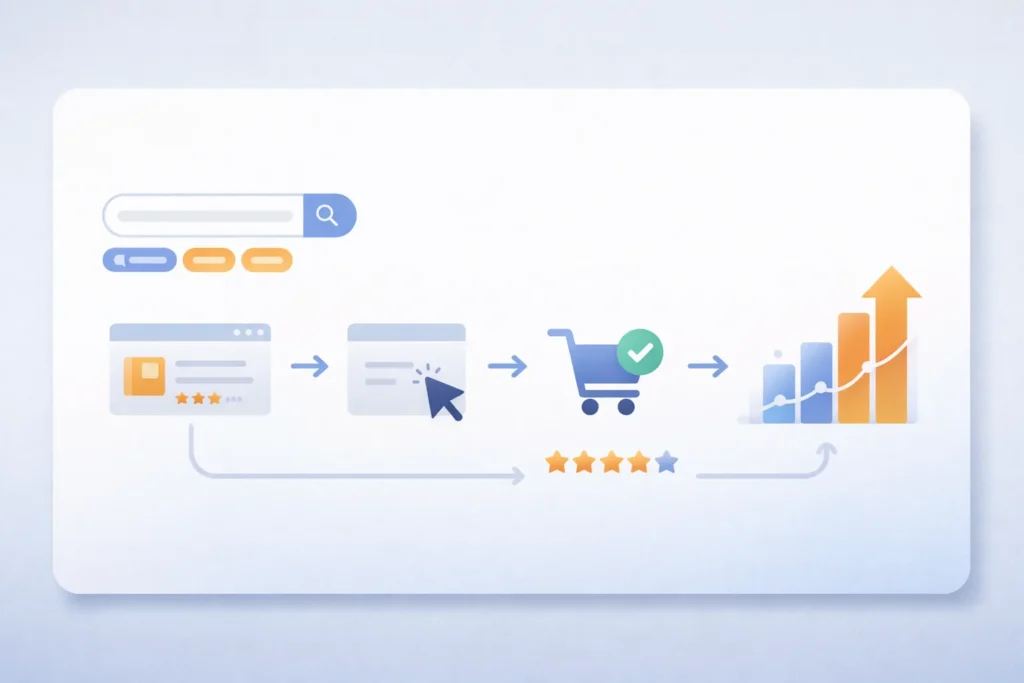
Amazon A10 Algorithm Optimization helps sellers rank higher and sell more. Firstly, it focuses on user intent and real engagement signals.
Secondly, it rewards listings that convert and satisfy buyers. Therefore, sellers must focus on both traffic and conversion.
Table of Contents
- What is Amazon A10 Algorithm
- How Amazon A10 Algorithm Optimization Works
- Key Ranking Factors
- Amazon A10 Algorithm Optimization Strategy
- A9 vs A10 Comparison
- Frequently Asked Questions
- Conclusion
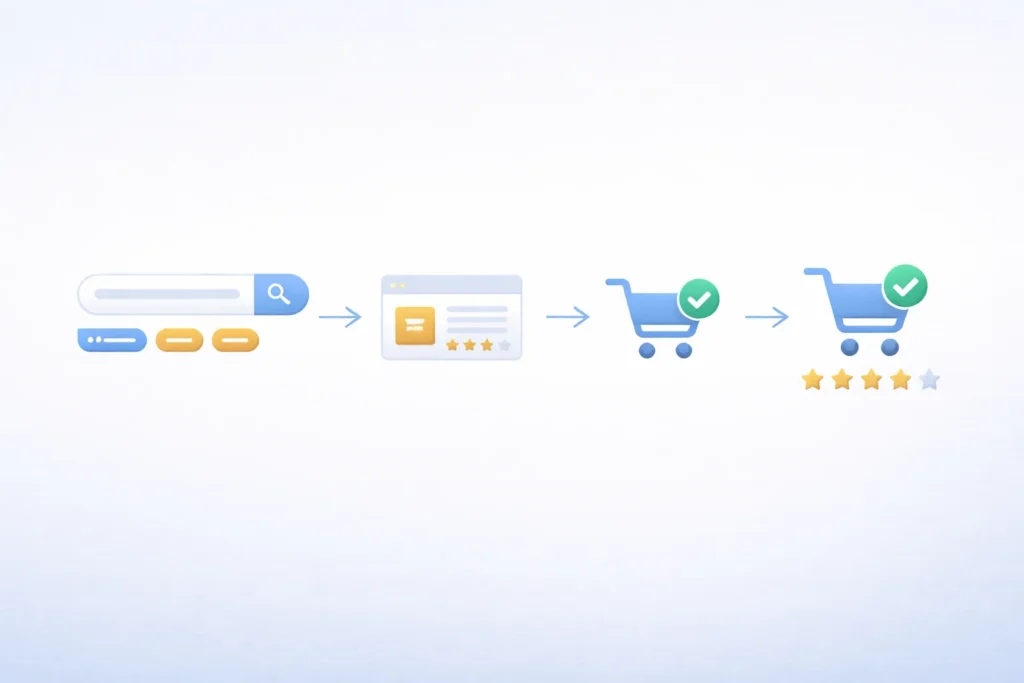 Amazon Listing Optimization Service workflow showing ranking and conversion process” class=”wp-image-7092″/>
What is Amazon A10 Algorithm
Firstly, Amazon A10 decides which products appear in search results. It ranks listings based on performance and relevance.
Secondly, it focuses more on organic signals than ads. Therefore, sellers must build strong listings.
Why A10 matters for sellers
Most importantly, A10 rewards listings that convert well. As a result, better listings get more visibility.
- Higher conversion improves ranking
- Better reviews increase trust
- Relevant keywords improve discoverability
In addition, using an Amazon SEO approach helps improve results.
How Amazon A10 Algorithm Optimization Works
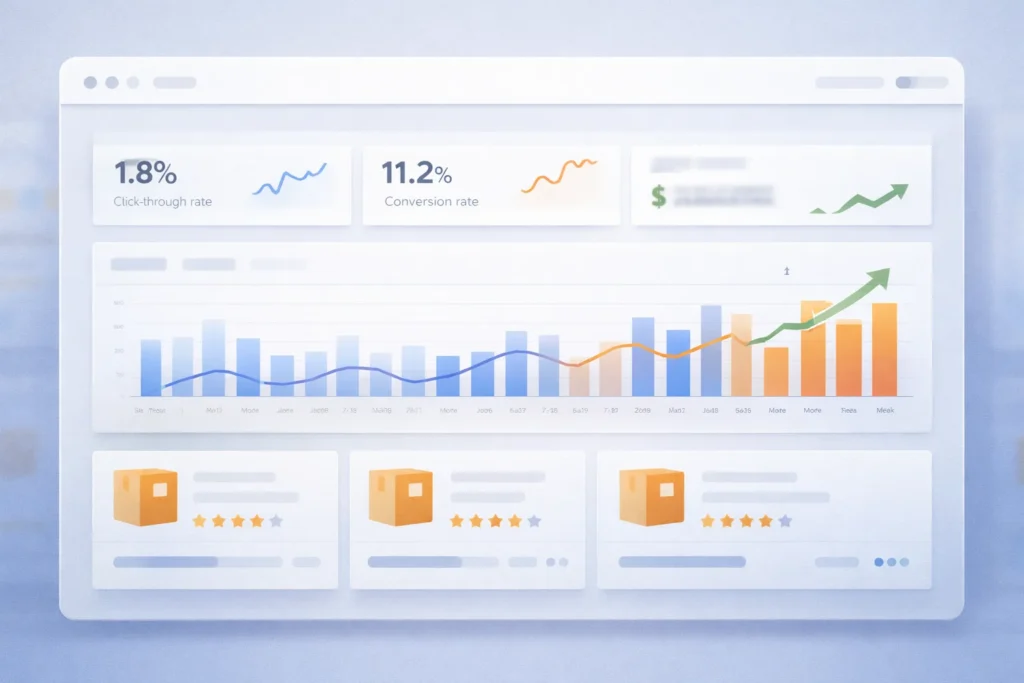
Firstly, A10 looks at shopper behaviour and purchase intent. Then, it ranks products based on performance.
Secondly, it values organic sales more than paid traffic. That means strong listings win long term.
Main working logic
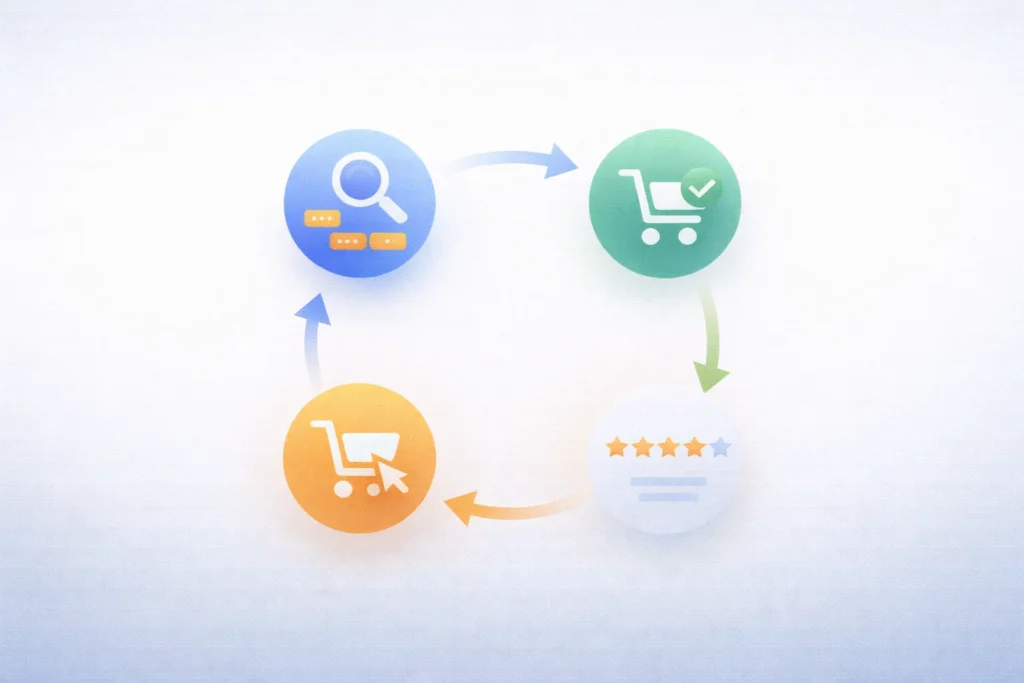
- Customer searches for a keyword
- Amazon matches relevant listings
- System ranks based on performance
- Top listings get more clicks and sales
For example, products with better click rates rank higher. As a result, visibility grows faster.
Pro Tip: Focus on improving click rate and conversion first
Key Ranking Factors
Firstly, A10 uses several signals to rank listings. Secondly, each factor impacts visibility and sales.
Important ranking signals
- Keyword relevance
- Sales velocity
- Customer reviews
- Click through rate
- Conversion rate
In contrast, weak listings struggle to rank. Therefore, you must improve every factor.
Role of keywords
Specifically, keywords help Amazon understand your product. In fact, better keyword use improves ranking.
That means you should use Amazon Product Listing Optimization techniques. Additionally, include keywords naturally.
Role of conversion
Above all, conversion matters the most. Consequently, listings with higher sales rank higher.
For instance, better images increase buyer trust. As a result, sales improve quickly.
Warning: Do not stuff keywords as it hurts readability
Amazon A10 Algorithm Optimization Strategy
Firstly, you need a clear strategy to rank. Secondly, you must optimise both SEO and conversion.
Step by step strategy
- Research high intent keywords
- Optimise title and bullets
- Improve images and A Plus Content
- Drive initial traffic
- Collect reviews and feedback
Additionally, using an Amazon SEO Optimization Service helps speed up results. In other words, experts handle complex tasks.
Meanwhile, a strong Amazon Listing Optimization Service improves conversion rates. As a result, ranking improves faster.
Also, you can book a Free Amazon Consultation to plan growth.
A9 vs A10 Comparison
| Factor | A9 Algorithm | A10 Algorithm |
|---|---|---|
| Focus | Sales driven | User behaviour driven |
| Ads impact | High | Lower |
| Organic ranking | Less priority | More priority |
| External traffic | Limited value | Higher value |
Table: Key differences between Amazon A9 and A10 ranking systems

However, A10 focuses more on user experience. Therefore, better listings always win.
Similarly, external traffic boosts ranking. As a consequence, brands should drive traffic outside Amazon.
Frequently Asked Questions
What is Amazon A10 Algorithm Optimization?
It is the process of improving listings to rank higher in Amazon search results. Does A10 prefer organic sales?
Yes, it values organic sales more than paid ads. How do keywords affect ranking?
Keywords help Amazon understand relevance and match search queries. Do reviews impact ranking?
Yes, positive reviews improve trust and increase conversions. Should I use external traffic?
Yes, external traffic helps improve ranking signals and visibility.
Ready to grow Your Amazon business?
Get a free strategy call with Advertpreneur.Book Your Free Consultation
Conclusion
Amazon A10 Algorithm Optimization plays a key role in ranking. Firstly, it rewards strong listings and real engagement.
Secondly, it focuses on conversion and user behaviour. Therefore, sellers must optimise every part of the listing.
Finally, consistent optimisation leads to long term growth. In short, better listings always win on Amazon.
Why shopify-vs-wordpress-2026/”>your-products-on-page-1-in-2025/”>amazon marketplace Growth Outside Amazon Matters in 2026

The amazon marketplace no longer sits inside one store alone. Instead, Amazon now pushes its tools across the wider web. For sellers, that shift creates fresh reach, but also fresh risk. Therefore, you need a plan before bigger brands move first.
Table of Contents
- Why amazon marketplace is changing
- What Amazon is building outside its store
- Why this move matters for sellers
- The risks of staying Amazon only
- What sellers should do now
- A simple plan for 2026
- Reference points from Amazon and Shopify
- Frequently Asked Questions
- Conclusion
Why amazon marketplace is changing
Firstly, Amazon wants a larger share of online demand. It no longer wants to win only inside its own walls.
Secondly, brands want more control over traffic and customer data. So Amazon built tools that work beyond the main store.
Thirdly, customer trust already sits with Amazon. Therefore, Amazon can turn that trust into a wider service business.
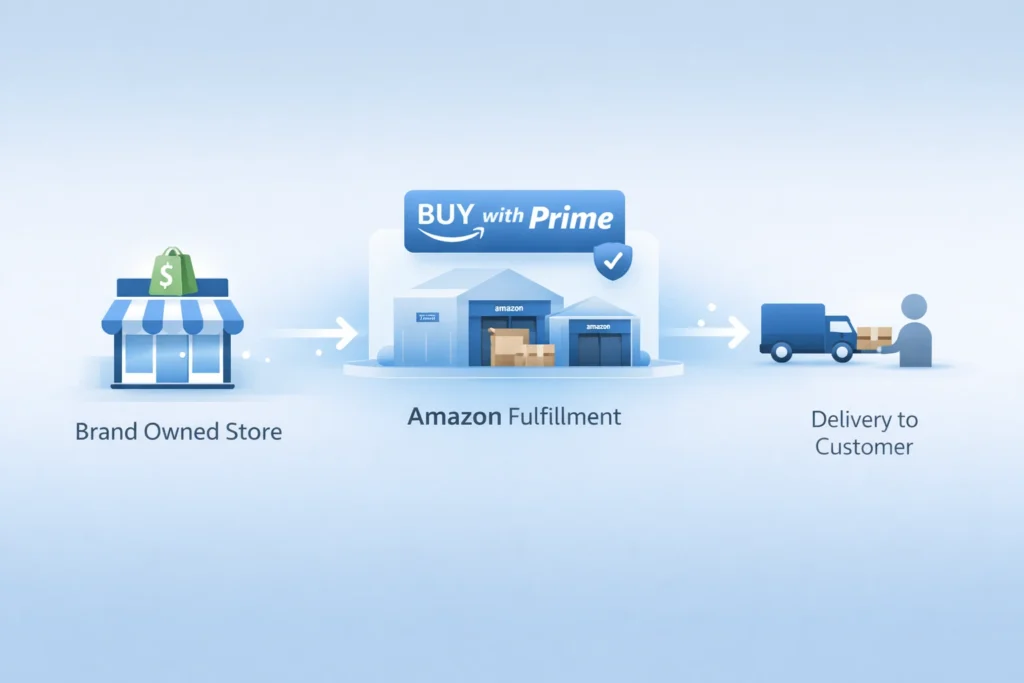
That move changes how the amazon marketplace fits your growth plan. In other words, Amazon now acts like a sales channel and a logistics layer.
- Amazon can power checkout on brand owned sites.
- Amazon can ship orders from one inventory pool.
- Amazon can support growth across more channels.
Pro Tip: Treat Amazon as a profit channel and a support system. Build both at the same time.
Many sellers still think in old terms. However, 2026 needs a wider view.
If you only watch ranking inside the amazon marketplace, you miss the bigger shift. Meanwhile, stronger brands build reach across many touchpoints.
What Amazon is building outside its store
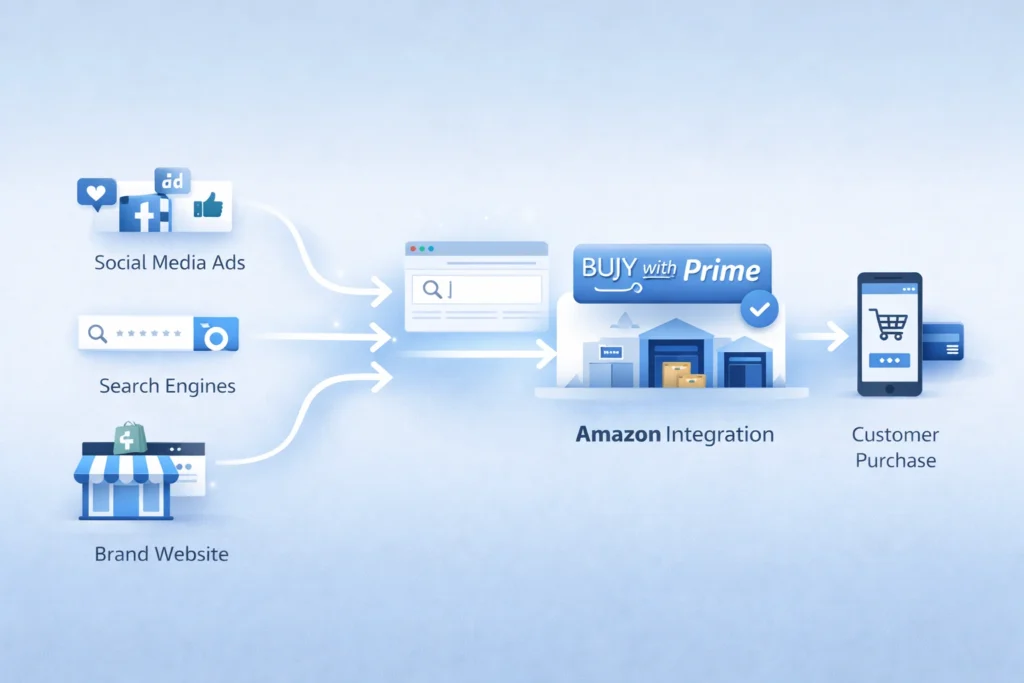
To begin with, Amazon offers Buy with Prime for brand sites. That tool adds Prime perks to direct sales pages.
Next, Amazon offers Multi Channel Fulfillment, often called MCF. That service ships orders from channels beyond Amazon.
In addition, Amazon now has a Shopify app for both tools. So sellers can connect store orders with Amazon fulfillment.
You can read more about Amazon Multi Channel Fulfillment for ecommerce brands. Also, Shopify explains setup in its guide for selling with Amazon tools on Shopify.
Buy with Prime changes the buying moment
For instance, amazon buy with prime gives shoppers a familiar option. That can reduce doubt on a brand owned store.
As a result, Amazon can help brands convert traffic they already own. But the sale does not need to start inside Amazon.
MCF changes the fulfillment model
Similarly, MCF lets brands use Amazon stock for outside orders. That means one pool can serve many channels.
In fact, Amazon states MCF works for businesses that do not sell on Amazon. So the service reaches beyond the amazon marketplace itself.
Shopify links the two worlds
Specifically, the new app supports shopify amazon integration inside Shopify admin. Therefore, more sellers can test Amazon tools without leaving their core store. :contentReference[oaicite:6]{index=6}
That matters because many private label brands already use Shopify. So Amazon now meets them where they work.
Table: Amazon tools now serve more than one sales path.
| Tool | Main job | Where it helps | What sellers gain |
|---|---|---|---|
| Buy with Prime | Boosts trust and speed at checkout | Brand owned site | Higher chance of conversion |
| MCF | Ships non Amazon orders | Shopify and other channels | One stock pool, faster shipping |
| Amazon app for Shopify | Connects orders and setup | Shopify admin | Smoother daily operations |
Why this move matters for sellers
Most importantly, this move changes seller economics. You can now keep Amazon strengths without keeping all sales inside Amazon.
That opens a real amazon multi channel strategy. In other words, you can use Amazon where it helps, then own more of the customer journey elsewhere.
- Keep fast fulfillment without full marketplace dependence.
- Build a brand site with better customer control.
- Spread risk across channels and traffic sources.
However, this shift also raises the bar. Basic sellers will struggle because strong brands will move faster.
For example, one brand may rank on Amazon, run ads on Meta, and close sales on Shopify. Meanwhile, Amazon still fulfills those orders in the background.
That is an ecommerce omnichannel strategy in simple terms. You meet the buyer on many paths, but you keep the brand story strong.
If you want that kind of growth, fix your store basics first. Then Improve Your Amazon SEO so your catalog can pull demand from search.
Also, you need clean ad data to guide budget moves. So sharpen your Amazon PPC before you expand traffic.
Warning: More channels do not solve weak offers. Poor listings and weak margins still hurt growth.
The risks of staying Amazon only
Firstly, one channel can change your costs fast. A fee shift or ad spike can hit profit hard.
Secondly, one channel can limit brand memory. Many buyers remember Amazon first, not your brand.
Thirdly, one channel can limit customer data. So repeat sales get harder over time.
In contrast, sellers who sell outside amazon platform can build email lists and repeat demand. They can also test offers with more freedom.
Still, you should not quit the amazon marketplace. Instead, you should stop treating it as your only home.
- Keep Amazon for search demand and trust.
- Use your own site for retention and bundles.
- Use outside traffic to lower total dependence.
That balance matters most in 2026. As a consequence, smart brands build both reach and control.
What sellers should do now
To clarify, you do not need a huge team. You need a clear order of moves.
1. Audit your catalog
Firstly, find products with steady reviews and good margins. Those items work best for wider expansion.
Next, check stock depth and shipping cost. You cannot scale if your core SKUs run thin.
2. Build a store that can convert
Secondly, fix your product pages before new traffic arrives. Add better photos, clear copy, and stronger proof.
For instance, show use cases, FAQs, and simple comparisons. That helps when buyers do not start inside the amazon marketplace.
3. Test Amazon powered fulfillment
Thirdly, review whether MCF fits your margins. Then test one small group of SKUs first.
You can start with the official page for fulfillment across multiple sales channels. Also, Amazon states MCF can fulfill in as fast as two days.
4. Add Buy with Prime where it helps
Additionally, use amazon buy with prime for items that need trust fast. This often works well for known hero products.
But do not force it on every SKU. Instead, test where the lift can cover the added cost.
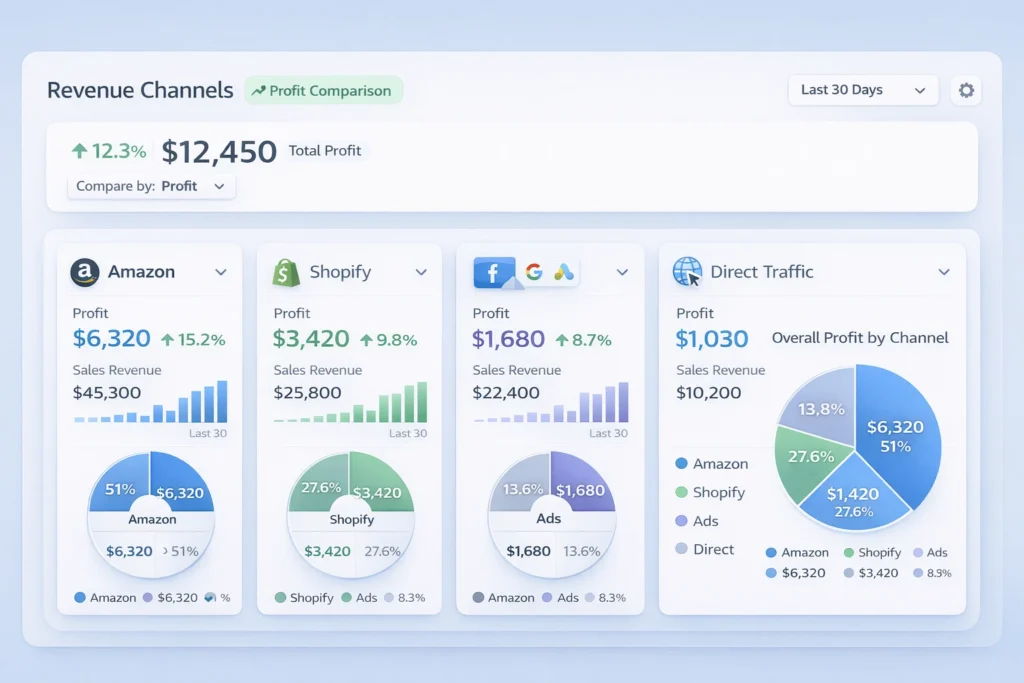
5. Track profit by channel
Most importantly, split reports by source. Otherwise, you will scale vanity sales and miss real profit.
Look at ad spend, refund rate, and repeat rate. Then compare each channel with Your Amazon marketplace results.
A simple plan for 2026
Above all, keep the plan simple. Complexity kills speed for small teams.
Phase one, fix the base
- Improve listing copy and images.
- Clean your PPC waste.
- Protect margin on core SKUs.
Phase two, expand one sales path
- Launch one strong product on Shopify.
- Test shopify amazon integration for operations.
- Send a small traffic batch to that page.
Phase three, widen the system
- Add bundles for your direct site.
- Collect email and SMS leads.
- Retarget visitors who do not buy first.
Finally, build process before scale. That means fewer surprises as orders rise.
In short, the best 2026 plan uses Amazon in two ways. It wins demand inside the amazon marketplace, and support outside sales too.
What good execution looks like
A strong brand ranks on Amazon and runs clean ads. Then it sends outside traffic to pages built to convert.
Meanwhile, the team watches profit by SKU and channel. Therefore, budget shifts follow real numbers.
- Pick one hero SKU.
- Build one strong landing page.
- Test one outside traffic source.
- Measure repeat buyers after thirty days.
Reference points from Amazon and Shopify
Amazon says its Shopify integration can sync orders, products, and returns in Shopify admin. It also says sellers can use the same Amazon inventory for Shopify orders.
Shopify says merchants in the United States can import and fulfill Shopify orders through the Amazon MCF and Buy with Prime app. It also outlines setup steps in Shopify admin.
Recent reporting also says Amazon has tested Prime shipping on outside sites without an Amazon login for some merchants. That points to an even wider push beyond the core amazon marketplace.
These points matter because they show direction, not hype. Amazon wants a bigger role in commerce infrastructure.

Frequently Asked Questions
Why is Amazon moving beyond its main store?
Amazon wants more order flow, more merchant ties, and more logistics volume. So it now supports sales outside its core store too. Does this mean Amazon Sellers need Shopify now?
No, but many sellers should test a brand site. That gives more control over repeat sales and customer data. What is amazon buy with prime in simple terms?
It adds Prime style delivery and checkout trust to your own site. As a result, some shoppers feel safer buying direct. Can brands use MCF if they do not sell on Amazon?
Yes. Amazon states MCF is open to businesses that do not sell on Amazon. Should I leave the amazon marketplace and focus only on my site?
No. Keep Amazon as a core channel. Then build your own site so you gain more control and reduce channel risk. What is the first step for private label brands?
Ready to grow your Amazon business?
Get a free strategy call with Advertpreneur.Book Your Free Consultation
Conclusion
The amazon marketplace still matters, but its role has changed. It now acts as a store, a trust layer, and a shipping engine.
Therefore, sellers who adapt early can win more control and better reach. They can keep Amazon strengths while building direct brand value.
To conclude, do not wait for the shift to become obvious. Build your amazon multi channel strategy now, test smart, and grow with intent.
How amazon A content-boosts-conversion-rates-fast/”>Plus Content Design Helps You Increase Conversions Fast
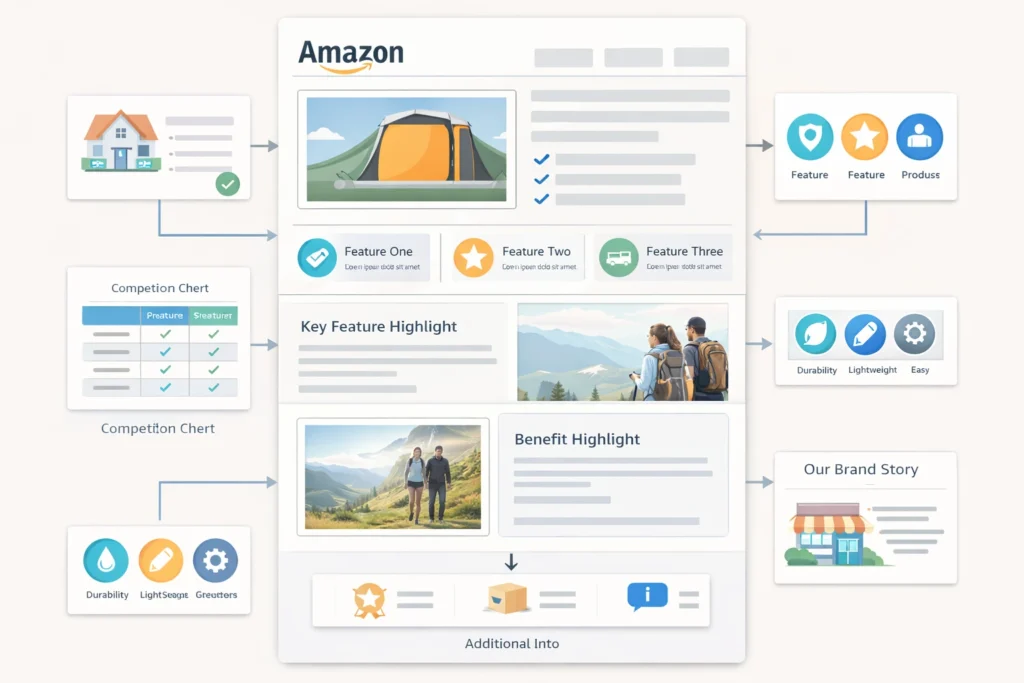 Content Design layout showing optimized product modules for higher conversions” class=”wp-image-7045″/>
Amazon A Plus Content Design can change how buyers see your-product-listings/”>Your Product. It helps you explain value clearly and quickly.
Firstly, Most Sellers ignore this tool and lose sales. Secondly, you can use it to build trust and boost conversions.
Table of Contents
- What is A Plus Content
- Why Amazon A Plus Content Design Matters
- Key Elements of A Plus Content
- Steps to Create High Converting Content
- Comparison of Basic and Premium A Plus
- Common Mistakes to Avoid
- Frequently Asked Questions
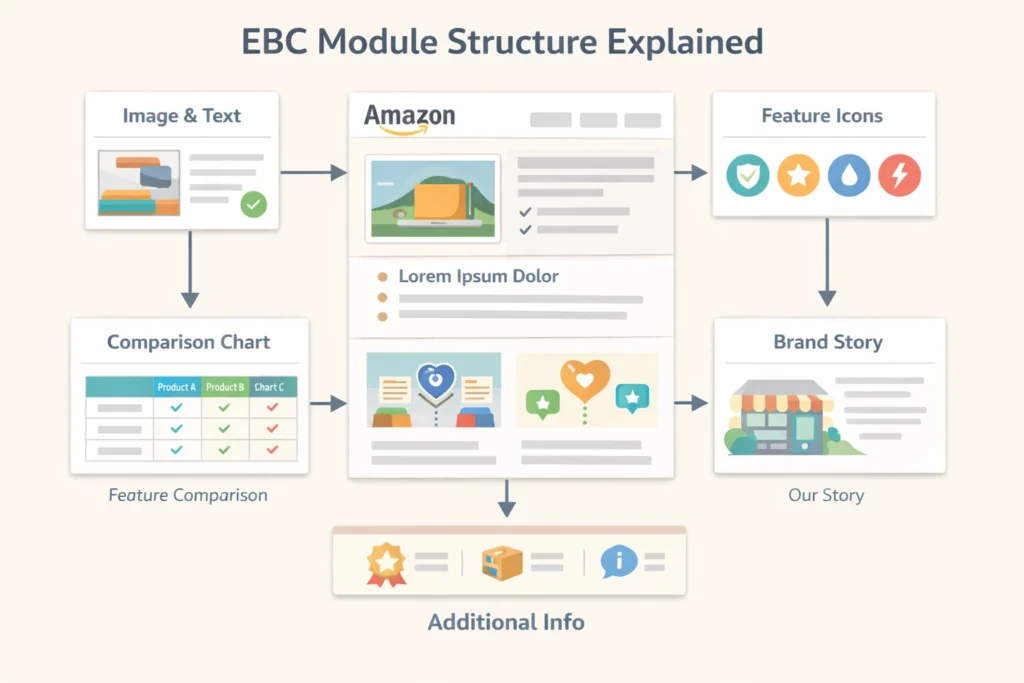 Enhanced Brand Content Service diagram showing how modules connect in a listing” class=”wp-image-7046″/>
What is A Plus Content
Firstly, A Plus content lets you add images and text blocks. Secondly, it replaces basic product descriptions with rich layouts.
In fact, sellers also call it EBC or Enhanced Brand Contnet. However, Amazon now uses the A Plus name.
Also, you need brand registry to use it. Therefore, most serious sellers invest in this early.
- Image modules explain features clearly
- Comparison charts help buyers decide faster
- Brand story builds trust
In addition, many sellers use an Amazon A Plus Content Service. That means experts handle design and layout.
Why Amazon A Plus Content Design Matters
Firstly, design affects how buyers feel about your product. Secondly, clean layouts reduce confusion.
Most importantly, Amazon A Plus Content Design improves conversion rates. As a result, you get more sales from same traffic.
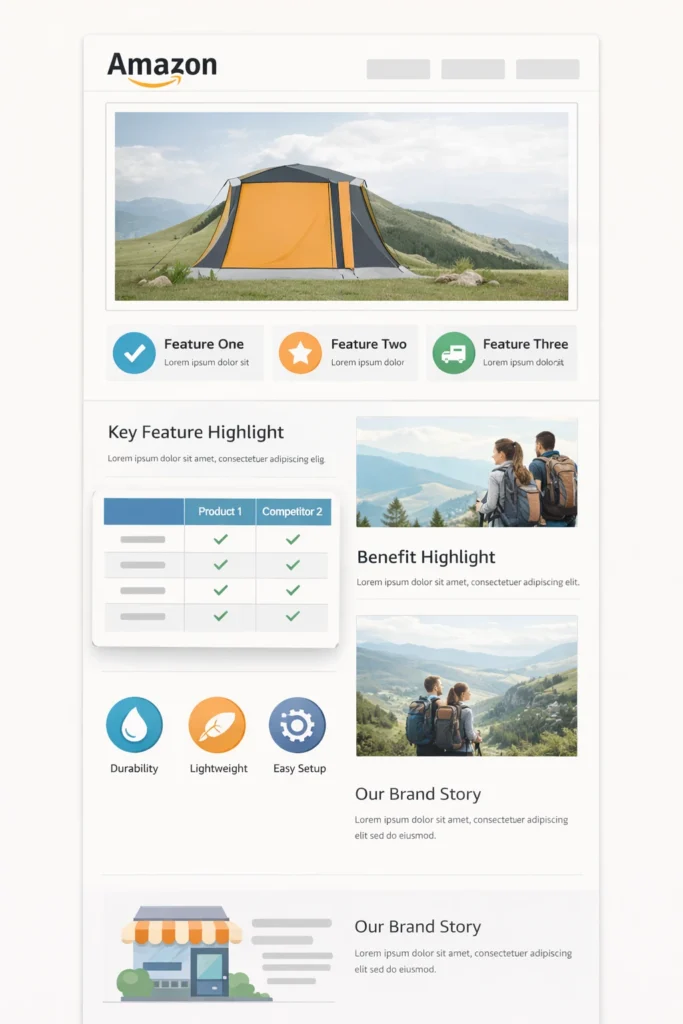
However, poor design can hurt trust. Therefore, always keep things simple and clear.
- Use clear images with real product context
- Keep text short and easy
- Focus on benefits, not features only
Pro Tip: Use real lifestyle images to show product use clearly.
Additionally, you can study tools from Amazon A Plus tools page. This helps you understand available modules.
Key Elements of A Plus Content
Firstly, strong Amazon A Plus Content Design uses a clear structure. Secondly, each section should answer one buyer question.
Images
Images should show product use clearly. For instance, lifestyle shots work better than plain photos.
Text Blocks
Text should stay short and direct. In other words, avoid long paragraphs.
Comparison Tables
Tables help buyers compare options quickly. As a result, they choose faster.
Brand Story
Story builds trust and loyalty. Meanwhile, it shows your brand personality.
Also, many sellers upgrade to Amazon Premium A Plus Content. This gives video and advanced layouts.
Warning: Do not overload content with too much text or images.
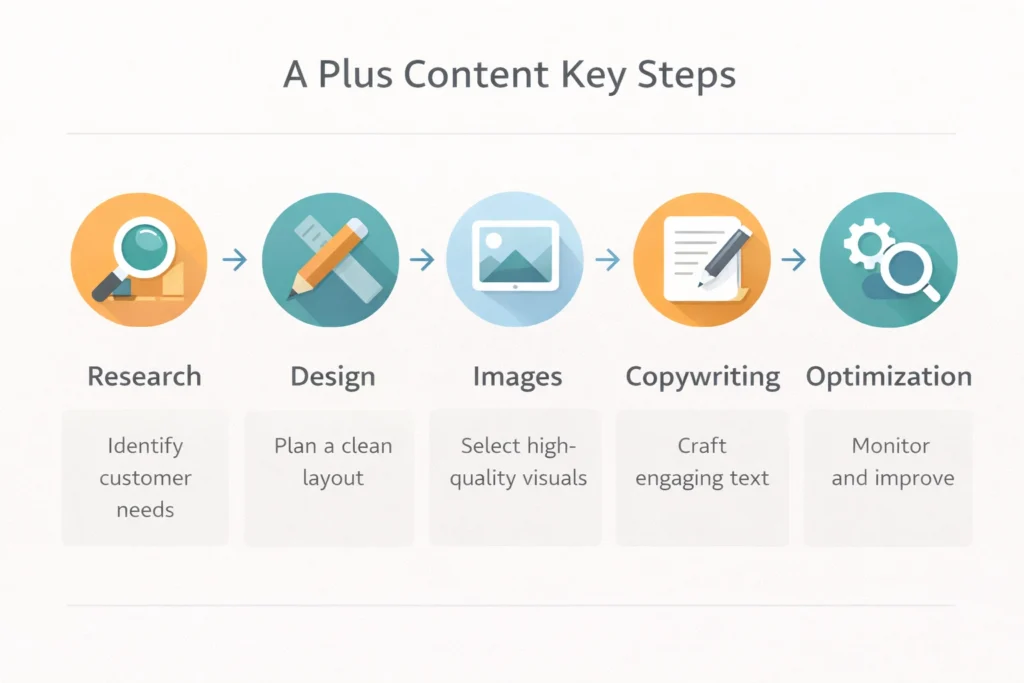
Steps to Create High Converting Content
Firstly, start with Keyword Research. Secondly, align content with buyer intent.
- Define your target customer
- Plan content sections clearly
- Create images with clear message
- Write short benefit driven text
- Test and improve based on results
In addition, check guidelines on Amazon content help page. This avoids rejection issues.
Also, you can use an Amazon A+ Contnet service to speed things up. That means experts handle everything for you.
Meanwhile, if you need strategy help, book a Free Amazon Consultation. This helps you plan better content.
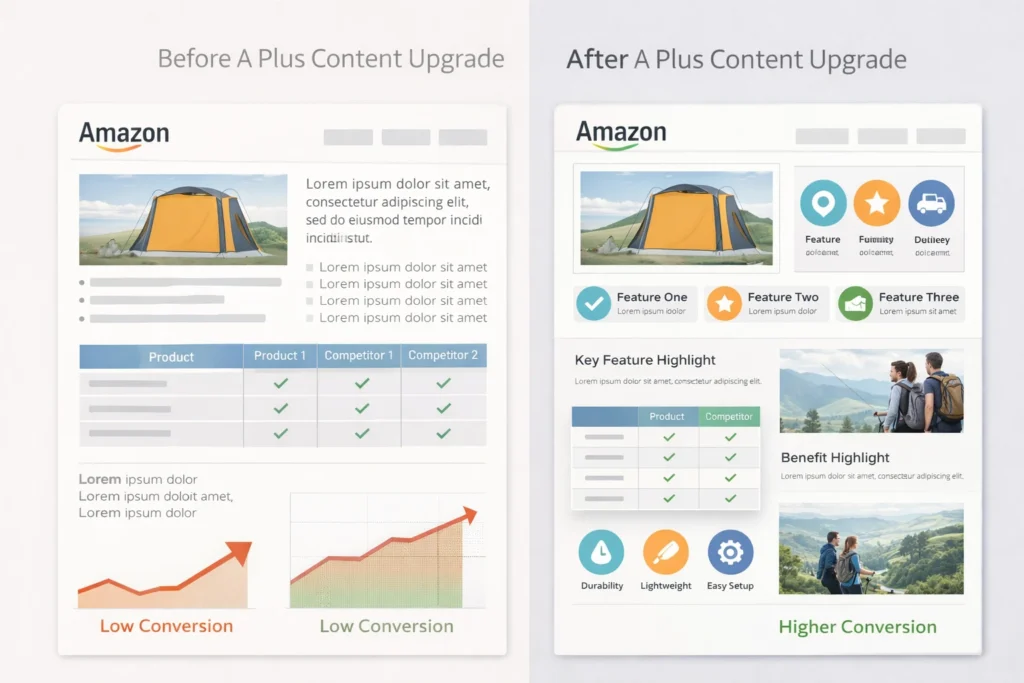
Comparison of Basic and Premium A Plus
Firstly, not all content types offer the same value. Secondly, premium options provide more flexibility.
| Feature | Basic A Plus | Premium A Plus |
|---|---|---|
| Modules | Standard layouts | Advanced layouts |
| Video | No | Yes |
| Interactivity | Limited | Higher |
| Brand Story | Basic | Enhanced |
Table: Differences between standard and premium A Plus content
In contrast, premium suits large brands. However, basic still works for new sellers.
Common Mistakes to Avoid
Firstly, many sellers copy competitors blindly. Secondly, this leads to weak content.
- Using too much text
- Ignoring mobile layout
- Poor image quality
- No clear message
However, good Amazon A Plus Content Design avoids these issues. Therefore, always review your layout before publishing.
Frequently Asked Questions
What is Amazon A Plus Content Design?
It is a way to enhance product pages with rich images and text. Does A Plus content increase sales?
Yes, it improves trust and clarity, which leads to higher conversions. What is EBC?
EBC stands for Enhanced Brand Content, which is the old name. Should new sellers use A Plus?
Yes, it helps build trust even for new brands. Do I need a service for A Plus content?
You can do it yourself, but services save time and improve results.
Ready to grow your Amazon business?
Get a free strategy call with Advertpreneur.Book Your Free Consultation
Conclusion
Amazon A Plus Content Design plays a key role in product success. It helps buyers understand value fast.
Therefore, strong design leads to better conversions and more sales. In short, every seller should invest in it.
amazon Suppressed Listing Fix: How to Restore Your Sales Fast
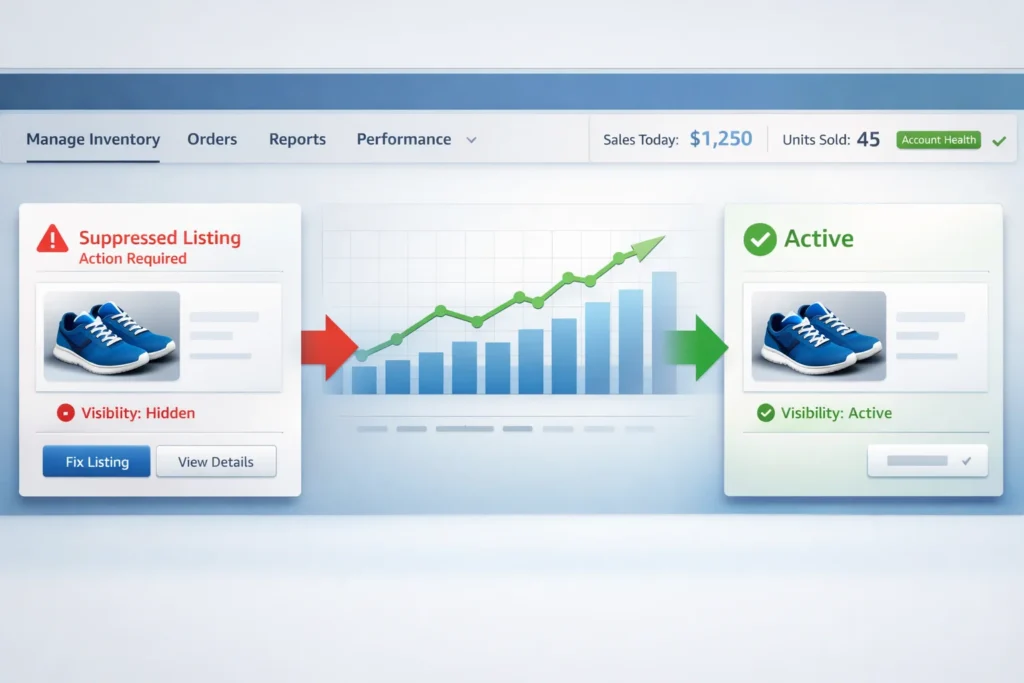
An Amazon Suppressed Listing Fix can save your business from lost sales. Therefore, you need to understand why Amazon hides Your Products. Then, you can take fast action to restore visibility.
Table of Contents
- What Is a Suppressed Amazon Listing
- Why Is My Amazon Listing Suppressed
- How to Fix a Suppressed Amazon Listing
- Using Flat Files for Bulk Fixes
- Fixing Stranded Inventory Issues
- How to Prevent Future Suppressions
- When to Use an Amazon Listing Fix Service
- Frequently Asked Questions
- Conclusion
What Is a Suppressed Amazon Listing
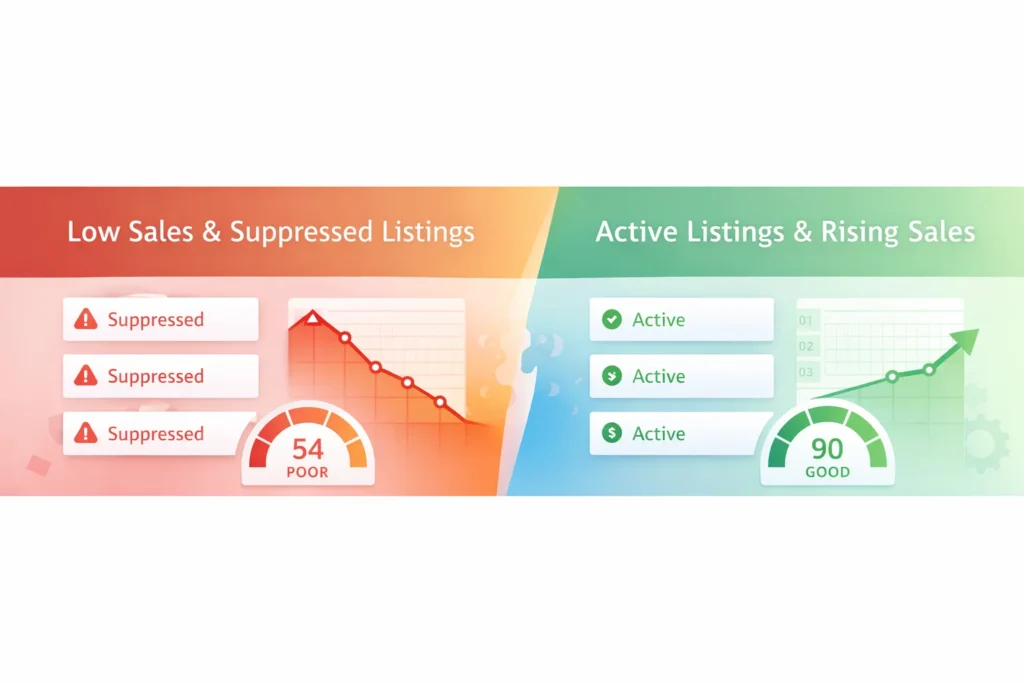
A suppressed listing is a product that Amazon hides from buyers. As a result, shoppers cannot find or buy your item.
Amazon suppresses listings that break their rules. In other words, your product becomes invisible in search results.
Most importantly, suppressed listings cost you money every day. Consequently, you lose sales while competitors win.
An Amazon Suppressed Listing Fix restores your product to active status. Therefore, buyers can see and purchase your items again.
Warning: Suppressed listings do not show up in Amazon search at all. This means zero visibility until you fix the problem.
Why Is My Amazon Listing Suppressed
Amazon suppresses listings for many different reasons. However, most issues fall into three main categories.
Missing Required Information
Amazon needs complete data for every product. For example, you must include images, titles, and descriptions.
Additionally, you need valid category codes and proper brand names. Without these details, Amazon will suppress your listing.
Policy Violations
Your listing might break Amazon’s selling rules. In fact, restricted words or false claims trigger suppression quickly.
Similarly, incorrect product details cause problems. So always check your content against Amazon’s guidelines.
Image Issues
Amazon requires specific image standards. Specifically, your main photo needs a pure white background.
Moreover, images must show the actual product clearly. Therefore, blurry or text heavy images get rejected.
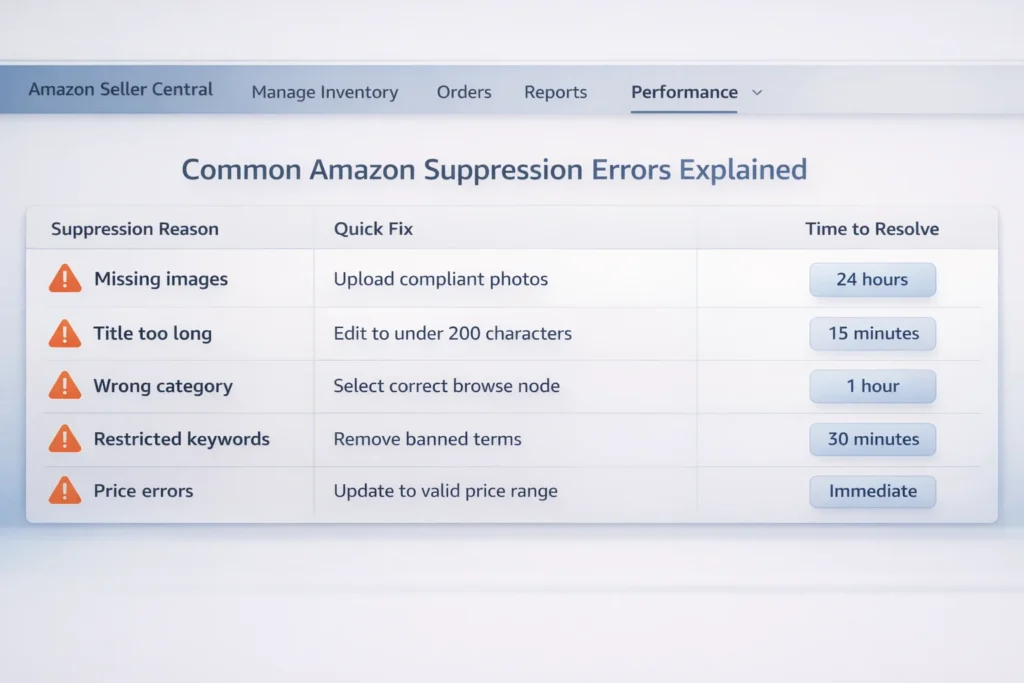
| Suppression Reason | Quick Fix | Time to Resolve |
|---|---|---|
| Missing images | Upload compliant photos | 24 hours |
| Title too long | Edit to under 200 characters | 15 minutes |
| Wrong category | Select correct browse node | 1 hour |
| Restricted keywords | Remove banned terms | 30 minutes |
| Price errors | Update to valid price range | Immediate |
Table: Common suppression causes and their typical resolution times
How to Fix a Suppressed Amazon Listing
You can perform an Amazon Suppressed Listing Fix yourself. However, you need to follow specific steps carefully.
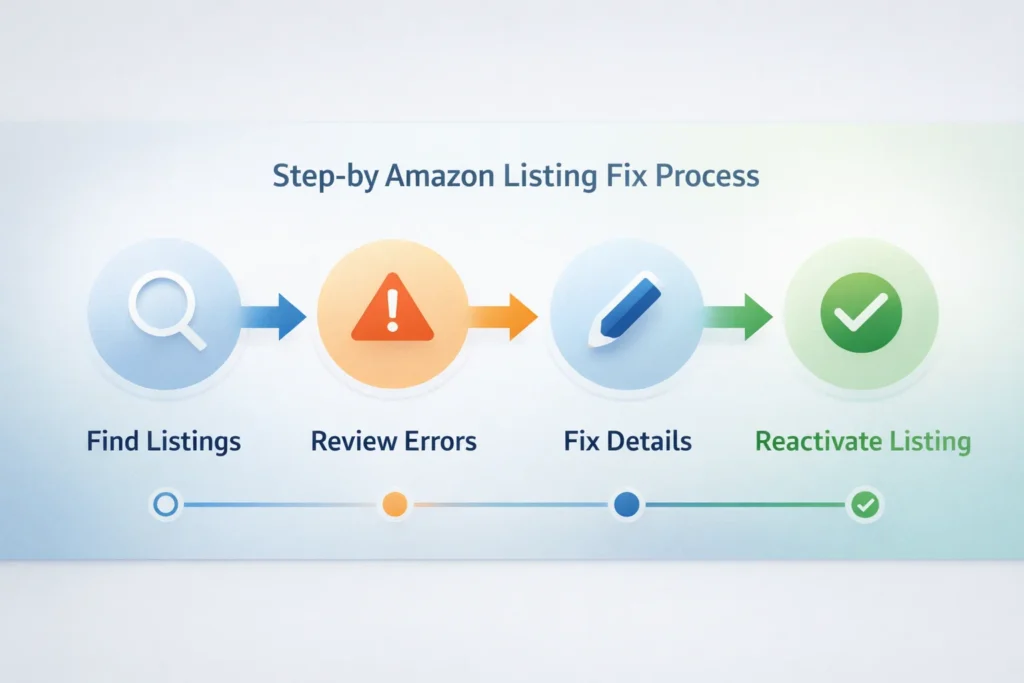
Step 1: Find Your Suppressed Listings
Firstly, log into Amazon Seller Central. Then, click the Inventory menu tab.
Next, select Manage Inventory from the dropdown. After that, click Fix Suppressed Listings at the top.
Step 2: Review the Error Details
Amazon shows exactly what is wrong. For instance, you might see Missing Bullet Points or Image Required.
Therefore, read each error message completely. This tells you exactly what to fix.
Step 3: Update Your Listing
Edit the missing or incorrect information. Additionally, upload new images if needed.
Then, save your changes and wait. In most cases, Amazon reactivates listings within 24 hours.
Pro Tip: Save your listing as a draft before submitting. This prevents new errors from going live.
Meanwhile, you can check other listings for similar issues. Consequently, you fix problems before they cause suppression.
Using Flat Files for Bulk Fixes
An Amazon Flat File Fix Service helps with many listings at once. Specifically, this works well for sellers with large catalogs.
What Is a Flat File
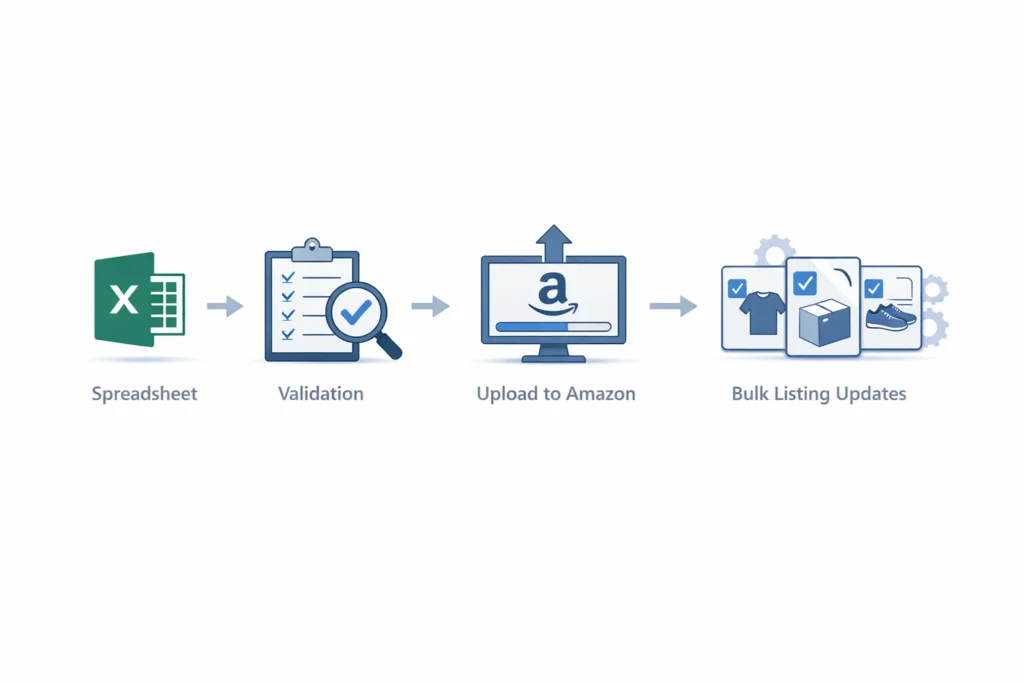
A flat file is a spreadsheet template from Amazon. In fact, you can update hundreds of listings simultaneously.
However, flat files contain many columns. Therefore, one small error can cause big problems.
How to Use Flat Files Safely
Firstly, download the correct template for your category. Then, fill in all required fields completely.
Next, validate your file before uploading. As a result, you catch errors before Amazon sees them.
Finally, upload small batches first. This way, you test the process with less risk.
Fixing Stranded Inventory Issues
An Amazon Listing Stranded Inventory Fix addresses a special problem. Specifically, this happens when inventory exists but has no active listing.
What Causes Stranded Inventory
Inventory becomes stranded for several reasons. For example, listing errors or policy violations can strand your stock.
Additionally, deleting listings while inventory remains in FBA causes stranding. Therefore, always check stock levels before making changes.
How to Fix Stranded Inventory
Go to Inventory then Manage Inventory in Seller Central. Then, click Fix Stranded Inventory.
Amazon will show why each item is stranded. After that, follow their specific instructions to relist.
In some cases, you need to create a new listing. Meanwhile, in other cases, you simply edit existing details.
How to Prevent Future Suppressions
Stopping problems before they start saves time. Therefore, follow these simple prevention tips.
- Check your listings weekly for alerts or warnings
- Keep images updated with Amazon’s latest requirements
- Never use restricted words in titles or bullets
- Maintain accurate inventory counts at all times
- Update prices regularly to avoid pricing errors
Additionally, use Amazon’s Listing Quality Dashboard. This tool shows potential problems before suppression happens.
Most importantly, stay current with Amazon’s policy changes. Consequently, you avoid new restriction triggers.
When to Use an Amazon Listing Fix Service
Sometimes you need expert help. Therefore, consider an Amazon Listing Fix when you face complex issues.
You Have Hundreds of Suppressed Listings
DIY fixes work for a few listings. However, bulk problems need professional Amazon Flat File Fix Service expertise.
Experts can process thousands of listings quickly. As a result, you restore revenue faster.
The Problem Keeps Returning
Some suppressions happen again and again. In fact, this usually means a deeper issue exists.
An Amazon Listing Fix Service finds root causes. Therefore, they stop the cycle permanently.
You Need an Amazon Listing Stranded Inventory Fix
Stranded inventory costs storage fees without generating sales. Moreover, long term stranding can hurt your account health.
Professionals understand Amazon’s complex inventory systems. Consequently, they fix stranding issues that stump sellers.
If you want personalised help, book a Free Amazon Consultation with Advertpreneur today.
Frequently Asked Questions
What is the fastest way to fix a suppressed Amazon listing?
The fastest Amazon Suppressed Listing Fix is updating the specific missing information. Firstly, check the error message in Seller Central. Then, add the required data and save. Most listings reactivate within 15 minutes to 24 hours. Can I fix multiple suppressed listings at once?
Yes, you can fix many listings simultaneously. Specifically, use Amazon’s flat file upload feature. However, this requires careful attention to detail. Alternatively, hire an Amazon Flat File Fix Service for bulk updates without errors. Why does my listing keep getting suppressed after I fix it?
Recurring suppression usually means an underlying problem exists. For example, you might have category mismatches or policy violations. Therefore, review Amazon’s complete requirements. Additionally, consider professional help from an Amazon Listing Fix Service to find the root cause. What is stranded inventory and how is it different?
Stranded inventory is stock in Amazon warehouses without an active listing. In contrast, suppressed listings still exist but are hidden. An Amazon Listing Stranded Inventory Fix requires relinking your stock to a valid product page. Consequently, your items become buyable again. How much does an Amazon Listing Fix Service cost?
Costs vary based on how many listings need fixing. For instance, a single listing might cost less than a bulk catalog fix. However, Advertpreneur offers a Free Amazon Consultation to assess your needs. Therefore, you get exact pricing before committing. Will fixing suppressed listings improve my sales?
Absolutely. When you perform an Amazon Suppressed Listing Fix, your products become visible again. As a result, buyers can find and purchase them. Additionally, active listings improve your overall account health. Consequently, this helps all your products rank better.
Ready to grow Your Amazon business?
Get a free strategy call with Advertpreneur.Book Your Free Consultation
Conclusion
An Amazon Suppressed Listing Fix is essential for every seller. Without it, you lose sales daily while competitors thrive.
Therefore, check your listings regularly for suppression warnings. Then, fix issues quickly using the steps above.
However, complex problems need expert help. Consequently, consider Advertpreneur’s professional Amazon Listing Fix services. In fact, we also offer Amazon Flat File Fix Service and Amazon Listing Stranded Inventory Fix solutions.
Most importantly, act fast when you spot suppression. The sooner you fix the problem, the sooner sales return.
Finally, prevention beats cure every time. So maintain high listing quality standards and stay updated on Amazon’s policies.
Why amazon ppc costs Are Crushing Profits for Sellers in 2026
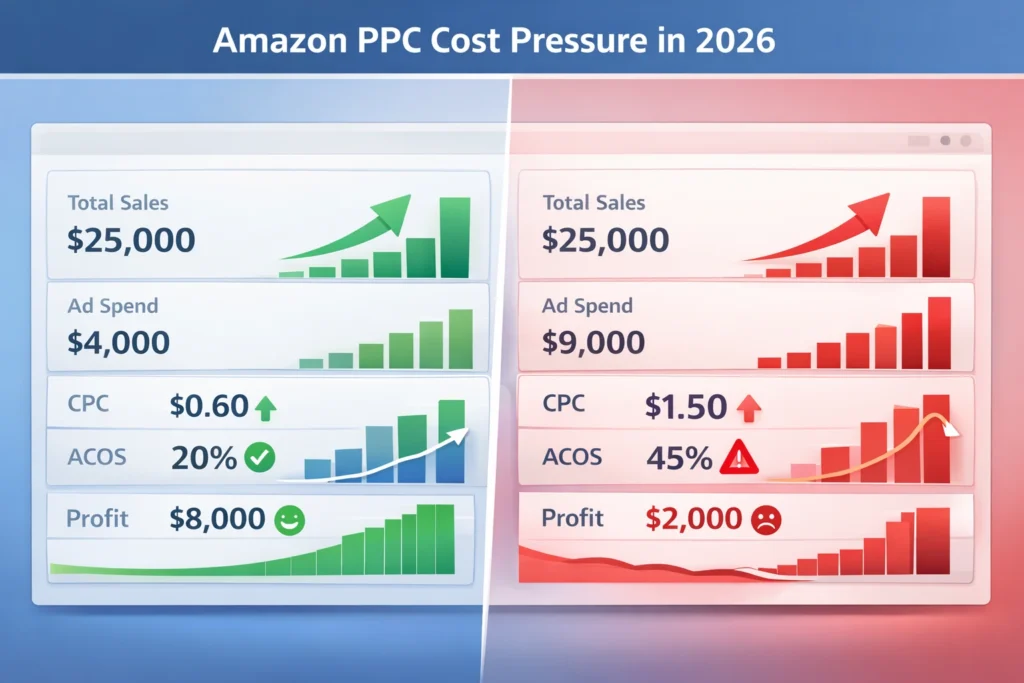
amazon ppc costs are rising fast in 2026. As a result, many sellers now struggle to stay profitable.
Firstly, ad competition keeps growing across every niche. Therefore, you must adapt your strategy or lose margins.
Table of Contents
- Why amazon ppc Costs Are Rising
- Impact on Profit Margins
- Common Seller Mistakes
- Winning amazon ads strategy 2026
- ppc optimization amazon Framework
- amazon ad bidding Explained
- FAQ
- Conclusion
Why amazon ppc Costs Are Rising
Firstly, more sellers enter Amazon every month. As a result, keyword bids rise quickly.
Secondly, brands invest heavily in ads to defend rankings. Therefore, small sellers feel pressure.
- More competition in every category
- Higher bid prices for main keywords
- Brands dominate top placements
In addition, retail media grows fast globally. That means Amazon pushes ads more aggressively.
For example, sponsored placements now fill most search results. Consequently, organic reach drops.
Meanwhile, many sellers share their struggles on real seller discussions on Reddit.
Warning: If you ignore rising CPC trends, your profits will shrink fast.
Impact on Profit Margins
Firstly, higher CPC means higher spend per sale. As a result, margins shrink quickly.
Secondly, many sellers chase revenue instead of profit. Therefore, they lose money without noticing.
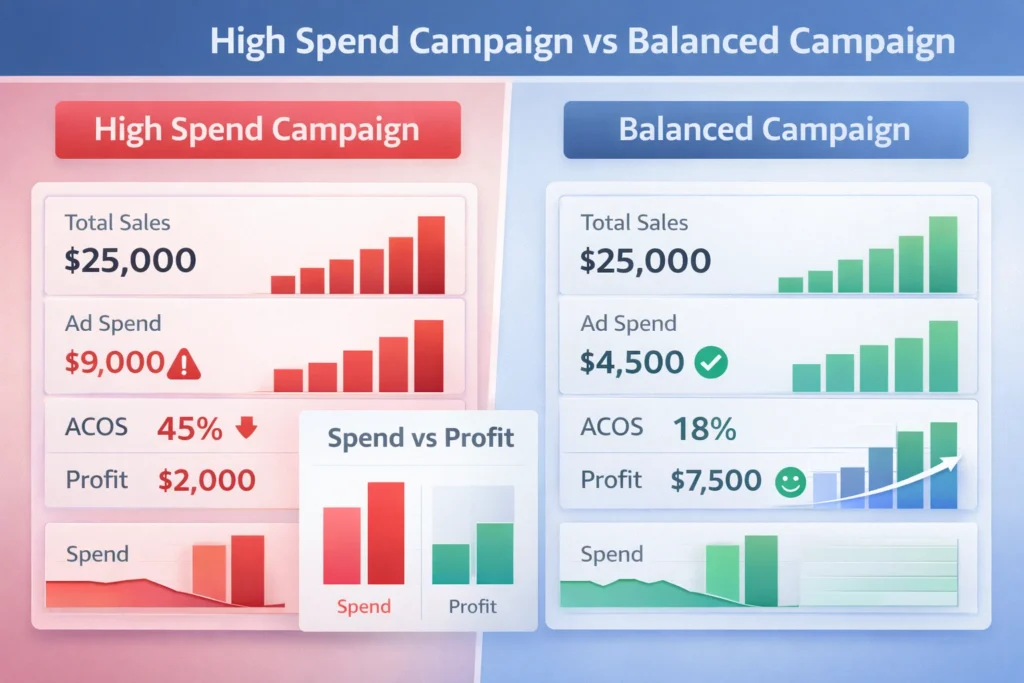
In fact, most sellers ignore true costs. That means they only track sales, not profit.
Similarly, rising fees add more pressure on margins. Consequently, ads become harder to justify.
| Metric | 2022 | 2026 |
|---|---|---|
| Average CPC | $0.75 | $1.40 |
| ACOS | 25% | 40% |
| Profit Margin | 20% | 8% |
Table: Rising PPC costs vs shrinking margins
Common Seller Mistakes
Firstly, sellers target broad keywords without control. As a result, spend increases fast.
Secondly, many ignore negative keywords completely. Therefore, waste keeps growing daily.
- No keyword segmentation
- Poor campaign structure
- Weak listing conversion
However, poor listings make ads expensive. That means low conversion leads to higher ACOS.
In contrast, strong listings reduce ad cost naturally. Consequently, better conversion lowers spend.
Pro Tip: Fix your listing before scaling ads. Conversion drives profit.
Winning amazon ads strategy 2026
Firstly, focus on intent based keywords only. As a result, you reduce wasted clicks.
Secondly, separate campaigns by match type clearly. Therefore, control improves.
- Exact match for profit keywords
- Phrase match for scaling
- Broad match for discovery
Additionally, test bids slowly instead of aggressively. That means better control over spend.
For instance, lowering bids slightly can protect margins. Consequently, efficiency improves.
To learn official guidance, check Amazon advertising platform insights.
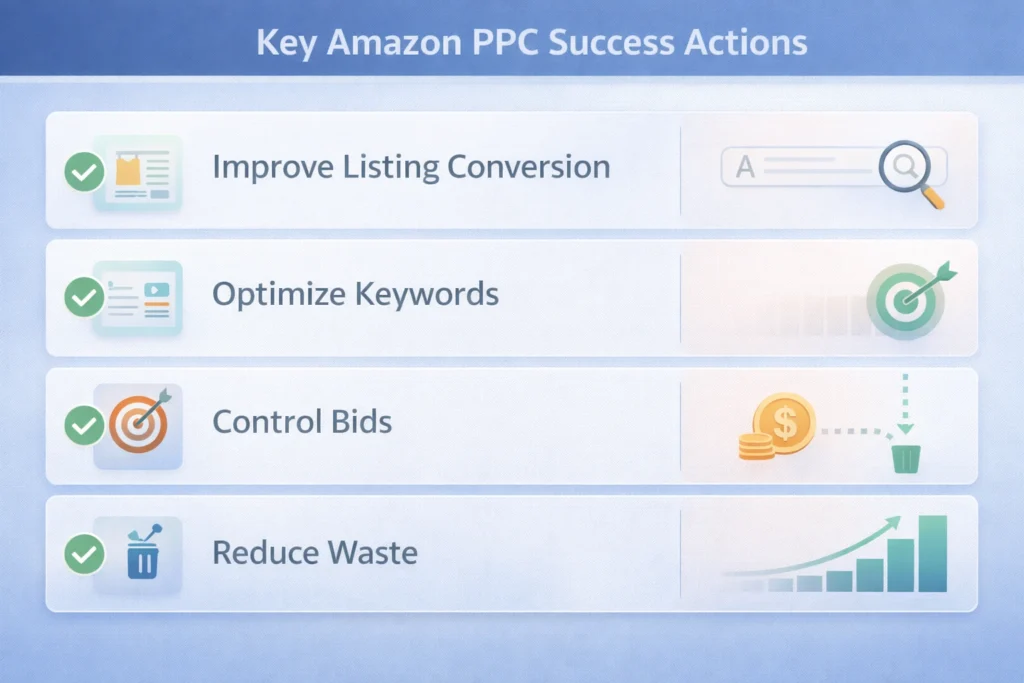
ppc optimization amazon Framework
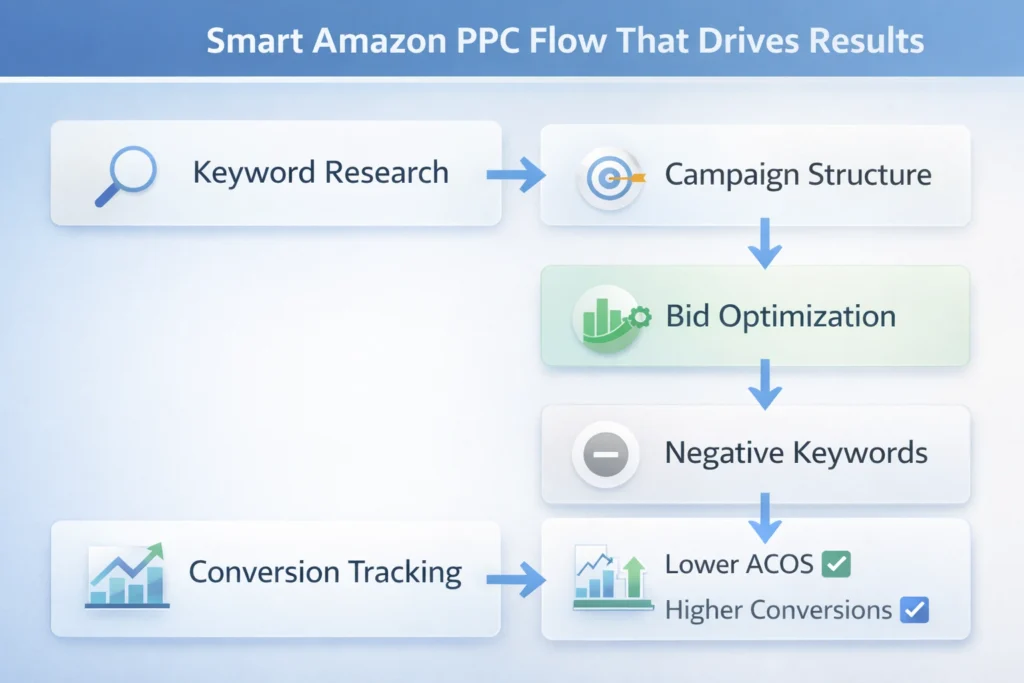
Firstly, review search term reports weekly. As a result, you find waste fast.
Secondly, move winning keywords into exact campaigns. Therefore, control increases.
- Identify high spend low conversion terms
- Add negative keywords quickly
- Increase bids on converting keywords
In addition, track TACOS not just ACOS. That means full business view improves decisions.
Meanwhile, focus on lowering acos amazon through better targeting. Consequently, profit grows.
Also, consider expert help from Amazon PPC specialists for faster results.
amazon ad bidding Explained
Firstly, Amazon uses auction based bidding system. As a result, higher bids win placements.
Secondly, bid strategy impacts cost directly. Therefore, control is critical.
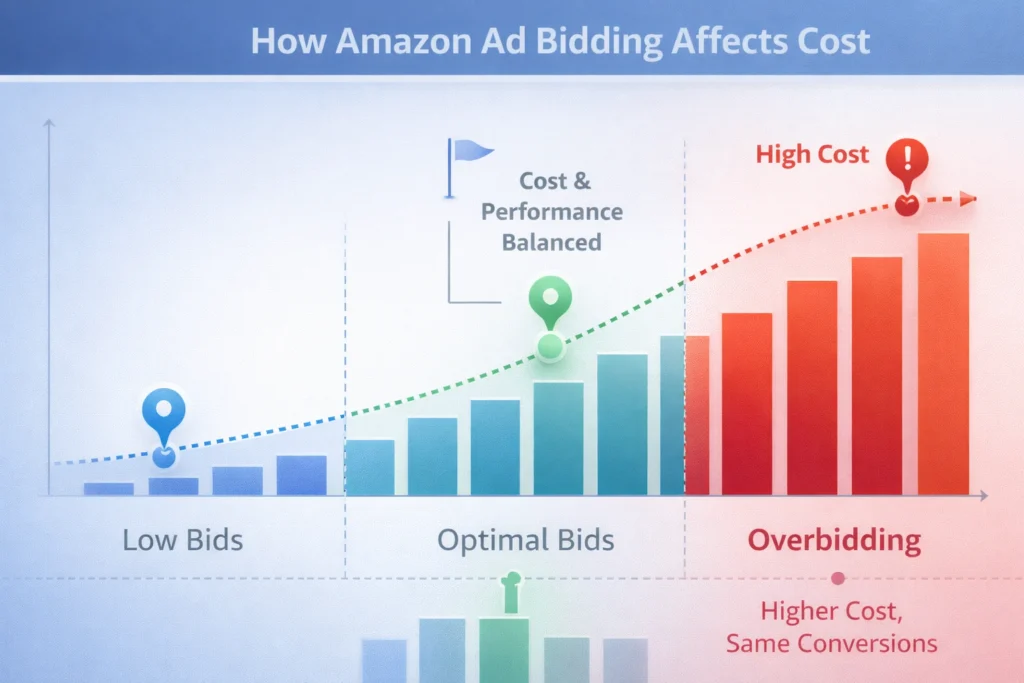
- Dynamic bids up and down
- Fixed bids for stability
- Placement adjustments for visibility
However, many sellers overbid without reason. That means wasted budget increases.
In contrast, smart bidding improves efficiency. Consequently, results become predictable.
Frequently Asked Questions
Why is amazon ppc getting expensive?
Competition is increasing fast and more brands invest in ads. How can I reduce ACOS?
Focus on better targeting, strong listings, and proper keyword structure. Is PPC still worth it in 2026?
Yes, but only with strong strategy and strict cost control. What is the best bidding strategy?
Start with dynamic down and adjust based on performance data. Should beginners run ads?
Yes, but start small and test before scaling.
Conclusion
amazon ppc is no longer simple or cheap. As a result, strategy matters more than ever.
Firstly, you must focus on profit not just sales. Therefore, track every dollar carefully.
Secondly, smart optimization protects your margins. In short, better decisions drive growth.
Finally, sellers who adapt early will win. That means now is the time to act.
Ready to grow your Amazon business?
Get a free strategy call with Advertpreneur. Book Your Free Consultation
Why Your amazon Listing Isn’t Ranking Even with Good Keywords in Amazon SEO
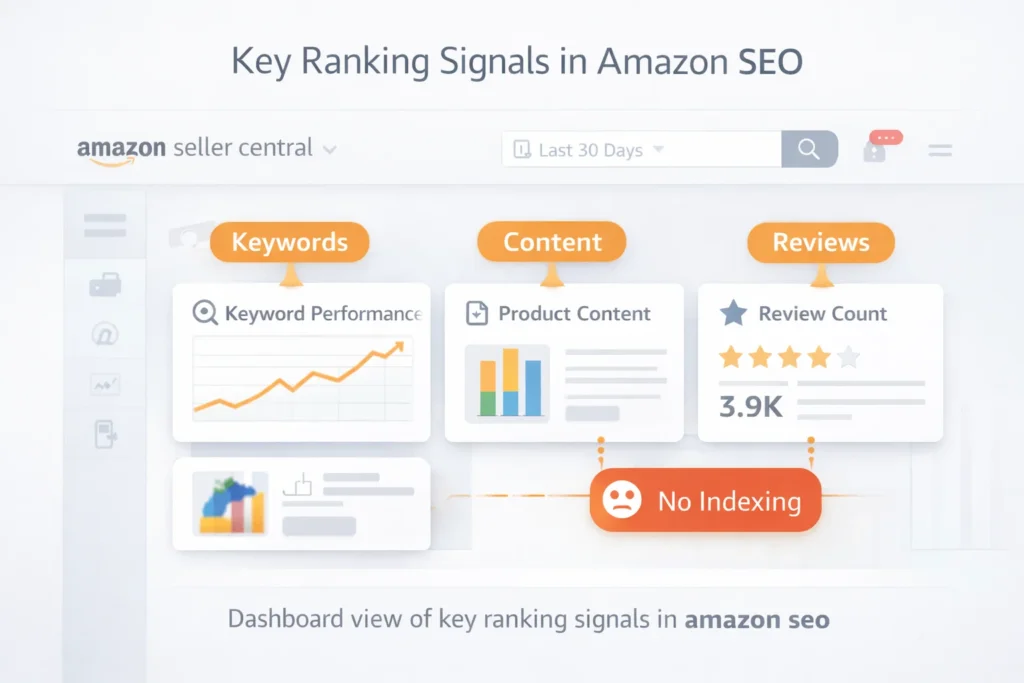
Many sellers struggle with amazon seo even after finding good keywords. You may rank nowhere despite strong research and effort. Therefore, you must understand what really blocks your listing from visibility.
Table of Contents
- Why Amazon SEO Fails Even with Good Keywords
- Understanding Amazon Indexing Issues
- Core Amazon Ranking Factors You Must Know
- Common Amazon SEO Mistakes Sellers Make
- Complete Listing Optimization Amazon Guide
- How to Track and Fix Performance Issues
- Frequently Asked Questions
- Conclusion
Why Amazon SEO Fails Even with Good Keywords
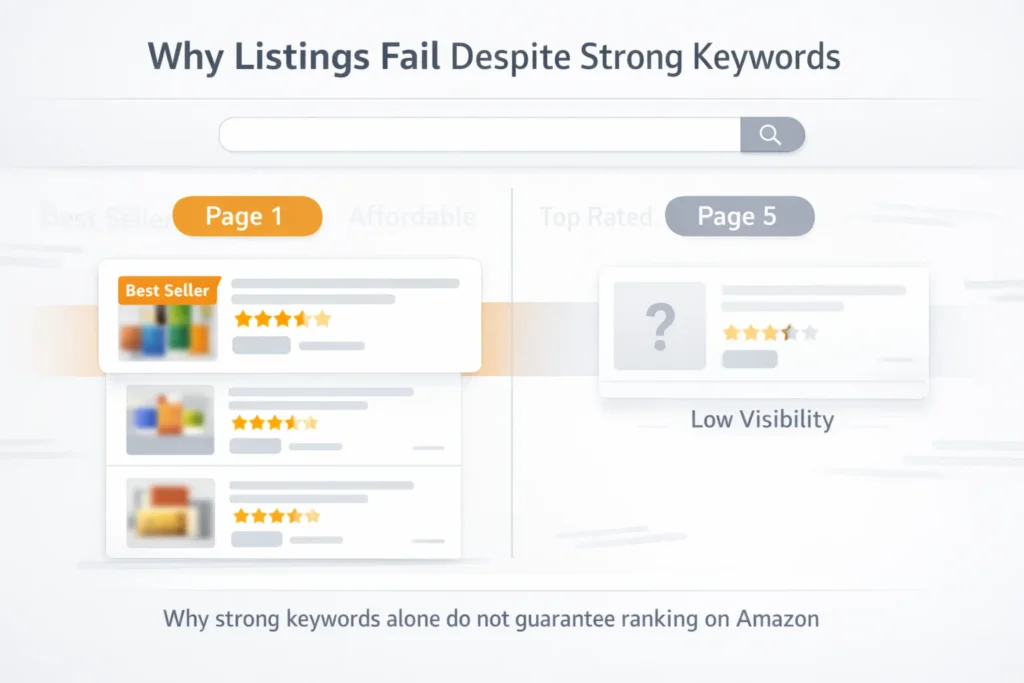
Firstly, keywords alone do not guarantee ranking. Amazon uses behavior data to decide visibility. Therefore, listings without sales rarely move up.
Secondly, poor listing structure weakens your relevance. Even strong keywords fail without proper placement. As a result, your product stays hidden.
Most importantly, conversion rate plays a huge role. If shoppers do not buy, rankings drop quickly. In contrast, high conversions boost visibility.
- Low click through rate reduces exposure
- Poor images lower buyer trust
- Weak copy reduces conversions
- Incorrect keyword placement hurts relevance
Warning: Good keywords without sales signals will not rank your listing.
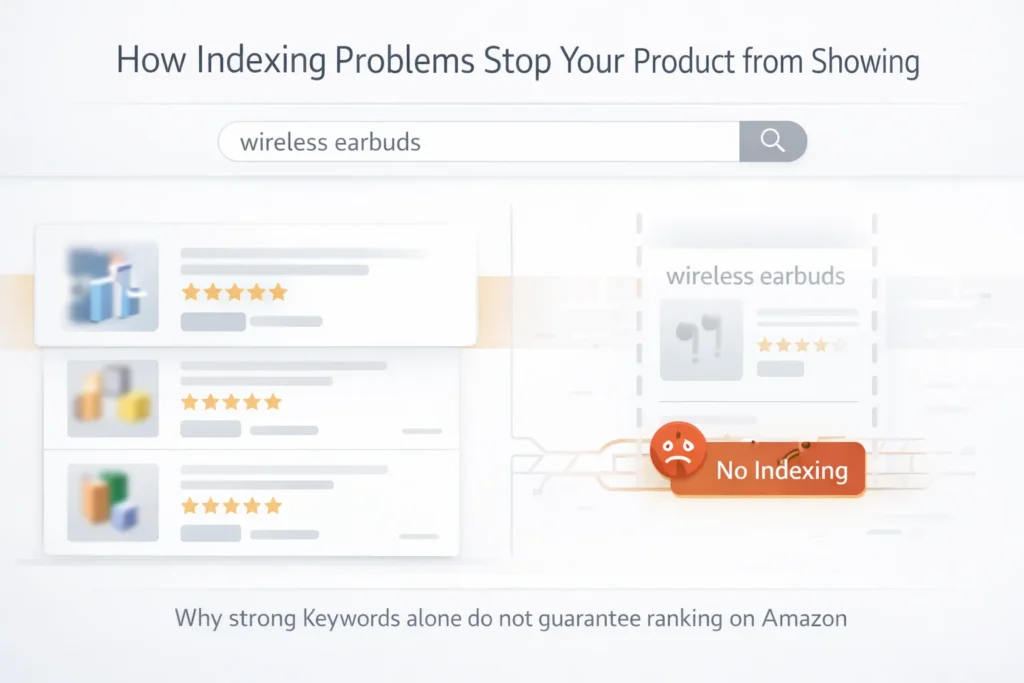
Understanding Amazon Indexing Issues
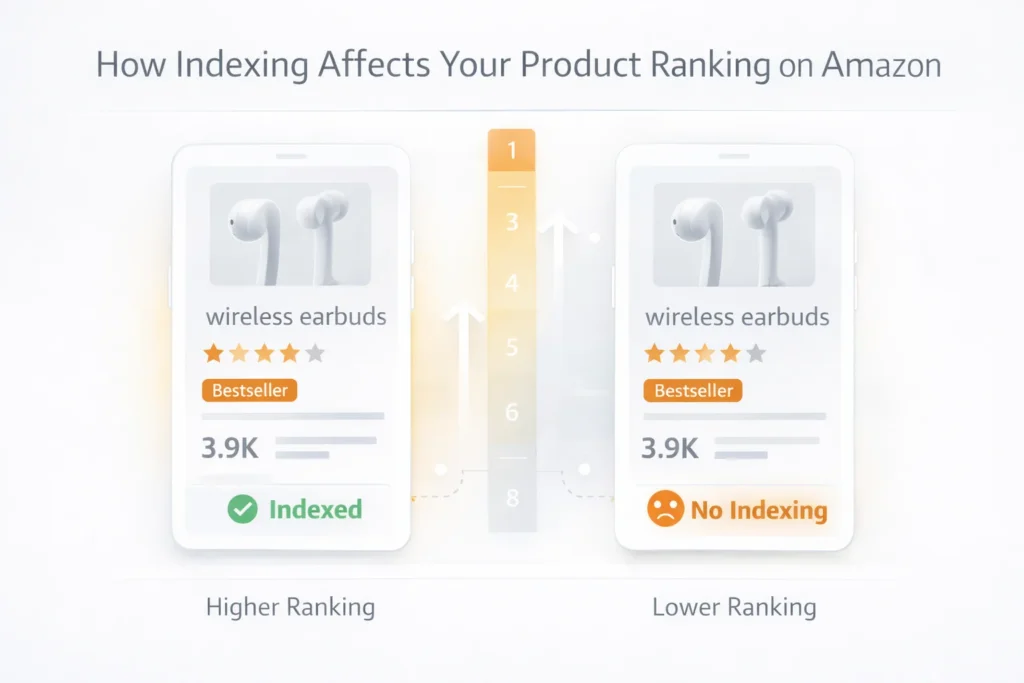
Amazon indexing issues happen when your product does not appear for search terms. This often confuses new sellers. However, indexing and ranking are different.
Indexing means Amazon recognizes your keyword. Ranking means your position in results. Therefore, you must check both regularly.
For example, use tools or search manually on Amazon search results. This helps confirm if your product shows.
Signs of Amazon Keyword Indexing Problems
- Your product does not appear for exact keyword search
- Backend keywords do not trigger visibility
- Long tail keywords fail to index
Additionally, avoid keyword stuffing. Amazon may ignore excessive repetition. Consequently, indexing fails silently.
Pro Tip: Use short and clear keywords across title, bullets, and backend fields.
Core Amazon Ranking Factors You Must Know
Amazon ranking factors go beyond keywords. The algorithm focuses on performance data. Therefore, you must optimize for sales.
Main Ranking Signals
- Sales velocity over time
- Click through rate from search
- Conversion rate on listing
- Customer reviews and ratings
In addition, pricing impacts conversions. Competitive pricing improves performance. As a result, your ranking improves.
You can learn more about listing strategy through our Services page.
Relevance vs Performance
Relevance comes from keywords and content. Performance comes from sales and engagement. Therefore, both must align.
| Factor | Impact on Ranking | Control Level |
|---|---|---|
| Keywords | Medium | High |
| Sales | Very High | Medium |
| Conversion Rate | High | High |
| Reviews | High | Low |
Table: Key amazon ranking factors explained
Common Amazon SEO Mistakes Sellers Make
Many sellers repeat the same amazon seo mistakes. These errors block growth even with good keywords. Therefore, fixing them improves results fast.
- Ignoring backend search terms
- Using irrelevant keywords
- Poor product images
- Weak Product Titles
In addition, duplicate keywords waste space. Amazon reads variations automatically. Consequently, you lose indexing opportunities.
For example, review competitor listings on Amazon best sellers. This helps identify gaps.
Complete Listing Optimization Amazon Guide
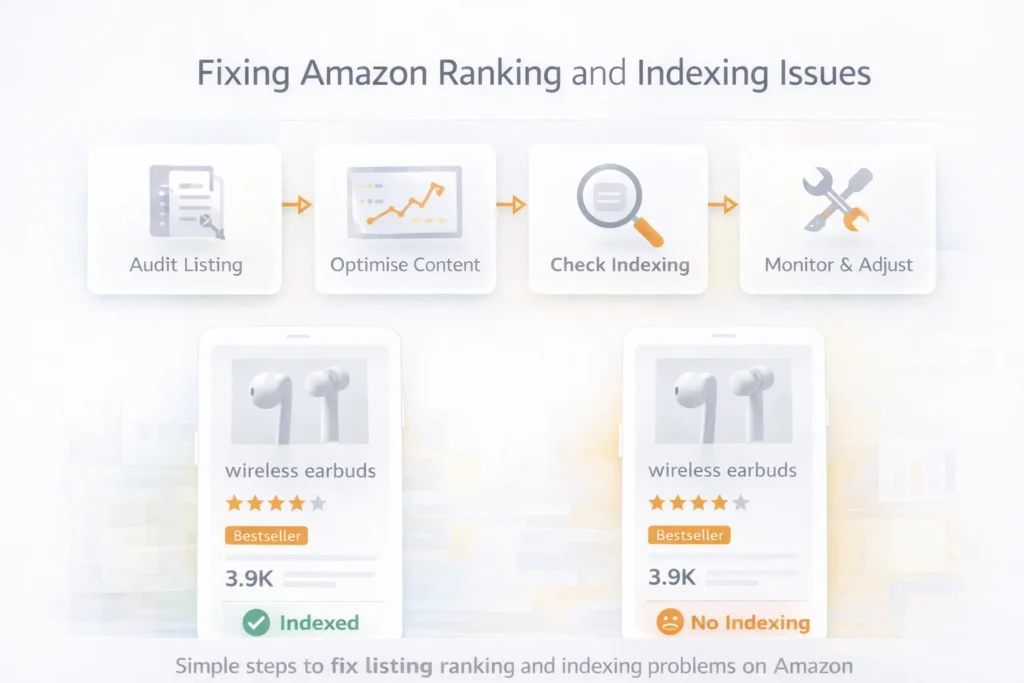
Listing optimization amazon requires structure and clarity. Every section must support conversions. Therefore, optimize each element carefully.
Key Areas to Optimize
- Title with primary keywords
- Bullet points focused on benefits
- High quality images
- Backend keyword field
Additionally, keep sentences simple and clear. Buyers scan quickly. As a result, clarity increases conversions.
Step by Step Optimization
- Research keywords and search intent
- Place main keywords in title
- Add secondary keywords in bullets
- Use backend for extra terms
- Improve images and A Plus Content
You can also explore our Services for full optimization support.
Pro Tip: Focus on conversion rate first, ranking follows naturally.
How to Track and Fix Performance Issues
Tracking helps you improve amazon seo results. Without data, you cannot fix problems. Therefore, monitor metrics daily.
- Track keyword ranking positions
- Monitor click through rate
- Check conversion rate changes
- Analyze competitor performance
Finally, test changes regularly. Small updates can improve results fast. Consequently, consistent optimization wins.
Frequently Asked Questions
Why is my Amazon Listing not ranking?
Your listing may lack sales or conversions. Amazon prioritizes performance data over keywords. What are amazon indexing issues?
These occur when your product does not appear for keywords. It means Amazon does not recognize your terms. How do I improve amazon keyword indexing?
Use keywords in title, bullets, and backend fields. Keep them relevant and avoid repetition. Does listing optimization amazon improve ranking?
Yes, better structure improves conversion rate. This leads to higher rankings over time. What are common amazon seo mistakes?
Sellers often ignore conversions, overuse keywords, and use weak images.
Ready to grow your Amazon business?
Get a free strategy call with Advertpreneur.Book Your Free Consultation
Conclusion
Amazon seo requires more than keywords. You must focus on conversions, indexing, and performance signals. Therefore, build listings that sell, not just rank.
In addition, avoid common amazon seo mistakes. Fix indexing issues and improve content structure. As a result, your rankings will improve steadily.
Finally, stay consistent with testing and optimization. Amazon rewards sellers who improve performance over time. Focus on results and growth will follow.
What is Amazon SEO?
Amazon SEO (Search Engine Optimization) is the process of optimizing product listings to rank higher in Amazon’s internal search results. When a shopper types a query into the Amazon search bar, Amazon’s A10 algorithm scans millions of listings and ranks them based on relevance, conversion history, and seller performance. Amazon SEO is the practice of aligning your listing with what the A10 algorithm rewards.
Amazon SEO is different from Google SEO. While Google optimizes for information, Amazon’s search engine optimizes for purchases. Every ranking signal Amazon weighs is tied to the likelihood that a listing will convert.
Why Amazon SEO Matters for US Sellers
More than 70% of Amazon shoppers never scroll past the first page of search results. For US sellers competing in crowded categories, appearing on page 1 is the difference between generating sales daily and going unnoticed. Amazon SEO is the organic, sustainable path to page 1 — without paying for every click.
How the Amazon A10 Algorithm Works
Amazon’s A10 algorithm (the successor to A9) ranks products based on several weighted signals:
- Click-Through Rate (CTR) — How often shoppers click your listing when it appears in search results. Your main image and title drive CTR.
- Conversion Rate (CVR) — The percentage of visitors who purchase. This is the most heavily weighted signal in A10.
- Sales Velocity — How many units you sell per day. Higher velocity signals demand and pushes rankings higher.
- Relevance — How closely your title, bullets, description, and backend keywords match the shopper’s query.
- Seller Authority — Your account health, review count, and feedback score.
- External Traffic — Traffic from outside Amazon (Google, social media) that converts on your listing now carries positive ranking weight in A10.
The 5 Core Elements of Amazon SEO
1. Keyword Research Keyword research is the foundation. Use tools like Helium 10’s Magnet or Jungle Scout’s Keyword Scout to identify high-volume, relevant search terms. Focus on: primary keywords (highest volume), secondary keywords (supporting terms), and long-tail keywords (lower competition, higher buyer intent).
2. Title Optimization Your Amazon product title is the most important SEO field. It should include your primary keyword within the first 80 characters, your brand name, key product attributes (size, color, material), and a conversion hook. Amazon allows up to 200 characters for most categories.
3. Bullet Points The five bullet points serve a dual purpose: keyword indexing for the algorithm and conversion copy for the shopper. Each bullet should start with a benefit keyword, not a feature. For example: “WATERPROOF PROTECTION: Sealed lining keeps contents dry in heavy rain” outperforms “Made from waterproof materials.”
4. Backend Search Terms The backend search term field (up to 250 bytes) is invisible to shoppers but indexed by Amazon. Include synonyms, alternate spellings, Spanish-language terms for US Hispanic buyers, and related search terms that didn’t fit in the visible copy.
5. A+ Content A+ Content (formerly Enhanced Brand Content) replaces the standard product description for Brand Registry members. It adds rich images, comparison charts, and brand storytelling. Amazon reports that A+ Content increases conversion rates by an average of 3-10%, and higher conversions directly improve organic rankings.
Amazon SEO vs Google SEO: Key Differences
| Factor | Amazon SEO | Google SEO |
|---|---|---|
| Primary goal | Purchase conversion | Information retrieval |
| Main ranking signal | Conversion rate + sales velocity | Backlinks + content authority |
| Timeframe for results | 2-6 weeks | 3-12 months |
| Keyword research tools | Helium 10, Jungle Scout, Brand Analytics | Ahrefs, Semrush, Google Keyword Planner |
| Content format | Titles, bullets, backend terms | Blog posts, pages, schema |
| External traffic impact | Positive (A10 rewards it) | Core requirement |
Common Amazon SEO Mistakes
- Keyword stuffing titles with commas and symbols (Amazon penalizes this)
- Ignoring the backend search terms entirely
- Writing bullets as feature lists instead of benefit-driven copy
- Using competitor brand names in backend terms (against Amazon TOS)
- Not updating listings when seasonal keywords shift
- Neglecting images — low CTR from poor images tanks SEO regardless of keyword quality
How Long Does Amazon SEO Take?
Most sellers see movement in rankings within 2-6 weeks of a full listing optimization. Sales velocity and conversion rate improvements are the fastest path to accelerated ranking. Pairing Amazon SEO with a PPC campaign during the initial launch period drives the sales velocity needed to push the algorithm faster.
FAQ: Amazon SEO
What is the difference between Amazon SEO and Amazon PPC? Amazon SEO improves your organic (unpaid) ranking through listing optimization. Amazon PPC (Pay-Per-Click) pays for ad placement in search results. They work best together: PPC drives immediate visibility and sales velocity while SEO builds sustainable long-term ranking.
Do I need Brand Registry for Amazon SEO? No — any seller can optimize titles, bullets, and backend keywords. However, Brand Registry unlocks A+ Content, which significantly improves conversion rates and supports SEO indirectly.
How many keywords should I target? Focus on 3-5 primary keywords for your title and bullets. Use your remaining keyword variations in the backend search terms. Quality and relevance matter more than quantity.
Can I hire an agency for Amazon SEO? Yes. A specialized Amazon SEO agency like advertpreneur conducts keyword research, writes optimized listings, and monitors ranking changes on your behalf. Get a free consultation here.