Why shopify-vs-wordpress-2026/”>your-products-on-page-1-in-2025/”>amazon marketplace Growth Outside Amazon Matters in 2026

The amazon marketplace no longer sits inside one store alone. Instead, Amazon now pushes its tools across the wider web. For sellers, that shift creates fresh reach, but also fresh risk. Therefore, you need a plan before bigger brands move first.
Table of Contents
- Why amazon marketplace is changing
- What Amazon is building outside its store
- Why this move matters for sellers
- The risks of staying Amazon only
- What sellers should do now
- A simple plan for 2026
- Reference points from Amazon and Shopify
- Frequently Asked Questions
- Conclusion
Why amazon marketplace is changing
Firstly, Amazon wants a larger share of online demand. It no longer wants to win only inside its own walls.
Secondly, brands want more control over traffic and customer data. So Amazon built tools that work beyond the main store.
Thirdly, customer trust already sits with Amazon. Therefore, Amazon can turn that trust into a wider service business.
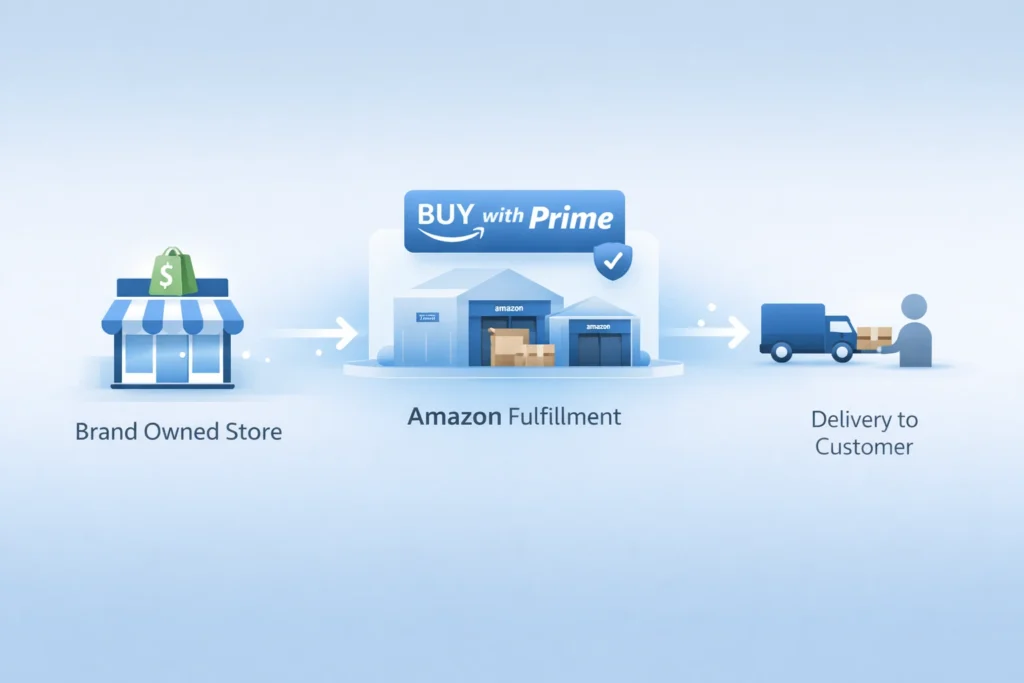
That move changes how the amazon marketplace fits your growth plan. In other words, Amazon now acts like a sales channel and a logistics layer.
- Amazon can power checkout on brand owned sites.
- Amazon can ship orders from one inventory pool.
- Amazon can support growth across more channels.
Pro Tip: Treat Amazon as a profit channel and a support system. Build both at the same time.
Many sellers still think in old terms. However, 2026 needs a wider view.
If you only watch ranking inside the amazon marketplace, you miss the bigger shift. Meanwhile, stronger brands build reach across many touchpoints.
What Amazon is building outside its store
To begin with, Amazon offers Buy with Prime for brand sites. That tool adds Prime perks to direct sales pages.
Next, Amazon offers Multi Channel Fulfillment, often called MCF. That service ships orders from channels beyond Amazon.
In addition, Amazon now has a Shopify app for both tools. So sellers can connect store orders with Amazon fulfillment.
You can read more about Amazon Multi Channel Fulfillment for ecommerce brands. Also, Shopify explains setup in its guide for selling with Amazon tools on Shopify.
Buy with Prime changes the buying moment
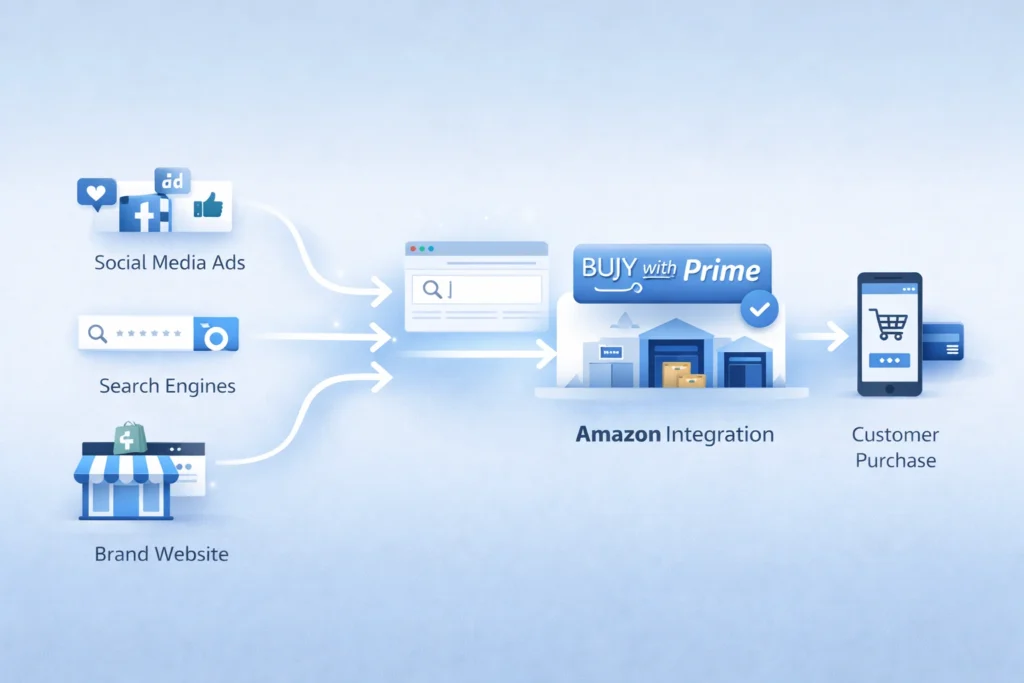
For instance, amazon buy with prime gives shoppers a familiar option. That can reduce doubt on a brand owned store.
As a result, Amazon can help brands convert traffic they already own. But the sale does not need to start inside Amazon.
MCF changes the fulfillment model
Similarly, MCF lets brands use Amazon stock for outside orders. That means one pool can serve many channels.
In fact, Amazon states MCF works for businesses that do not sell on Amazon. So the service reaches beyond the amazon marketplace itself.
Shopify links the two worlds
Specifically, the new app supports shopify amazon integration inside Shopify admin. Therefore, more sellers can test Amazon tools without leaving their core store. :contentReference[oaicite:6]{index=6}
That matters because many private label brands already use Shopify. So Amazon now meets them where they work.
Table: Amazon tools now serve more than one sales path.
| Tool | Main job | Where it helps | What sellers gain |
|---|---|---|---|
| Buy with Prime | Boosts trust and speed at checkout | Brand owned site | Higher chance of conversion |
| MCF | Ships non Amazon orders | Shopify and other channels | One stock pool, faster shipping |
| Amazon app for Shopify | Connects orders and setup | Shopify admin | Smoother daily operations |
Why this move matters for sellers
Most importantly, this move changes seller economics. You can now keep Amazon strengths without keeping all sales inside Amazon.
That opens a real amazon multi channel strategy. In other words, you can use Amazon where it helps, then own more of the customer journey elsewhere.
- Keep fast fulfillment without full marketplace dependence.
- Build a brand site with better customer control.
- Spread risk across channels and traffic sources.
However, this shift also raises the bar. Basic sellers will struggle because strong brands will move faster.
For example, one brand may rank on Amazon, run ads on Meta, and close sales on Shopify. Meanwhile, Amazon still fulfills those orders in the background.
That is an ecommerce omnichannel strategy in simple terms. You meet the buyer on many paths, but you keep the brand story strong.
If you want that kind of growth, fix your store basics first. Then Improve Your Amazon SEO so your catalog can pull demand from search.
Also, you need clean ad data to guide budget moves. So sharpen your Amazon PPC before you expand traffic.
Warning: More channels do not solve weak offers. Poor listings and weak margins still hurt growth.
The risks of staying Amazon only
Firstly, one channel can change your costs fast. A fee shift or ad spike can hit profit hard.
Secondly, one channel can limit brand memory. Many buyers remember Amazon first, not your brand.
Thirdly, one channel can limit customer data. So repeat sales get harder over time.
In contrast, sellers who sell outside amazon platform can build email lists and repeat demand. They can also test offers with more freedom.
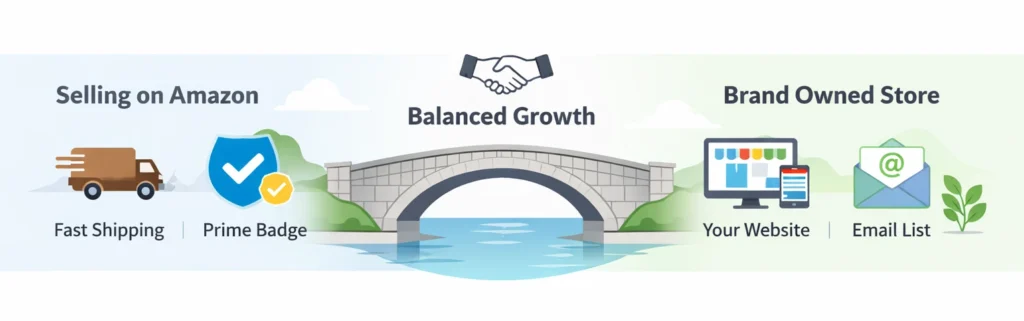
Still, you should not quit the amazon marketplace. Instead, you should stop treating it as your only home.
- Keep Amazon for search demand and trust.
- Use your own site for retention and bundles.
- Use outside traffic to lower total dependence.
That balance matters most in 2026. As a consequence, smart brands build both reach and control.
What sellers should do now
To clarify, you do not need a huge team. You need a clear order of moves.
1. Audit your catalog
Firstly, find products with steady reviews and good margins. Those items work best for wider expansion.
Next, check stock depth and shipping cost. You cannot scale if your core SKUs run thin.
2. Build a store that can convert
Secondly, fix your product pages before new traffic arrives. Add better photos, clear copy, and stronger proof.
For instance, show use cases, FAQs, and simple comparisons. That helps when buyers do not start inside the amazon marketplace.
3. Test Amazon powered fulfillment
Thirdly, review whether MCF fits your margins. Then test one small group of SKUs first.
You can start with the official page for fulfillment across multiple sales channels. Also, Amazon states MCF can fulfill in as fast as two days.
4. Add Buy with Prime where it helps
Additionally, use amazon buy with prime for items that need trust fast. This often works well for known hero products.
But do not force it on every SKU. Instead, test where the lift can cover the added cost.
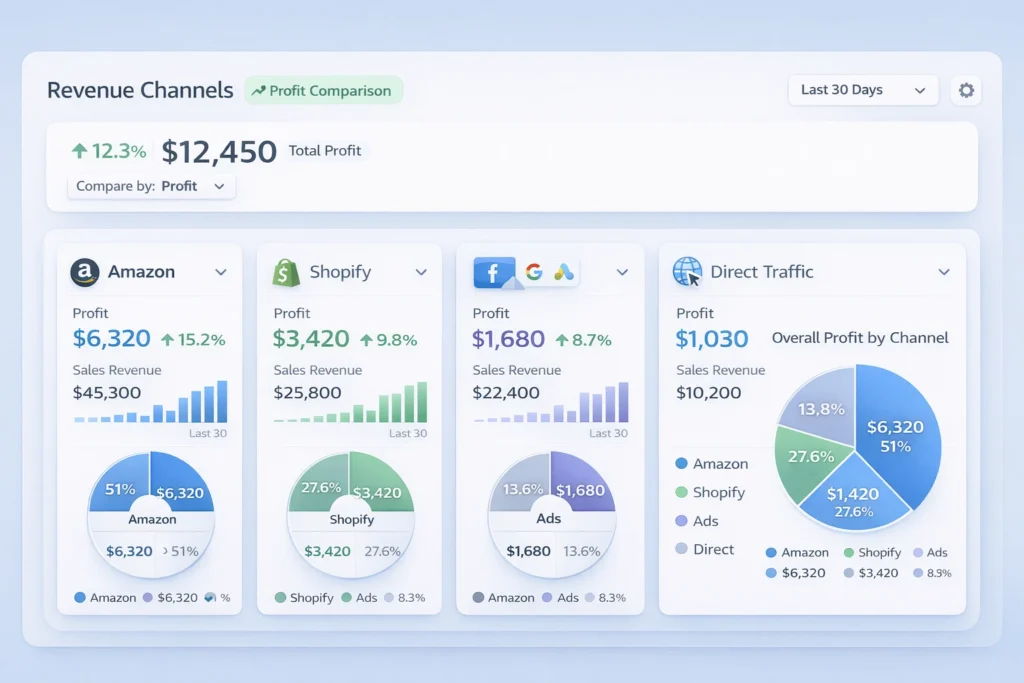
5. Track profit by channel
Most importantly, split reports by source. Otherwise, you will scale vanity sales and miss real profit.
Look at ad spend, refund rate, and repeat rate. Then compare each channel with Your Amazon marketplace results.
A simple plan for 2026
Above all, keep the plan simple. Complexity kills speed for small teams.
Phase one, fix the base
- Improve listing copy and images.
- Clean your PPC waste.
- Protect margin on core SKUs.
Phase two, expand one sales path
- Launch one strong product on Shopify.
- Test shopify amazon integration for operations.
- Send a small traffic batch to that page.
Phase three, widen the system
- Add bundles for your direct site.
- Collect email and SMS leads.
- Retarget visitors who do not buy first.
Finally, build process before scale. That means fewer surprises as orders rise.
In short, the best 2026 plan uses Amazon in two ways. It wins demand inside the amazon marketplace, and support outside sales too.
What good execution looks like
A strong brand ranks on Amazon and runs clean ads. Then it sends outside traffic to pages built to convert.
Meanwhile, the team watches profit by SKU and channel. Therefore, budget shifts follow real numbers.
- Pick one hero SKU.
- Build one strong landing page.
- Test one outside traffic source.
- Measure repeat buyers after thirty days.
Reference points from Amazon and Shopify
Amazon says its Shopify integration can sync orders, products, and returns in Shopify admin. It also says sellers can use the same Amazon inventory for Shopify orders.
Shopify says merchants in the United States can import and fulfill Shopify orders through the Amazon MCF and Buy with Prime app. It also outlines setup steps in Shopify admin.
Recent reporting also says Amazon has tested Prime shipping on outside sites without an Amazon login for some merchants. That points to an even wider push beyond the core amazon marketplace.
These points matter because they show direction, not hype. Amazon wants a bigger role in commerce infrastructure.
Frequently Asked Questions
Why is Amazon moving beyond its main store?
Amazon wants more order flow, more merchant ties, and more logistics volume. So it now supports sales outside its core store too. Does this mean Amazon Sellers need Shopify now?
No, but many sellers should test a brand site. That gives more control over repeat sales and customer data. What is amazon buy with prime in simple terms?
It adds Prime style delivery and checkout trust to your own site. As a result, some shoppers feel safer buying direct. Can brands use MCF if they do not sell on Amazon?
Yes. Amazon states MCF is open to businesses that do not sell on Amazon. Should I leave the amazon marketplace and focus only on my site?
No. Keep Amazon as a core channel. Then build your own site so you gain more control and reduce channel risk. What is the first step for private label brands?
Ready to grow your Amazon business?
Get a free strategy call with Advertpreneur.Book Your Free Consultation
Conclusion
The amazon marketplace still matters, but its role has changed. It now acts as a store, a trust layer, and a shipping engine.
Therefore, sellers who adapt early can win more control and better reach. They can keep Amazon strengths while building direct brand value.
To conclude, do not wait for the shift to become obvious. Build your amazon multi channel strategy now, test smart, and grow with intent.
How shopify ChatGPT integration Is Changing Online Shopping in 2026
 amazon-ppc-optimization-with-ai/”>with product recommendations” class=”wp-image-7052″ />
Shopify ChatGPT integration is changing how people discover and buy products. Today, buyers ask questions instead of searching pages.
Firstly, this shift impacts every Shopify store owner. Secondly, it changes how Amazon sellers think about traffic.
Table of Contents
- <a href="#what-is-shopify-chatgpt-integration”>What Is Shopify ChatGPT integration
- How ChatGPT Shopping Works
- Why This Matters for Sellers
- Shopify vs Amazon vs AI
- How to Optimize for AI Commerce
- Future of Ecommerce AI
- Frequently Asked Questions
- Conclusion
What Is Shopify ChatGPT integration
Firstly, Shopify ChatGPT integration connects store data with AI systems. Secondly, it allows ChatGPT to suggest products directly.
In other words, your products become part of AI conversations. That means users can find items without visiting your site.
Additionally, this shift builds on Shopify AI commerce trends. Therefore, stores must adapt fast.
- Chat based product discovery replaces search browsing
- AI product recommendations guide buyer decisions
- Users can buy products from ChatGPT in some cases
Pro Tip: Focus on clear product data. AI tools rely on structured content.
How ChatGPT Shopping Works
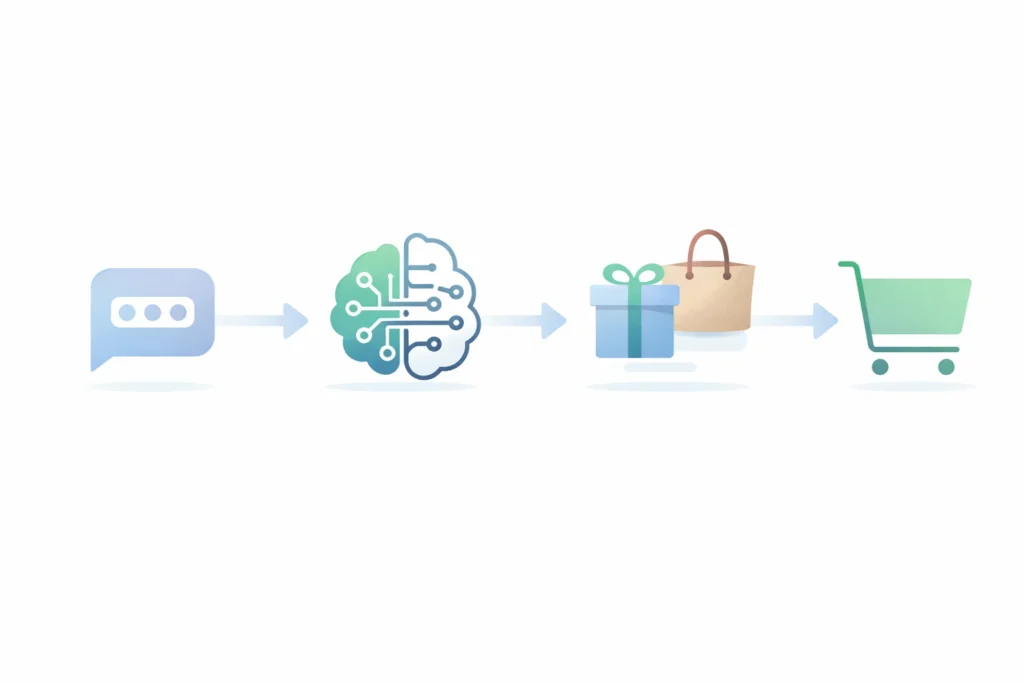
To begin with, the ChatGPT shopping feature works on intent. Users ask questions instead of typing keywords.
Next, ChatGPT analyzes needs and suggests products. Then, it compares options based on relevance.

For example, a user asks for a beach bag. ChatGPT suggests Shopify products with strong data.
- User asks a question
- AI understands intent
- Products get recommended
- User clicks or buys
Meanwhile, your Shopify Website still plays a role. However, discovery shifts to AI first.
Warning: Poor product descriptions reduce visibility in AI results.
Why This Matters for Sellers
Firstly, Shopify ChatGPT integration reduces reliance on ads. Secondly, it opens a new traffic channel.
As a result, sellers gain exposure without high ad costs. That means better margins over time.
- Lower cost of customer acquisition
- Higher conversion from AI recommendations
- Better reach for niche products
In fact, many sellers still ignore this shift. Therefore, early adopters gain an edge.
Additionally, AI commerce insights show rising adoption. So demand will grow fast.
Shopify vs Amazon vs AI
Firstly, Amazon controls search based buying. Secondly, Shopify builds brand identity.
However, AI acts as a decision layer. That means it sits between user and product.
| Platform | Main Role | Strength | Weakness |
|---|---|---|---|
| Amazon | Marketplace | High intent buyers | High competition |
| Shopify | Brand store | Full control | Traffic challenge |
| ChatGPT | Decision engine | AI product recommendations | Still evolving |
Table: Comparison of ecommerce platforms and AI role
How to Optimize for AI Commerce
Firstly, optimize Product Titles with clear intent. Secondly, use simple language.
Additionally, improve descriptions for AI understanding. That means fewer buzzwords.
- Use structured bullet points
- Answer common buyer questions
- Add real use cases
Meanwhile, your Shopify Website must stay clean. Therefore, focus on user experience.
In contrast, keyword stuffing fails in AI systems. Instead, write for clarity.

Future of Ecommerce AI
Firstly, the future of ecommerce AI will rely on conversations. Secondly, search will decline.
As a result, brands must adapt to AI visibility. That means building strong product signals.
- AI will replace search for many users
- Recommendations will drive most purchases
- Websites will support final conversion
In fact, users already prefer quick answers. Therefore, ChatGPT becomes a buying assistant.

Frequently Asked Questions
What is Shopify ChatGPT integration?
It connects Shopify stores with AI tools. Users can discover products through chat. Can users buy products from ChatGPT?
Yes, in some cases users can buy products from ChatGPT directly or via links. How does the ChatGPT shopping feature work?
It uses user intent and data to show relevant products quickly. Why is Shopify AI commerce important?
It reduces dependency on ads and improves product discovery. What is the future of ecommerce AI?
AI will guide buying decisions. Search engines will play a smaller role.
Ready to grow your Amazon business?
Get a free strategy call with Advertpreneur.Book Your Free Consultation
Conclusion
Shopify ChatGPT integration is not a trend. It is a shift in how people shop.
Therefore, Sellers Must adapt fast. Otherwise, they risk losing visibility.
Finally, those who act early will gain the most. AI driven commerce will define the next decade.
Best with-ai/”>free wordpress themes That Keep your Site fast
Firstly, wordpress themes can make or break your site speed. Secondly, new site owners often pick heavy themes and slow everything down.
Therefore, you need smart choices from the start. As a result, you save time, money, and ranking potential.
Table of Contents
- Why Speed Matters for wordpress themes
- What Makes wordpress themes Fast
- Best Free wordpress themes in 2026
- Theme Comparison Table
- How to Choose the Right Theme
- Common Mistakes to Avoid
- Frequently Asked Questions
- Conclusion
Why Speed Matters for wordpress themes
Firstly, speed affects user experience right away. Secondly, slow pages make users leave fast.
Therefore, Google ranks faster sites higher. As a result, you gain more traffic without extra cost.
- Firstly, fast sites keep users longer
- Secondly, they reduce bounce rate
- Additionally, they improve SEO rankings
- Finally, they boost conversions
In fact, most beginners ignore this early. However, fixing speed later costs more time.
What Makes wordpress themes Fast
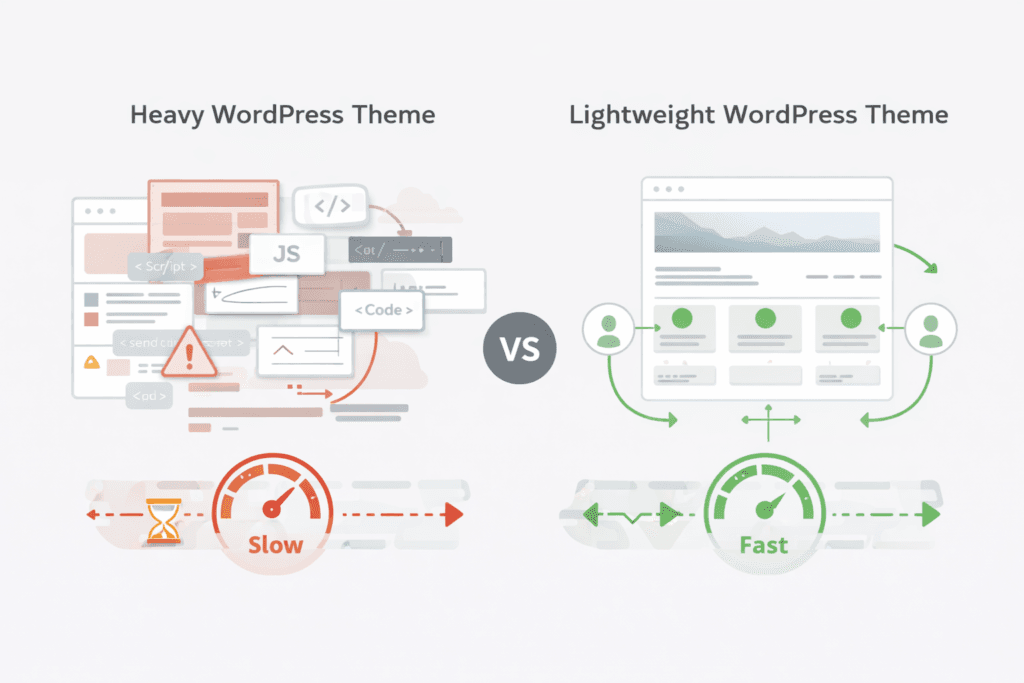
Firstly, lightweight wordpress themes use clean code. Secondly, they avoid heavy scripts and extra files.
Therefore, pages load faster and smoother. As a result, users enjoy a better experience.
- Minimal design structure
- Clean CSS and JS files
- Fewer plugin dependencies
- Optimised mobile layout
Meanwhile, fast wordpress themes also support caching tools. Similarly, they work well with CDN setups.
Pro Tip: Always test your theme with PageSpeed Insights before final use
Best Free wordpress themes in 2026
Firstly, not all wordpress themes perform equally well. Secondly, some free options still deliver great speed.
Astra
Firstly, Astra loads very fast out of the box. Secondly, it works well with most builders.
GeneratePress
Secondly, GeneratePress focuses on clean code. Therefore, it offers one of the best speed scores.
Neve
Thirdly, Neve works well for Small Businesses. As a result, it supports mobile-first design.
Hello Theme
Additionally, Hello works best with Elementor users. However, it stays very lightweight.
For example, you can explore more options on WordPress theme directory. Similarly, real user feedback appears on WordPress Reddit discussions.
Theme Comparison Table
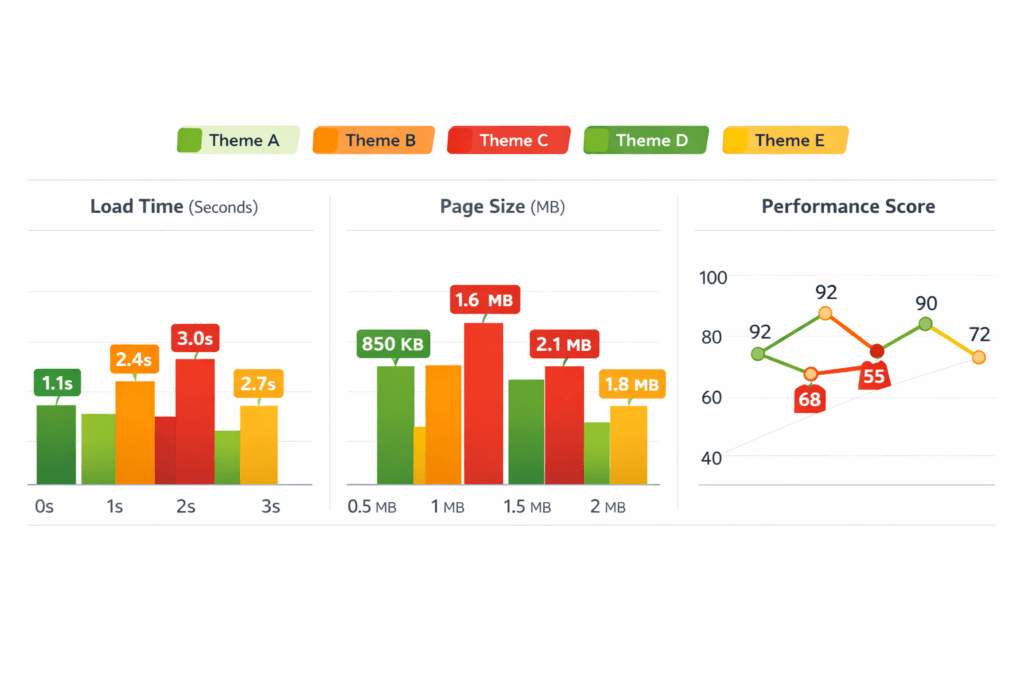
| Theme | Speed | Ease of Use | Best For |
|---|---|---|---|
| Astra | Very Fast | Easy | Beginners |
| GeneratePress | Very Fast | Moderate | Bloggers |
| Neve | Fast | Easy | Small Business |
| Hello | Very Fast | Advanced | Elementor Users |
Table: Comparison of popular fast wordpress themes
How to Choose the Right Theme
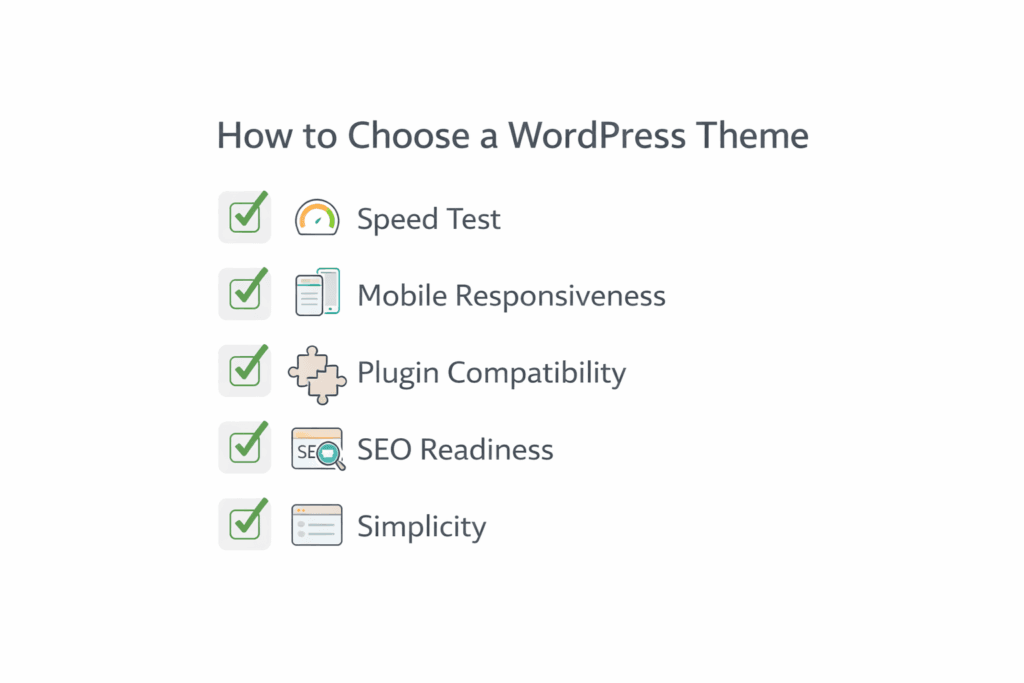
Firstly, define your goal before picking wordpress themes. Secondly, match the theme to your site type.
- Choose a lightweight base
- Test demo speed
- Check mobile design
- Review plugin support
In addition, always think about long term use. Therefore, avoid themes that lock you in.
If you want expert help, check our WordPress Website service for better setup.
Warning: Heavy themes can slow your site even with strong hosting
Common Mistakes to Avoid
Firstly, many users pick themes based on design only. Secondly, they ignore speed and SEO.
- Installing too many plugins
- Using bloated page builders
- Ignoring mobile performance
- Not testing theme demos
However, SEO friendly themes wordpress improve ranking chances. As a result, your site grows faster.
Frequently Asked Questions
Which wordpress themes are best for beginners?
Firstly, Astra and Neve work best for beginners. Secondly, they offer easy setup and fast speed. Are free wordpress themes good for SEO?
Yes, many free themes support SEO well. However, you must still optimise your content. Do wordpress themes affect site speed?
Yes, themes directly affect loading time. Therefore, choose lightweight options always. Can I change wordpress themes later?
Yes, you can switch themes anytime. However, layout changes may affect your design. What are lightweight wordpress themes?
These themes use minimal code and design. As a result, they load faster and perform better.
Ready to grow your Amazon business?
Get a free strategy call with Advertpreneur.Book Your Free Consultation
Conclusion
Firstly, wordpress themes play a key role in site success. Secondly, speed and simplicity should guide your choice.
Therefore, choose lightweight wordpress themes for better results. As a result, your site loads faster and ranks higher.
wordpress Website design Service Guide for WordPress 7.0
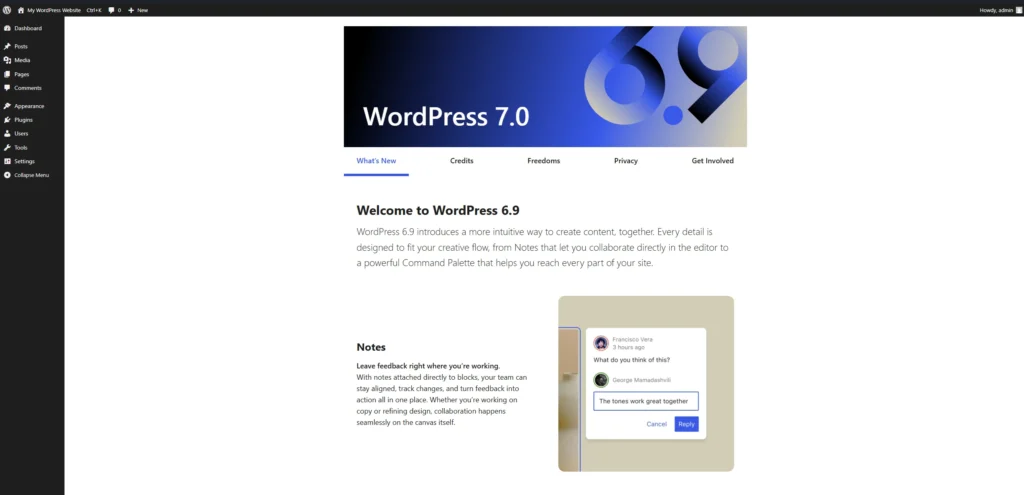
A strong WordPress Website Design Service helps businesses launch fast and scalable websites. WordPress 7.0 introduces better speed, improved editing tools, and helpful changes for ecommerce owners.
Table of contents
- What WordPress 7.0 Means for Businesses
- Important WordPress features in version 7.0
- How WordPress Supports ecommerce Websites
- Performance Improvements in WordPress 7.0
- WordPress Compared amazon-ppc-optimization-with-ai/”>with Other Platforms
- How WordPress Helps eCommerce growth
- Frequently Asked Questions
- Conclusion
 Amazon Listing optimization” class=”wp-image-6095″/>
What WordPress 7.0 Means for Businesses
Firstly, WordPress powers millions of websites across the world. Many companies depend on a WordPress Website Design Service to manage content and sales pages.
WordPress 7.0 improves the editing system and reduces page load time. As a result, business owners can publish content faster.
Additionally, developers now control layouts more easily. This change benefits agencies working on WordPress Website Design Service projects for online stores.
- Faster block editor
- Better template editing
- Improved plugin compatibility
- Cleaner site structure
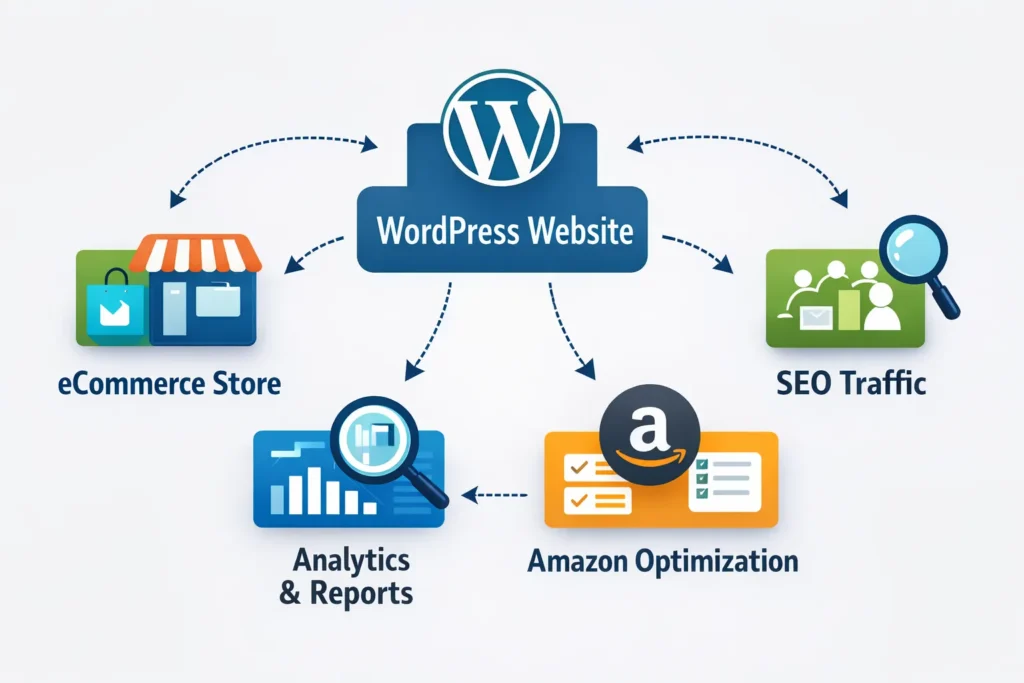
Pro Tip: Many businesses combine WordPress with Amazon Listing Optimization strategies to increase traffic and brand awareness.
Important WordPress features in version 7.0
Secondly, WordPress introduces new tools that simplify page creation. These updates help beginners and experienced developers.
For example, block patterns now offer better layout control. Therefore, website owners design pages without heavy coding.
Most importantly, improved theme editing helps agencies offering WordPress Website Design Service solutions.
Block editor improvements
The block editor now loads faster and handles large pages smoothly. Consequently, content teams publish blogs and product pages without delay.
- Better layout alignment
- Improved typography controls
- Simplified reusable blocks
Theme customization
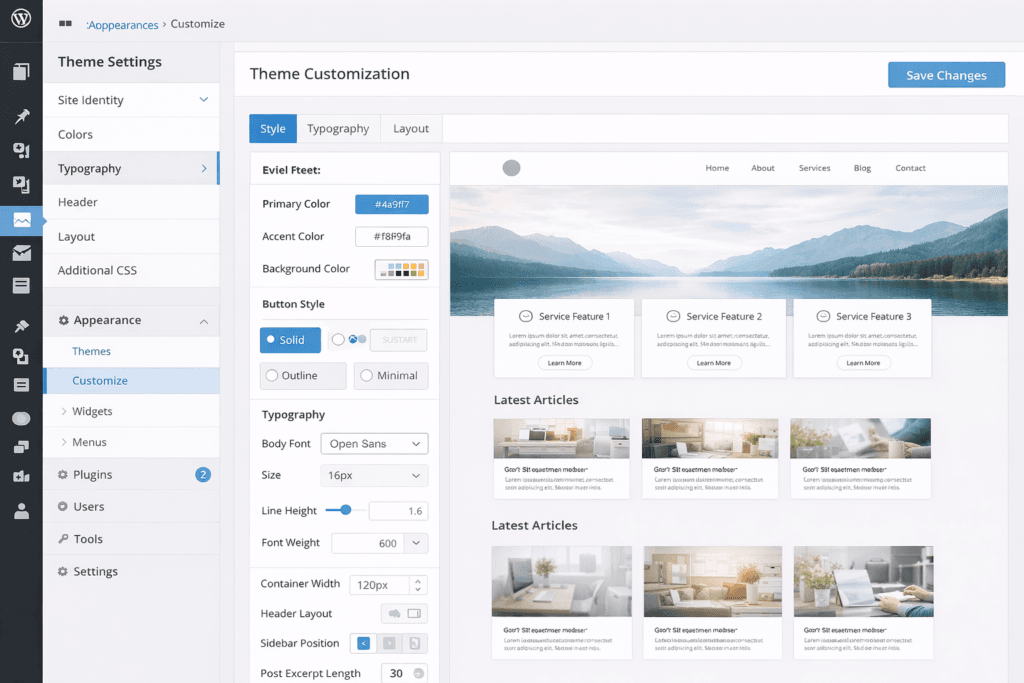
Additionally, WordPress allows easier theme editing inside the dashboard. This feature reduces reliance on external design tools.
Businesses can also adjust design sections quickly. As a result, a WordPress Website Design Service becomes faster to deliver.
Warning: Installing too many plugins can slow your site and create security risks.
How WordPress Supports ecommerce Websites
Thirdly, WordPress works well for ecommerce websites. WooCommerce allows businesses to sell products online with flexibility.
For example, sellers connect product pages with Amazon listing optimization strategies. This approach increases visibility and conversions.
Additionally, agencies offering WordPress Website Design Service often integrate payment gateways and marketing tools.
Benefits for online stores
- Flexible product catalog management
- Strong SEO capabilities
- Full design control
- Integration with marketing platforms
Many store owners also link their sites with Amazon strategies. You can request a Free Amazon Consultation to understand this approach.
Performance Improvements in WordPress 7.0
Performance matters for search ranking and user experience. WordPress 7.0 focuses heavily on loading speed.
Firstly, the system reduces unnecessary scripts. Secondly, caching support improves page delivery.
Consequently, websites load faster and provide better user experience.
Speed improvements
- Reduced database queries
- Optimized block rendering
- Better media handling
- Improved theme performance
In addition, many businesses rely on a WordPress Website Design Service to implement these improvements correctly.
WordPress Compared With Other Platforms
Some business owners compare WordPress with hosted website builders. However, WordPress provides more flexibility.
The table below highlights common differences.
Table: Comparison of website platforms
| Feature | WordPress | Hosted Website Builder |
|---|---|---|
| Design flexibility | Very high | Limited |
| Plugin ecosystem | Extensive | Restricted |
| SEO control | Strong | Moderate |
| Customization | Full control | Platform limitations |
Developers often recommend WordPress Website Design Service projects for scalable websites.
How WordPress Helps eCommerce growth
WordPress supports content marketing and product promotion. Therefore businesses use blogs to attract search traffic.
For example, companies combine educational articles with Amazon listing optimization campaigns. This approach builds authority and trust.
Additionally, WordPress integrates easily with marketing platforms and analytics tools.
- Email marketing integrations
- SEO plugins
- Analytics tracking
- Content marketing support
Businesses often publish product tutorials on YouTube video marketing channels. These videos then drive visitors back to WordPress product pages.
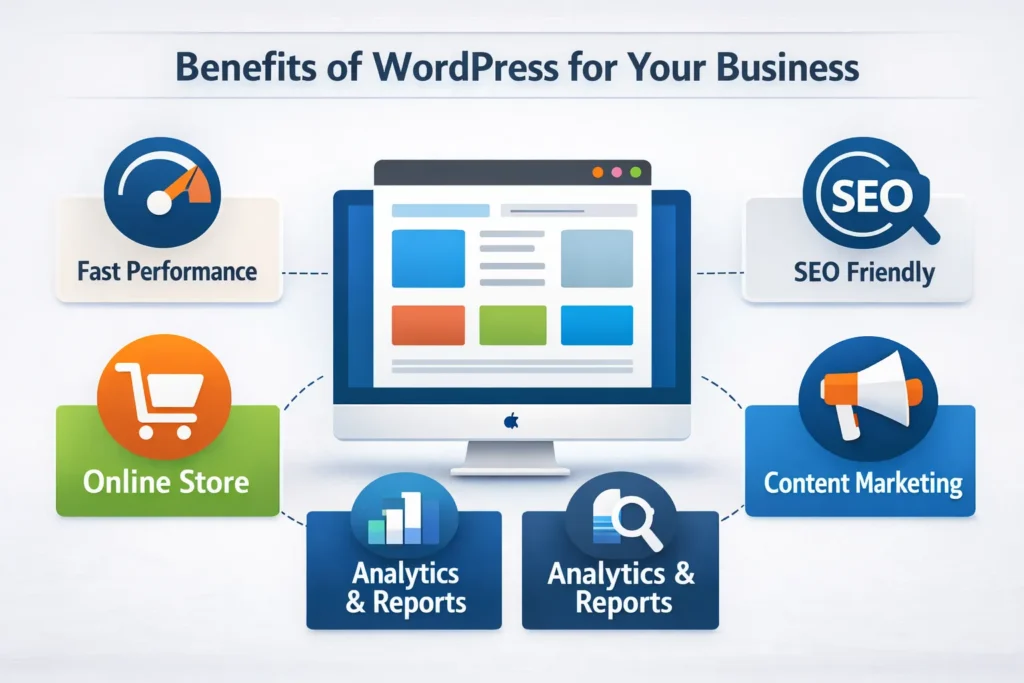
Developers also study the official WordPress documentation when planning complex websites.
Note: A professional WordPress Website Design Service ensures the site structure supports SEO and marketing goals.
Frequently Asked Questions
What is new in WordPress 7.0?
WordPress 7.0 introduces faster editing tools, improved block design features, and stronger performance optimization. Why should businesses use WordPress for ecommerce?
WordPress provides design flexibility, strong SEO tools, and integration with ecommerce systems such as WooCommerce. Does WordPress help with Amazon listing optimization?
Yes. Many businesses use WordPress content pages to support Amazon listing optimization through traffic and brand authority. How does WordPress improve eCommerce growth?
WordPress supports blogging, product pages, and SEO plugins. These tools help attract visitors and increase sales. Do businesses need a WordPress Website Design Service?
A professional WordPress Website Design Service helps businesses launch faster websites with better performance and structure.
Ready to grow your Amazon business?
Get a free strategy call with Advertpreneur. We help Amazon Sellers in Pakistan and worldwide grow faster.Book Your Free Consultation
Conclusion
WordPress continues to improve with every release. WordPress 7.0 focuses on performance, usability, and better design tools.
A professional WordPress Website Design Service helps businesses use these features effectively. As a result, websites perform better and attract more customers.
Finally, companies that combine WordPress content marketing with ecommerce strategies often see stronger growth.
Introduction
Amazon listing optimization is the foundation of Amazon success. A well-optimized listing can increase conversion rates by 30-50% and improve organic rankings, driving more sales without additional ad spend.
But most Amazon sellers make critical optimization mistakes that hurt their rankings and conversions. They focus on the wrong elements, ignore important factors, or optimize once and never update.
In this comprehensive guide, we’ll share 15 proven Amazon listing optimization strategies. These are the same techniques we use to help sellers achieve page 1 rankings and double their sales.
Why Amazon Listing Optimization Matters
The Impact:
Ranking Impact:
- Better rankings – Optimized listings rank higher
- More visibility – Appear in more searches
- Organic traffic – Free traffic from search
- Long-term growth – Sustainable rankings
Conversion Impact:
- Higher conversion rates – Better listings convert better
- More sales – Optimized = more purchases
- Lower returns – Clear expectations = fewer returns
- Better reviews – Happy customers = better ratings
Business Impact:
- Increased revenue – More sales = more profit
- Lower ACoS – Better listings = better PPC performance
- Competitive advantage – Stand out from competitors
- Brand building – Professional listings build trust
15 Amazon Listing Optimization Strategies
1. Optimize Your Product Title
Why it matters:
- Most important SEO element – Heavily weighted by algorithm
- First impression – What customers see first
- Primary ranking factor – Determines search visibility
How to optimize:
- Place primary keyword in first 50 characters
- Use all 200 characters available
- Include brand name, key features, use cases
- Add size/color/variations if applicable
- Keep it natural and readable (no keyword stuffing)
Example: ❌ Bad: “Headphones” ✅ Good: “Wireless Bluetooth Headphones, Noise Cancelling Over-Ear Headphones with 30H Battery, Hi-Fi Sound, Quick Charge, for Travel Work Home Office – Black”
2. Write Compelling Bullet Points
Why it matters:
- Second most important SEO element
- Conversion driver – Converts browsers to buyers
- Keyword placement – Secondary keyword opportunities
How to optimize:
- Lead with benefits – What’s in it for customers
- Include keywords naturally – Don’t force them
- Address pain points – Solve customer problems
- Use formatting – Bold text, line breaks
- Stay under 500 characters per bullet
- Use 5-7 bullet points – Cover all key benefits
Example: ❌ Bad: “Bluetooth connectivity” ✅ Good: “Wireless Freedom: Advanced Bluetooth 5.0 technology provides seamless connectivity up to 33 feet, perfect for workouts, commuting, or working from home. No more tangled wires or connection drops.”
3. Optimize Backend Keywords
Why it matters:
- Hidden SEO goldmine – 250 bytes for keywords
- No customer clutter – Keep listing clean
- More discoverability – Target additional terms
How to optimize:
- Use all 250 bytes – Every character counts
- No repetition – Don’t repeat title/bullet keywords
- Include synonyms – “headphones”, “earphones”, “earbuds”
- Add misspellings – Common typos
- Use long-tail keywords – Specific phrases
- Separate with commas – Clean formatting
4. Create High-Quality Product Images
Why it matters:
- 75% of shoppers influenced by images
- 30% better conversion with good images
- Reduces returns – Sets proper expectations
How to optimize:
- Use all 9 image slots – Maximum visibility
- Main image: White background, product fills 85%
- Lifestyle images – Product in use
- Infographics – Key features and benefits
- Comparison charts – Your product vs competitors
- Size guides – Help with sizing decisions
- Meet Amazon requirements – 1000px minimum, JPEG/PNG
5. Write Detailed Product Descriptions
Why it matters:
- SEO value – Additional keyword opportunities
- Conversion driver – Detailed info converts better
- Reduces questions – Answers customer queries
How to optimize:
- Natural keyword integration – Don’t stuff keywords
- Tell your brand story – Build emotional connection
- Include specifications – Technical details
- Use formatting – Paragraphs, bold, lists
- Address FAQs – Answer common questions
- Focus on benefits – What customers get
6. Add A+ Content (Enhanced Brand Content)
Why it matters:
- 5-10% conversion boost – Proven impact
- Reduces returns – Better expectations
- Brand building – Stand out from competitors
How to optimize:
- Visual storytelling – Compelling images
- Feature highlights – Key benefits showcased
- Comparison charts – Competitive advantages
- Brand story – Connect emotionally
- Mobile-optimized – 70%+ traffic is mobile
- Professional design – High-quality visuals
7. Optimize for Mobile
Why it matters:
- 70%+ of Amazon traffic is mobile
- Mobile conversion often lower
- Mobile-first indexing – Amazon prioritizes mobile
How to optimize:
- Short, scannable titles – Mobile shows fewer characters
- Clear bullet points – Easy to read on small screens
- Fast-loading images – Optimize file sizes
- Mobile-friendly A+ Content – Test on devices
- Simple navigation – Easy to use on mobile
8. Get More Customer Reviews
Why it matters:
- Social proof – Builds trust
- Ranking factor – More reviews = better ranking
- Conversion driver – Reviews increase sales
How to optimize:
- Use Amazon’s Request a Review – Automated follow-up
- Provide excellent service – Happy customers review
- Follow up with buyers – Polite request for feedback
- Respond to reviews – Show you care
- Consider Amazon Vine – Early reviews for new products
9. Optimize Pricing Strategy
Why it matters:
- Buy Box eligibility – Competitive pricing wins Buy Box
- Conversion impact – Right price = more sales
- Profitability – Balance price and margin
How to optimize:
- Research competitors – Know market prices
- Price competitively – Not always lowest
- Consider value – Quality justifies price
- Test pricing – Find sweet spot
- Monitor Buy Box – Win rate matters
10. Improve Inventory Management
Why it matters:
- Out of stock = no ranking – Can’t rank if unavailable
- Buy Box eligibility – Stock affects Buy Box
- Customer satisfaction – Fast shipping builds trust
How to optimize:
- Maintain stock levels – Never go out of stock
- FBA for Prime – Faster shipping, better ranking
- Forecast demand – Plan inventory ahead
- Monitor stock levels – Daily checks
- Quick restocking – Minimize downtime
11. Use Enhanced Brand Content Strategically
Why it matters:
- Conversion boost – 5-10% increase common
- Brand differentiation – Stand out
- Trust building – Professional appearance
How to optimize:
- Tell your story – Brand narrative
- Showcase benefits – Visual feature highlights
- Include comparisons – Competitive advantages
- Use high-quality visuals – Professional images
- Mobile-optimized – Test on devices
- Update regularly – Keep content fresh
12. Optimize for Search Intent
Why it matters:
- Better matching – Amazon shows you to right customers
- Higher conversion – Relevant traffic converts
- Better rankings – Relevance = ranking boost
How to optimize:
- Match keywords to intent – Buying vs browsing
- Use commercial keywords – “buy”, “best”, “review”
- Address search queries – Answer what customers search
- Optimize for questions – “how to”, “what is”
- Seasonal optimization – Match seasonal searches
13. Monitor and Respond to Customer Questions
Why it matters:
- Keyword opportunities – Questions reveal searches
- Conversion impact – Answered questions = more sales
- Trust building – Shows you care
How to optimize:
- Answer quickly – Within 24 hours
- Be helpful – Provide detailed answers
- Use keywords – Naturally in answers
- Address concerns – Build confidence
- Update listing – Add common Q&As to description
14. Optimize Product Variations
Why it matters:
- More visibility – Each variation can rank
- Better conversion – Customers find exact product
- Cross-selling – Show related options
How to optimize:
- Set up parent-child – Proper variation structure
- Optimize each variation – Unique titles/bullets
- Clear differentiation – Size, color, style
- Proper images – Show each variation
- Accurate attributes – Match Amazon requirements
15. Continuously Test and Optimize
Why it matters:
- Amazon changes – Algorithm updates
- Competition changes – Stay ahead
- Performance data – Learn what works
How to optimize:
- A/B test titles – Test different keywords
- Test bullet points – Different benefit focuses
- Monitor rankings – Track keyword positions
- Analyze conversion – What converts best
- Update quarterly – Regular optimization
- Test new strategies – Stay innovative
Amazon Listing Optimization Checklist
Title Optimization
Bullet Points
Backend Keywords
Images
Description & A+ Content
Reviews & Social Proof
Ongoing Optimization
Measuring Listing Optimization Success
Key Metrics:
- Keyword Rankings
- Track positions for target keywords
- Monitor weekly
- Identify improvements
- Organic Traffic
- Sessions from organic search
- Compare before/after
- Track growth
- Conversion Rate
- Sales ÷ Page Views
- Target: 10-15%+
- Higher = better optimization
- Sales Velocity
- Units sold per day/week
- Increasing = better ranking
- Monitor consistency
- Return Rate
- Returns ÷ Total Sales
- Lower = better expectations set
- Target: Under 5%
Common Listing Optimization Mistakes
1. Keyword Stuffing
❌ Mistake: “Wireless Wireless Bluetooth Bluetooth Headphones Wireless” ✅ Solution: Natural integration, readable copy
2. Ignoring Backend Keywords
❌ Mistake: Only optimizing visible content ✅ Solution: Use all 250 bytes strategically
3. Poor Images
❌ Mistake: Low-quality, few images ✅ Solution: Professional photos, use all 9 slots
4. Weak Bullet Points
❌ Mistake: Features without benefits ✅ Solution: Lead with benefits, address pain points
5. Not Updating
❌ Mistake: Set it and forget it ✅ Solution: Regular optimization based on data
6. Ignoring Mobile
❌ Mistake: Desktop-only optimization ✅ Solution: Mobile-first approach
7. No A+ Content
❌ Mistake: Missing conversion opportunity ✅ Solution: Create Enhanced Brand Content
Conclusion: Optimize for Rankings and Conversions
Amazon listing optimization is an ongoing process that requires strategic thinking, data analysis, and continuous improvement. The 15 strategies above will help you create listings that rank well AND convert browsers into buyers.
Key Principles:
- Balance SEO and conversion – Rank AND convert
- Optimize all elements – Title, bullets, images, backend
- Mobile-first – 70%+ traffic is mobile
- Test and optimize – Data-driven improvements
- Update regularly – SEO is ongoing
Remember: Optimization is never done. Amazon’s algorithm changes, competition evolves, and customer behavior shifts. Continuous optimization keeps you ahead.
Need Professional Amazon Listing Optimization?
Our Amazon listing optimization service includes comprehensive keyword research, competitor analysis, and strategic optimization of all listing elements. We’ll help you rank higher, convert better, and drive more organic sales.
Related Resources
- → Amazon PPC Basics: Simple Guide for Beginners
- → 7 Amazon Sponsored Products Strategies That Lower ACoS by 40%
- → Complete Guide to Amazon SEO: How to Rank Your Products on Page 1 in 2025
- → Amazon A+ Content: How to Create Conversion-Optimized Enhanced Brand Content
- → Amazon Keyword Research: The Ultimate Guide to Finding Profitable Keywords
- → Amazon Product Title Optimization: How to Write Titles That Rank and Convert
Introduction
Amazon SEO (Search Engine Optimization) is the cornerstone of successful Amazon selling. With over 70% of Amazon shoppers never clicking past the first page of search results, ranking on page 1 isn’t just nice to have—it’s essential for your business survival.
In this comprehensive guide, we’ll walk you through everything you need to know about Amazon SEO optimization in 2025. Whether you’re a new seller or looking to improve existing listings, these strategies will help you climb the rankings and drive more organic traffic to your products.
What is Amazon SEO and Why Does It Matter?
Amazon SEO is the process of optimizing your product listings to rank higher in Amazon’s search results. Unlike Google SEO, which focuses on external factors like backlinks, Amazon SEO is all about relevance, conversion rates, and sales velocity.
Why Amazon SEO Matters
- 70% of shoppers stay on page 1 – If you’re not ranking there, you’re missing most potential customers
- Organic traffic is free – Unlike PPC ads, ranking organically costs nothing per click
- Higher conversion rates – Organic rankings often convert better than paid ads
- Long-term sustainability – Once you rank, you can maintain it with proper optimization
Amazon SEO vs Google SEO: Key Differences
Understanding how Amazon SEO differs from Google SEO is crucial:
| Factor | Amazon SEO | Google SEO |
|---|---|---|
| Primary Focus | Sales and conversions | Content and authority |
| Ranking Factors | Keywords, sales velocity, conversion rate | Backlinks, domain authority, content quality |
| Keyword Strategy | Transactional keywords | Informational keywords |
| Optimization | Product listings, backend keywords | Blog posts, articles, technical SEO |
Amazon’s algorithm prioritizes products that sell, so your optimization must focus on conversion as much as visibility.
The 7 Pillars of Amazon SEO Optimization
1. Keyword Research and Strategy
Effective Amazon keyword research is the foundation of SEO success. Here’s how to do it right:
Primary Keywords
- High-volume, high-intent keywords that customers actually search for
- Include in your product title (first 50 characters)
- Examples: “wireless bluetooth headphones”, “organic baby formula”
Secondary Keywords
- Related terms and synonyms that expand your reach
- Place in bullet points and product description
- Examples: “noise cancelling headphones”, “baby food powder”
Long-tail Keywords
- Specific, less competitive phrases that target niche searches
- Use in backend search terms
- Examples: “wireless bluetooth headphones for running waterproof”
Tools for Amazon Keyword Research:
- Helium 10 – Comprehensive keyword research and competitor analysis
- Jungle Scout – Keyword tracking and opportunity finder
- Amazon Autocomplete – Free tool showing what customers actually search
- Google Keyword Planner – Understand search volume trends
2. Product Title Optimization
Your Amazon product title is the most important SEO element. Here’s how to optimize it:
Title Structure Formula:
[Brand] + [Primary Keyword] + [Key Feature 1] + [Key Feature 2] + [Target Audience]
Best Practices:
- Place primary keyword in first 50 characters – Amazon gives more weight to early keywords
- Use all 200 characters – More keywords = more ranking opportunities
- Include brand name – Builds brand recognition and trust
- Add size/color/variations – If applicable to your product
- Avoid keyword stuffing – Keep it natural and readable
- Use numbers and specifics – “10-Pack” converts better than “Pack”
Example of Optimized Title:
❌ Bad: “Headphones” ✅ Good: “Wireless Bluetooth Headphones, Noise Cancelling Over-Ear Headphones with 30H Battery, Hi-Fi Sound, Comfortable Earcups for Travel Work Home Office – Black”
3. Bullet Points Optimization
Bullet points are your second most important ranking factor. They need to balance SEO and conversion:
Structure Each Bullet:
- Lead with the benefit (not the feature)
- Include relevant keywords naturally
- Address customer pain points
- Use formatting (bold text, line breaks)
- Stay within 500 characters per bullet
Example:
❌ Bad: “Bluetooth connectivity” ✅ Good: “Wireless Freedom: Advanced Bluetooth 5.0 technology provides seamless connectivity up to 33 feet, perfect for workouts, commuting, or working from home. No more tangled wires or connection drops.”
4. Product Description and A+ Content
While product descriptions have less direct SEO impact, they’re crucial for conversions:
- Use natural keyword integration – Don’t force keywords
- Tell your brand story – Build emotional connection
- Include technical specifications – Help customers make decisions
- Use formatting – Paragraphs, bold text, line breaks
A+ Content (Enhanced Brand Content) can significantly boost conversions:
- 5-10% conversion rate increase is common with A+ Content
- Visual storytelling that showcases product benefits
- Comparison charts that highlight your advantages
- Brand story that builds trust
5. Backend Search Terms (Hidden Keywords)
Backend keywords are hidden from customers but visible to Amazon’s algorithm:
Best Practices:
- Use all 250 bytes available – Every character counts
- Include synonyms and variations – “headphones”, “earphones”, “earbuds”
- Add misspellings – Customers make typos
- Include abbreviations – “BT” for Bluetooth
- No repetition – Don’t repeat keywords from title/bullets
- Use commas or spaces – Both work, but be consistent
What NOT to Include:
- Brand names (unless it’s your brand)
- Temporary terms (“new”, “on sale”)
- Competitor names
- Profanity or inappropriate terms
6. Product Images Optimization
Images don’t directly affect SEO, but they dramatically impact conversion rates, which affects rankings:
Image Requirements:
- Main image: White background, product fills 85% of frame
- Minimum 1000px on longest side
- JPEG or PNG format
- RGB color mode
Image Strategy:
- Hero shot – Main product image (white background)
- Lifestyle images – Product in use
- Infographics – Key features and benefits
- Comparison charts – Your product vs competitors
- Size/dimension guides – Help customers visualize
- Detail shots – Close-ups of important features
7. Sales Velocity and Conversion Rate
Amazon’s algorithm heavily weights sales velocity and conversion rates:
Factors That Boost Rankings:
- Recent sales – More important than total sales
- Conversion rate – Higher = better ranking
- Sales consistency – Steady sales > sporadic spikes
- Return rate – Lower returns = better ranking
- Review quality – 4+ star average helps
How to Improve Sales Velocity:
- Optimize pricing – Competitive but profitable
- Run PPC campaigns – Boost initial sales to trigger organic ranking
- Get reviews – Use Amazon’s Request a Review feature
- Improve listing quality – Better listings = more conversions
Amazon SEO Checklist: Step-by-Step Optimization
Follow this checklist to optimize your Amazon listing:
Pre-Optimization Research
Title Optimization
Bullet Points
Product Description
Backend Keywords
Images
A+ Content
Advanced Amazon SEO Strategies for 2025
1. Leverage Amazon’s Algorithm Updates
Amazon constantly updates its algorithm. Stay ahead by:
- Monitoring ranking changes – Use tools to track positions
- Testing new strategies – A/B test different approaches
- Staying updated – Follow Amazon seller forums and news
- Adapting quickly – Adjust when algorithm changes
2. Optimize for Voice Search
With smart speakers growing, optimize for voice queries:
- Natural language keywords – “What are the best wireless headphones?”
- Question-based phrases – Include “how to”, “what is”, “best”
- Conversational terms – Match how people actually speak
3. Focus on Mobile Optimization
Over 70% of Amazon searches happen on mobile:
- Short, scannable titles – Mobile shows fewer characters
- Clear bullet points – Easy to read on small screens
- Fast-loading images – Optimize file sizes
- Mobile-friendly A+ Content – Test on devices
4. Build Social Proof
Social proof signals boost rankings:
- Get more reviews – Use Amazon’s Request a Review feature
- Maintain high ratings – Aim for 4+ stars average
- Respond to reviews – Show you care about customers
- Use review insights – Address common concerns in listings
5. Seasonal Optimization
Adjust your SEO strategy for seasons:
- Update keywords – Add seasonal terms (“holiday”, “gift”)
- Adjust images – Seasonal lifestyle photos
- Modify descriptions – Highlight seasonal benefits
- Plan ahead – Optimize 2-3 months before peak season
Common Amazon SEO Mistakes to Avoid
1. Keyword Stuffing
❌ Bad: “Wireless Bluetooth Headphones Wireless Bluetooth Headphones Wireless” ✅ Good: Natural keyword integration that reads well
2. Ignoring Backend Keywords
Many sellers focus only on visible content. Don’t forget backend keywords—they’re equally important for discoverability.
3. Copying Competitors
While research is good, copying exact keywords can hurt you. Find your unique angle and keywords.
4. Neglecting Conversion Rate
SEO isn’t just about ranking—it’s about converting. If you rank #1 but don’t convert, you’ll drop.
5. Not Updating Listings
SEO is ongoing. Update listings quarterly based on performance data and new keyword opportunities.
6. Ignoring Customer Questions
Customer questions reveal what people actually search for. Use them to find new keywords.
Measuring Amazon SEO Success
Key Metrics to Track:
- Organic Search Rankings
- Track positions for target keywords
- Use tools like Helium 10 or AMZScout
- Monitor weekly for trends
- Organic Traffic
- Sessions from organic search
- Compare to paid traffic
- Track conversion rates
- Sales Velocity
- Units sold per day/week
- Compare before/after optimization
- Monitor for consistency
- Conversion Rate
- Sales divided by page views
- Industry average: 10-15%
- Higher = better ranking potential
- Keyword Rankings
- Track 10-20 target keywords
- Monitor position changes
- Identify winning/losing keywords
How Long Does Amazon SEO Take to Work?
Timeline Expectations:
- Week 1-2: Initial indexing and minor ranking changes
- Week 3-4: Noticeable ranking improvements for long-tail keywords
- Week 6-12: Significant improvements for primary keywords
- Month 3-6: Stable rankings and consistent organic traffic
Factors Affecting Timeline:
- Competition level in your niche
- Existing listing performance
- Sales velocity and conversion rates
- Seasonality and market trends
- Quality of optimization
Amazon SEO Tools You Need
Free Tools:
- Amazon Autocomplete – See what customers search
- Amazon Brand Analytics – Keyword insights (Brand Registry required)
- Google Keyword Planner – Understand search trends
Paid Tools (Worth the Investment):
- Helium 10 – Comprehensive SEO suite ($97-397/month)
- Jungle Scout – Keyword research and tracking ($49-129/month)
- AMZScout – Competitor analysis and keyword tracking ($29-99/month)
Conclusion: Your Amazon SEO Action Plan
Amazon SEO optimization is an ongoing process, not a one-time task. Here’s your action plan:
- Week 1: Complete keyword research and competitor analysis
- Week 2: Optimize title, bullets, and description
- Week 3: Add backend keywords and improve images
- Week 4: Create or enhance A+ Content
- Ongoing: Monitor rankings, update quarterly, test new strategies
Remember: Amazon SEO is about relevance, conversion, and sales velocity. Focus on creating listings that both rank well AND convert browsers into buyers.
Ready to Boost Your Amazon Rankings?
If you need help with Amazon SEO optimization, our team at advertpreneur specializes in creating SEO-driven listings that rank higher and convert better. We’ve helped hundreds of sellers improve their organic rankings and increase sales.
Related Resources
- → Amazon PPC Basics: Simple Guide for Beginners
- → 7 Amazon Sponsored Products Strategies That Lower ACoS by 40%
- → Amazon Listing Optimization: 15 Ways to Improve Your Product Listings
- → Amazon A+ Content: How to Create Conversion-Optimized Enhanced Brand Content
- → Amazon Keyword Research: The Ultimate Guide to Finding Profitable Keywords
- → Amazon Product Title Optimization: How to Write Titles That Rank and Convert
Introduction
Your Amazon product title is the most important SEO element on your listing. It’s the first thing customers see, the primary ranking factor, and your biggest opportunity to capture attention and drive clicks.
The stakes are high: Get your title wrong, and you’ll struggle to rank. Get it right, and you’ll dominate search results and drive organic sales.
In this comprehensive guide, we’ll teach you everything you need to know about Amazon product title optimization. You’ll learn proven formulas, best practices, and real examples that rank and convert.
Why Amazon Product Titles Matter
The Impact of Title Optimization:
SEO Impact:
- Primary ranking factor – Amazon’s algorithm heavily weights titles
- First 50 characters get most weight in search
- Keyword placement determines search visibility
- Relevance matching – How well you match customer searches
Conversion Impact:
- First impression – Title is what customers see first
- Click-through rate – Better titles = more clicks
- Trust building – Professional titles build credibility
- Expectation setting – Clear titles reduce returns
The Numbers:
- 70% of shoppers never click past page 1
- Top 3 results get 64% of all clicks
- Title optimization can improve rankings by 20-40%
- Better titles can increase CTR by 15-25%
Amazon Title Requirements and Limits
Character Limits:
- Maximum: 200 characters
- Recommended: Use all 200 characters
- Minimum: At least 50-80 characters for basic info
Format Requirements:
- No HTML – Plain text only
- No special characters – Avoid symbols, emojis
- No promotional text – “Free shipping”, “On sale” (against policy)
- No ALL CAPS – Use proper capitalization
- No misleading claims – Must be accurate
Category-Specific Rules:
- Books: Author, title, edition
- Electronics: Brand, model, key specs
- Apparel: Brand, style, size, color
- Home & Kitchen: Brand, type, key features
The Amazon Title Optimization Formula
Standard Title Structure:
[Brand] + [Primary Keyword] + [Key Feature 1] + [Key Feature 2] + [Target Audience/Use Case] + [Size/Color/Variation]
Breaking Down Each Element:
1. Brand Name
- Placement: Usually first or second
- Purpose: Brand recognition and trust
- Example: “Sony”, “Apple”, “YourBrand”
2. Primary Keyword
- Placement: Within first 50 characters (critical!)
- Purpose: Main search term you want to rank for
- Example: “Wireless Bluetooth Headphones”
3. Key Features
- Placement: After primary keyword
- Purpose: Differentiation and additional keywords
- Example: “Noise Cancelling”, “30-Hour Battery”
4. Target Audience/Use Case
- Placement: Middle to end
- Purpose: Attract specific customer segments
- Example: “for Travel”, “for Gym”, “for Office”
5. Size/Color/Variation
- Placement: End of title
- Purpose: Help customers find exact product
- Example: “Black”, “15-inch”, “10-Pack”
Amazon Title Best Practices
1. Place Primary Keyword in First 50 Characters
Why it matters:
- Amazon gives most weight to early keywords
- First 50 characters appear in search results
- Mobile shows even fewer characters
- Early placement = better ranking
Example: ❌ Bad: “Premium Quality Wireless Bluetooth Headphones with Advanced Noise Cancelling Technology” ✅ Good: “Wireless Bluetooth Headphones, Noise Cancelling Over-Ear Headphones with 30H Battery”
2. Use All 200 Characters
Maximize opportunities:
- More keywords = more ranking chances
- More information = better matching
- More features = higher conversion potential
How to fill 200 characters:
- Include multiple keywords
- Add key features and benefits
- Specify use cases
- Include size/color/variations
3. Include Numbers and Specifics
Specificity converts:
- “30-hour battery” > “long battery”
- “10-pack” > “pack”
- “15-inch” > “large”
- “5.0 Bluetooth” > “Bluetooth”
Why it works:
- Sets clear expectations
- Helps customers find exact product
- Reduces returns
- Improves conversion rate
4. Lead with Benefits When Possible
Benefit-focused titles:
- “Noise Cancelling” (benefit) > “Active Noise Reduction” (feature)
- “Waterproof” (benefit) > “IPX7 Rated” (technical)
- “Lightweight” (benefit) > “0.5 lbs” (spec, but also benefit)
Balance:
- Include both benefits and features
- Use customer language
- Avoid technical jargon (unless necessary)
5. Use Natural Language
Readability matters:
- Titles should read naturally
- Avoid keyword stuffing
- Maintain grammar and flow
- Sound like human writing
Example: ❌ Bad: “Headphones Wireless Bluetooth Noise Cancelling Over Ear” ✅ Good: “Wireless Bluetooth Headphones, Noise Cancelling Over-Ear Headphones with 30H Battery”
6. Include Brand Name Strategically
Brand placement:
- First: If brand is well-known (Sony, Apple)
- Second: If keyword is more important
- Last: If brand is less known
When to include:
- Always include your brand
- Builds brand recognition
- Helps with brand searches
- Required for Brand Registry
7. Avoid Keyword Stuffing
Natural integration:
- Don’t repeat keywords unnecessarily
- Use variations and synonyms
- Maintain readability
- Focus on conversion, not just SEO
Example: ❌ Bad: “Wireless Wireless Bluetooth Bluetooth Headphones Wireless” ✅ Good: “Wireless Bluetooth Headphones, Noise Cancelling Over-Ear with Long Battery Life”
Amazon Title Optimization by Category
Electronics:
Structure: Brand + Product Type + Key Specs + Features + Use Case
Example: “Sony WH-1000XM4 Wireless Bluetooth Headphones, Noise Cancelling Over-Ear Headphones with 30H Battery, Hi-Fi Sound, Quick Charge, for Travel Work Home Office – Black”
Key Elements:
- Brand: Sony
- Product: Wireless Bluetooth Headphones
- Specs: 30H Battery, Quick Charge
- Features: Noise Cancelling, Hi-Fi Sound
- Use: Travel, Work, Home, Office
- Color: Black
Apparel:
Structure: Brand + Product Type + Style + Material + Size/Color
Example: “adidas Men’s Ultraboost 22 Running Shoes, Lightweight Athletic Sneakers with Boost Cushioning, Primeknit Upper, Size 10, Black/White”
Key Elements:
- Brand: adidas
- Product: Running Shoes
- Style: Athletic Sneakers
- Features: Lightweight, Boost Cushioning, Primeknit
- Size: 10
- Color: Black/White
Home & Kitchen:
Structure: Brand + Product Type + Key Features + Capacity/Size + Use Case
Example: “Instant Pot Duo 7-in-1 Electric Pressure Cooker, Slow Cooker, Rice Cooker, Steamer, Sauté, Yogurt Maker, Warmer & Sterilizer, 6 Quart, Stainless Steel”
Key Elements:
- Brand: Instant Pot
- Product: Pressure Cooker
- Features: 7-in-1 functions listed
- Size: 6 Quart
- Material: Stainless Steel
Step-by-Step: Optimizing Your Amazon Title
Step 1: Research Primary Keywords
Find your main keyword:
- Use Helium 10 or Jungle Scout
- Check Amazon autocomplete
- Analyze competitor titles
- Review customer search terms
Choose:
- High search volume
- Relevant to your product
- Commercial intent
- Achievable to rank for
Step 2: Analyze Top Competitors
Study top 10 listings:
- What keywords do they use?
- How do they structure titles?
- What features do they highlight?
- What’s their title length?
Learn from:
- Successful title patterns
- Keyword placement
- Feature prioritization
- Use case mentions
Step 3: List Key Features and Benefits
Brainstorm:
- Top 5-7 product features
- Main benefits to customers
- Unique selling points
- Use cases and applications
Prioritize:
- Most important features first
- Benefits over features when possible
- Customer language over technical terms
Step 4: Identify Target Audience
Define:
- Who buys this product?
- What are their use cases?
- Where do they use it?
- What problems does it solve?
Include in title:
- “for Travel”, “for Gym”, “for Office”
- “Professional”, “Home Use”, “Commercial”
- “Beginner”, “Advanced”, “Expert”
Step 5: Build Your Title
Follow the formula:
- Start with primary keyword (first 50 chars)
- Add brand name (if not first)
- Include key features
- Add use cases
- End with size/color/variation
Check:
- Primary keyword in first 50 characters ✓
- All 200 characters used ✓
- Natural and readable ✓
- No keyword stuffing ✓
- Includes brand ✓
Step 6: Test and Refine
After publishing:
- Monitor keyword rankings
- Track click-through rates
- Analyze conversion rates
- A/B test variations
- Update based on data
Common Title Optimization Mistakes
1. Primary Keyword Not in First 50 Characters
❌ Mistake: “Premium Quality [Brand] Wireless Bluetooth Headphones…” ✅ Solution: “Wireless Bluetooth Headphones [Brand] Premium Quality…”
2. Not Using All 200 Characters
❌ Mistake: “Wireless Headphones” (only 20 characters) ✅ Solution: Fill all 200 characters with relevant keywords
3. Keyword Stuffing
❌ Mistake: “Wireless Wireless Bluetooth Bluetooth Headphones Wireless” ✅ Solution: Natural integration: “Wireless Bluetooth Headphones, Noise Cancelling…”
4. Too Generic
❌ Mistake: “Headphones” ✅ Solution: “Wireless Bluetooth Headphones, Noise Cancelling Over-Ear with 30H Battery”
5. Missing Brand
❌ Mistake: No brand name in title ✅ Solution: Always include your brand
6. Using Prohibited Terms
❌ Mistake: “Free Shipping”, “On Sale”, “Best Seller” ✅ Solution: Only product attributes, no promotional text
7. Ignoring Mobile
❌ Mistake: Long, complex title that’s cut off on mobile ✅ Solution: Ensure first 50-80 characters are compelling
Advanced Title Optimization Strategies
1. A/B Testing Titles
Test variations:
- Different keyword placements
- Various feature orders
- Different use case mentions
- Test for 2-4 weeks each
- Measure CTR and conversions
2. Seasonal Optimization
Update for seasons:
- Add “Holiday”, “Gift” in Q4
- Add “Summer”, “Travel” in summer
- Add “Back to School” in August
- Remove after season
3. Competitor Gap Analysis
Find opportunities:
- Keywords competitors use but you don’t
- Features they highlight
- Use cases they mention
- Test in your title
4. Customer Language Matching
Use real customer terms:
- Extract from reviews
- Use Q&A language
- Match search patterns
- Natural over technical
Measuring Title Optimization Success
Key Metrics:
- Keyword Rankings
- Track positions for title keywords
- Monitor weekly
- Identify winning/losing keywords
- Click-Through Rate (CTR)
- Impressions vs clicks
- Higher CTR = better title
- Target: 0.5-1%+ CTR
- Conversion Rate
- Clicks vs sales
- Better titles = more conversions
- Monitor in Seller Central
- Organic Traffic
- Sessions from organic search
- Compare before/after
- Track growth over time
Amazon Title Optimization Checklist
Use this for every product:
Research Phase
Creation Phase
Optimization Phase
Conclusion: Write Titles That Rank and Convert
Amazon product title optimization is both art and science. The right title can catapult your product to page 1, while a poor title can keep you invisible.
Key Principles:
- Primary keyword first – Within first 50 characters
- Use all 200 characters – Maximize opportunities
- Natural and readable – Balance SEO with conversion
- Include specifics – Numbers, features, use cases
- Test and optimize – Data tells you what works
Remember: Your title must rank AND convert. It’s not enough to show up in search—you need to get clicks and sales.
Need Help with Amazon Title Optimization?
Our Amazon SEO optimization service includes strategic title optimization based on keyword research, competitor analysis, and conversion best practices. We’ll help you create titles that rank on page 1 and convert browsers into buyers.
Related Resources
- → Amazon PPC Basics: Simple Guide for Beginners
- → 7 Amazon Sponsored Products Strategies That Lower ACoS by 40%
- → Amazon Listing Optimization: 15 Ways to Improve Your Product Listings
- → Complete Guide to Amazon SEO: How to Rank Your Products on Page 1 in 2025
- → Amazon A+ Content: How to Create Conversion-Optimized Enhanced Brand Content
- → Amazon Keyword Research: The Ultimate Guide to Finding Profitable Keywords
Shopify SEO: How to Optimize Your Shopify Store for Search Engines
Shopify SEO is essential for driving organic traffic to your online store. With proper optimization, you can rank higher in search results, attract qualified customers, and reduce your dependence on paid advertising. This comprehensive guide covers everything you need to know about optimizing your Shopify store for search engines.
Why Shopify SEO Matters
Impact on Business
- Organic traffic is free and sustainable long-term
- SEO drives 53% of website traffic for e-commerce sites
- Better rankings lead to increased brand visibility
- Reduced advertising costs by relying on organic search
Shopify SEO Advantages
- Built-in SEO-friendly structure
- Mobile-responsive themes
- Fast loading speeds
- Clean URL structure
- Automatic sitemap generation
Shopify SEO Fundamentals
On-Page SEO Elements
- Title Tags: Appear in search results and browser tabs
- Meta Descriptions: Descriptions shown in search results
- Header Tags (H1-H6): Structure content hierarchy
- URL Structure: Clean, keyword-rich URLs
- Image Alt Text: Descriptions for images
- Internal Linking: Connect related pages
- Content Quality: Valuable, relevant content
Technical SEO
- Site speed optimization
- Mobile responsiveness
- SSL certificate (HTTPS)
- XML sitemap
- Robots.txt file
- Schema markup
Optimizing Shopify Product Pages
Product Title Optimization
Best Practices:
- Include primary keyword at the beginning
- Keep titles under 60 characters
- Make titles descriptive and compelling
- Include brand name if relevant
- Avoid keyword stuffing
Example:
- Bad: “Product”
- Good: “Wireless Bluetooth Headphones – Noise Cancelling Over-Ear”
Product Description Optimization
- Length: 300-500 words minimum
- Structure: Use headers (H2, H3) to organize content
- Keywords: Include primary and related keywords naturally
- Benefits: Focus on customer benefits, not just features
- Readability: Use bullet points, short paragraphs, clear language
Product Image SEO
- File Names: Use descriptive, keyword-rich names
- Alt Text: Describe images with relevant keywords
- Size: Optimize images for fast loading
- Format: Use WebP or optimized JPEG
- Quality: High-resolution images that load quickly
Product URL Structure
Shopify automatically creates clean URLs, but you can optimize:
- Use product type and vendor in URL
- Keep URLs short and descriptive
- Include primary keyword when possible
- Avoid special characters and numbers
Optimizing Shopify Collections
Collection Page Optimization
- Title: Include target keyword
- Description: Write unique, keyword-rich descriptions (200-300 words)
- Meta Description: Compelling 150-160 character description
- Header Tags: Use H1 for collection name, H2 for sections
- Internal Links: Link to related collections and products
Collection URL Optimization
- Use descriptive collection names
- Keep URLs short and keyword-focused
- Organize collections logically
- Create collection hierarchies
Shopify Blog SEO
Blog Post Optimization
- Title: Include primary keyword
- Meta Description: Compelling 150-160 character summary
- Content: 1,500+ words for comprehensive topics
- Headers: Use H2, H3 for structure
- Internal Links: Link to products and collections
- Images: Optimize with alt text and descriptive names
Blog Categories and Tags
- Create category pages with descriptions
- Use tags for related topics
- Link between related blog posts
- Build topic clusters
Technical SEO for Shopify
Site Speed Optimization
- Image Optimization: Compress and resize images
- Theme Selection: Choose fast-loading themes
- App Management: Remove unused apps
- CDN: Use Shopify’s CDN or third-party CDN
- Lazy Loading: Enable lazy loading for images
Mobile Optimization
- Responsive Design: Ensure mobile-friendly theme
- Mobile Speed: Optimize for mobile loading
- Touch-Friendly: Large buttons and easy navigation
- Mobile Testing: Test on actual devices
SSL and Security
- HTTPS: Shopify provides SSL automatically
- Security Headers: Configure security settings
- Privacy Policy: Include privacy policy page
- GDPR Compliance: Ensure compliance if serving EU customers
Schema Markup
Add structured data for:
- Products: Product schema with price, reviews, availability
- Organization: Business information
- Breadcrumbs: Navigation structure
- FAQ: Frequently asked questions
Keyword Research for Shopify
Primary Keywords
- Brand Keywords: Your brand name and variations
- Product Keywords: Main product category terms
- Long-Tail Keywords: Specific, lower-competition terms
- Local Keywords: Location-based terms if applicable
Keyword Research Tools
- Google Keyword Planner: Free keyword research
- Ahrefs: Comprehensive SEO tool
- SEMrush: Keyword and competitor analysis
- Ubersuggest: Free keyword suggestions
- Answer The Public: Question-based keywords
Keyword Implementation
- Include primary keyword in title, H1, and first paragraph
- Use related keywords naturally throughout content
- Target long-tail keywords in blog posts
- Create content around question-based keywords
Content Marketing for Shopify SEO
Blog Content Strategy
- How-To Guides: Step-by-step tutorials
- Product Guides: Detailed product information
- Industry News: Relevant industry updates
- Customer Stories: Case studies and testimonials
- Comparison Posts: Product comparisons
Content Optimization
- Length: 1,500+ words for comprehensive topics
- Structure: Use headers, bullet points, images
- Keywords: Natural keyword integration
- Internal Links: Link to products and collections
- External Links: Link to authoritative sources
Link Building for Shopify
Internal Linking
- Link between related products
- Link from blog posts to products
- Create topic clusters
- Use descriptive anchor text
- Build logical site structure
External Link Building
- Guest Posting: Write for industry blogs
- Directory Listings: Submit to relevant directories
- Social Media: Share content on social platforms
- Influencer Partnerships: Collaborate with influencers
- PR Outreach: Get featured in publications
Shopify SEO Apps and Tools
Recommended SEO Apps
- Plug in SEO: Comprehensive SEO audit tool
- TinyIMG: Image optimization
- Smart SEO: Advanced SEO features
- Breadcrumb Navigation: Improved site structure
- Schema Plus: Enhanced schema markup
Analytics Tools
- Google Analytics: Track traffic and behavior
- Google Search Console: Monitor search performance
- Shopify Analytics: Built-in store analytics
- Hotjar: User behavior analysis
Common Shopify SEO Mistakes
Mistake 1: Duplicate Content
- Using default product descriptions
- Copying manufacturer descriptions
- Duplicate meta descriptions
- Solution: Write unique content for every page
Mistake 2: Poor Image Optimization
- Large, unoptimized images
- Missing alt text
- Generic file names
- Solution: Compress images, add descriptive alt text
Mistake 3: Ignoring Mobile SEO
- Not testing on mobile devices
- Slow mobile loading
- Poor mobile user experience
- Solution: Optimize for mobile-first indexing
Mistake 4: Thin Content
- Short product descriptions
- Missing collection descriptions
- No blog content
- Solution: Create comprehensive, valuable content
Mistake 5: Neglecting Technical SEO
- Slow site speed
- Broken links
- Missing sitemap
- Solution: Regular technical SEO audits
Shopify SEO Checklist
On-Page SEO
Technical SEO
Content SEO
Analytics and Monitoring
Measuring Shopify SEO Success
Key Metrics
- Organic Traffic: Visitors from search engines
- Keyword Rankings: Positions for target keywords
- Conversion Rate: Sales from organic traffic
- Bounce Rate: Visitors leaving quickly
- Page Load Speed: Site performance metrics
Tools for Measurement
- Google Analytics: Traffic and behavior data
- Google Search Console: Search performance
- Ahrefs/SEMrush: Keyword rankings and backlinks
- PageSpeed Insights: Site speed analysis
Advanced Shopify SEO Strategies
International SEO
- Hreflang Tags: Language and region targeting
- Currency Optimization: Multi-currency support
- Local SEO: Location-based optimization
- Translation: Proper content translation
Voice Search Optimization
- Question-Based Content: Answer common questions
- Featured Snippets: Optimize for position zero
- Natural Language: Conversational keywords
- Local Queries: “Near me” optimization
E-A-T Optimization
- Expertise: Demonstrate product knowledge
- Authoritativeness: Build industry authority
- Trustworthiness: Customer reviews and trust signals
Common Questions About Shopify SEO
How long does it take to see SEO results?
Typically 3-6 months for noticeable results, but can vary based on competition and optimization quality.
Do I need a Shopify SEO app?
While not required, SEO apps can help with technical optimization, audits, and advanced features.
Can I do SEO myself on Shopify?
Yes, Shopify’s built-in SEO features make it accessible, but professional help can accelerate results.
How important is blog content for Shopify SEO?
Very important. Blog content helps with keyword targeting, internal linking, and establishing authority.
Conclusion
Shopify SEO is a long-term investment that can significantly impact your store’s success. By optimizing product pages, creating valuable content, building quality links, and monitoring performance, you can improve your search rankings and drive sustainable organic traffic.
Start with the fundamentals: optimize your product pages, create a blog, and ensure technical SEO is in place. Then continuously improve based on data and search trends.
Need help with Shopify SEO? Contact advertpreneur for expert Shopify website design and SEO services. We optimize Shopify stores for search engines and drive organic traffic.
Related Resources
- → Amazon PPC Basics: Simple Guide for Beginners
- → 7 Amazon Sponsored Products Strategies That Lower ACoS by 40%
- → Amazon Listing Optimization: 15 Ways to Improve Your Product Listings
- → Complete Guide to Amazon SEO: How to Rank Your Products on Page 1 in 2025
- → Amazon A+ Content: How to Create Conversion-Optimized Enhanced Brand Content
- → Amazon Keyword Research: The Ultimate Guide to Finding Profitable Keywords