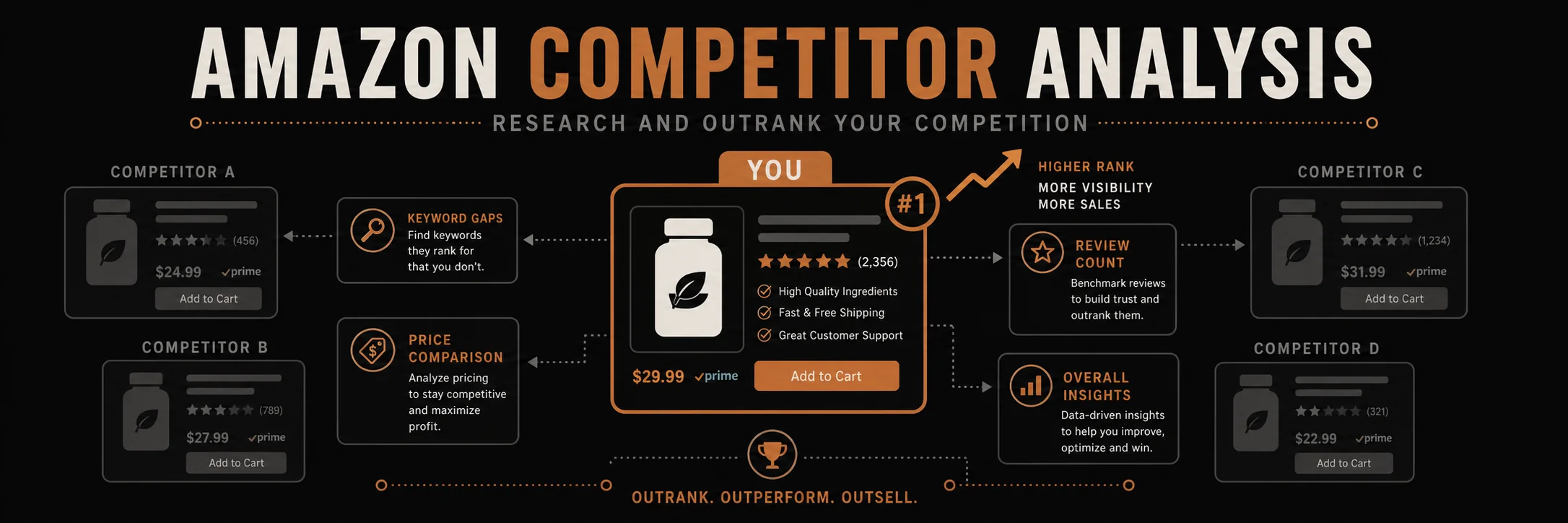
Understanding your competitors is crucial for success on Amazon. By analyzing what works for your competitors, you can identify opportunities, avoid mistakes, and develop strategies to outrank them. This comprehensive guide covers everything you need to know about Amazon competitor analysis.
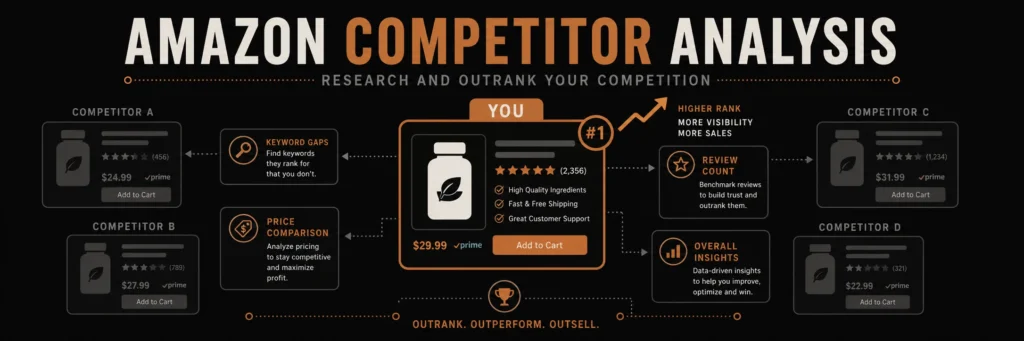
Outranking Amazon competitors starts with understanding exactly where their listings are weak. This guide shows you what to look for and how to act on it.
Why Competitor Analysis Matters
Strategic Benefits
- Identify Opportunities: Find gaps in competitor strategies
- Learn from Success: Understand what works for top sellers
- Avoid Mistakes: See what competitors are doing wrong
- Price Optimization: Competitive pricing strategies
- Content Ideas: Improve your listings based on successful examples
Competitive Advantages
- Better Rankings: Outrank competitors in search results
- Higher Conversions: Learn from high-converting listings
- Market Positioning: Understand your place in the market
- Product Development: Identify product improvement opportunities
How to Identify Competitors
Direct Competitors
- Same Products: Selling identical or very similar products
- Same Keywords: Ranking for the same search terms
- Same Price Range: Competing in similar price points
- Same Target Audience: Targeting the same customers
Indirect Competitors
- Alternative Products: Different products solving same problem
- Different Price Points: Competing in different segments
- Related Products: Complementary or substitute products
- Cross-Category: Products in related categories
Finding Competitors
- Amazon Search: Search for your main keywords
- Best Sellers: Check Best Seller Rank (BSR) lists
- Sponsored Products: Analyze competitors running ads
- Related Products: Check “Customers also bought” sections
- Category Browsing: Browse relevant categories
What to Analyze in Competitor Listings
1. Product Titles
- Keyword Usage: Which keywords they’re targeting
- Title Structure: How they structure their titles
- Character Count: Length of titles
- Brand Placement: Where brand name appears
- Feature Highlights: What features they emphasize
2. Product Images
- Image Quality: Professional vs. amateur photography
- Number of Images: How many images they use
- Image Types: Lifestyle, features, infographics
- Image Order: Sequence of images
- A+ Content: Enhanced brand content usage
3. Bullet Points
- Content Quality: How well-written are bullets
- Keyword Usage: Keywords in bullet points
- Benefit Focus: Features vs. benefits emphasis
- Length: Character count per bullet
- Structure: How bullets are organized
4. Product Descriptions
- Length: Word count and detail level
- Formatting: Use of headers, bullets, paragraphs
- Keyword Density: How keywords are used
- Content Quality: Value and clarity of content
- A+ Content: Enhanced content sections
5. Pricing Strategy
- Current Price: What they’re charging
- Price History: How prices change over time
- Promotions: Discounts and deals
- Shipping Costs: Free shipping or additional costs
- Bundle Pricing: Multi-pack or bundle offers
6. Reviews and Ratings
- Review Count: Total number of reviews
- Average Rating: Star rating average
- Review Quality: Detailed vs. brief reviews
- Review Velocity: Rate of new reviews
- Negative Reviews: Common complaints
7. Seller Information
- FBA vs FBM: Fulfillment method
- Seller Rating: Overall seller performance
- Account Age: How long they’ve been selling
- Other Products: What else they sell
- Brand Registry: Brand registered or not
Tools for Amazon Competitor Analysis
1. Jungle Scout
- Product Research: Find and analyze products
- Keyword Research: Track competitor keywords
- Sales Estimates: Estimate competitor sales
- Trend Analysis: Track performance over time
- Opportunity Score: Identify opportunities
2. Helium 10
- Xray: Analyze competitor listings
- Cerebro: Reverse ASIN lookup for keywords
- Magnet: Keyword research tool
- Trendster: Track keyword trends
- Black Box: Product opportunity finder
3. AMZScout
- Product Database: Search and filter products
- Sales Estimator: Estimate competitor sales
- Keyword Tracker: Track keyword rankings
- Product Tracker: Monitor competitor products
- Profit Calculator: Calculate profitability
4. Keepa
- Price History: Track price changes over time
- Sales Rank History: Monitor BSR trends
- Deal Tracking: Track promotions and deals
- Price Alerts: Get notified of price changes
- Chart Analysis: Visual price and rank trends
5. SellerApp
- Competitor Analysis: Comprehensive competitor research
- Keyword Research: Find competitor keywords
- Listing Quality: Analyze listing optimization
- Market Intelligence: Market insights and trends
- Profitability Analysis: Calculate profit margins
Competitive Analysis Framework
Step 1: Identify Top Competitors
- Search for your main keywords
- Identify top 10-20 ranking products
- Filter by relevance and similarity
- Select 5-10 primary competitors
- Document competitor ASINs
Step 2: Analyze Listings
- Titles: Extract keywords and structure
- Images: Count, quality, types
- Bullets: Content, keywords, benefits
- Descriptions: Length, quality, keywords
- A+ Content: Enhanced content analysis
Step 3: Analyze Performance
- Sales Rank: Current and historical BSR
- Reviews: Count, rating, velocity
- Pricing: Current price and history
- Inventory: Stock levels and availability
- Advertising: Sponsored product activity
Step 4: Identify Opportunities
- Content Gaps: What competitors miss
- Keyword Opportunities: Untapped keywords
- Pricing Opportunities: Better pricing strategy
- Feature Gaps: Missing features or benefits
- Image Opportunities: Better image strategies
Step 5: Develop Strategy
- Improve Listings: Based on competitor analysis
- Target Keywords: Focus on competitor keywords
- Optimize Pricing: Competitive pricing strategy
- Enhance Content: Better than competitors
- Differentiate: Stand out from competitors
Analyzing Competitor Keywords
Finding Competitor Keywords
- Reverse ASIN Lookup: Use tools to find competitor keywords
- Title Analysis: Extract keywords from titles
- Bullet Analysis: Keywords in bullet points
- Review Analysis: Keywords customers use
- Search Term Reports: If running ads on same keywords
Keyword Opportunities
- High-Ranking Keywords: Keywords competitors rank for
- Low Competition: Keywords competitors use but don’t rank well
- Missing Keywords: Important keywords competitors miss
- Long-Tail Keywords: Specific, less competitive terms
- Question Keywords: Question-based search terms
Competitive Pricing Analysis
Price Monitoring
- Current Prices: Track competitor pricing
- Price History: How prices change
- Promotions: Discounts and deals
- Shipping Costs: Total cost comparison
- Bundle Pricing: Multi-pack strategies
Pricing Strategy
- Price Positioning: Where you should price
- Price Gaps: Opportunities for better pricing
- Value Proposition: Justify your pricing
- Dynamic Pricing: When to adjust prices
- Promotion Timing: Best times for promotions
Content Gap Analysis
What Competitors Have
- A+ Content: Enhanced brand content
- Videos: Product videos
- Infographics: Visual content
- Detailed Descriptions: Comprehensive product info
- FAQ Sections: Frequently asked questions
What You Can Improve
- Better Images: Higher quality or more images
- Better Copy: More compelling descriptions
- More Content: Additional information
- Better Structure: Improved organization
- Unique Value: Stand out from competitors
Competitor Advertising Analysis
Sponsored Products
- Which Products: What competitors advertise
- Keywords: Keywords they target
- Ad Copy: How they present products
- Landing Pages: Where ads lead
- Ad Frequency: How often ads appear
Sponsored Brands
- Brand Messaging: How they position brand
- Product Selection: Featured products
- Creative Assets: Images and videos used
- Targeting: Who they target
Monitoring Competitor Activity
Regular Monitoring
- Weekly Reviews: Check top competitors weekly
- Price Changes: Monitor price adjustments
- New Listings: Track new product launches
- Review Activity: Monitor review velocity
- Ranking Changes: Track search position changes
Alerts and Tracking
- Price Alerts: Get notified of price changes
- Rank Tracking: Monitor keyword rankings
- Review Alerts: New competitor reviews
- Inventory Alerts: Stock level changes
- New Product Alerts: Competitor launches
Using Competitor Analysis to Improve Rankings
Content Optimization
- Better Titles: Improve based on competitor analysis
- Enhanced Images: Match or exceed competitor quality
- Improved Bullets: Better than competitor bullets
- Rich Descriptions: More comprehensive than competitors
- A+ Content: Enhanced content if competitors have it
Keyword Strategy
- Target Competitor Keywords: Rank for their keywords
- Find Gaps: Target keywords they miss
- Long-Tail Focus: Less competitive terms
- Question Keywords: Answer customer questions
- Semantic Keywords: Related terms competitors use
Performance Optimization
- Better Reviews: Encourage more reviews
- Faster Shipping: Compete on fulfillment speed
- Competitive Pricing: Price competitively
- Better Service: Exceed competitor service
- More Inventory: Avoid stock-outs
Common Competitor Analysis Mistakes
Mistake 1: Copying Competitors
- Problem: Directly copying competitor content
- Solution: Learn from competitors but create unique content
- Better Approach: Use insights to create better listings
Mistake 2: Ignoring Indirect Competitors
- Problem: Only analyzing direct competitors
- Solution: Analyze indirect competitors too
- Better Approach: Understand broader competitive landscape
Mistake 3: Not Monitoring Regularly
- Problem: One-time analysis
- Solution: Regular monitoring and updates
- Better Approach: Ongoing competitive intelligence
Mistake 4: Focusing Only on Top Sellers
- Problem: Only analyzing #1 sellers
- Solution: Analyze multiple competitors
- Better Approach: Learn from various success levels
Competitor Analysis Checklist
Common Questions About Competitor Analysis
How often should I analyze competitors?
Weekly monitoring is ideal, with comprehensive analysis monthly or quarterly. Monitor key metrics daily if possible.
Should I copy competitor listings?
No, never copy directly. Use competitor analysis to learn and create better, unique content that stands out.
What if I can’t compete on price?
Focus on value proposition, better content, superior customer service, and unique features that justify higher pricing.
How do I find competitor keywords?
Use tools like Helium 10 Cerebro, Jungle Scout, or SellerApp to perform reverse ASIN lookup and find competitor keywords.
Conclusion
Amazon competitor analysis is essential for understanding your market, identifying opportunities, and developing strategies to outrank competitors. By systematically analyzing competitor listings, keywords, pricing, and performance, you can create better listings and improve your rankings.
Remember, the goal isn’t to copy competitors but to learn from them and create something better. Use competitor insights to identify gaps, improve your content, and differentiate your products.
Need help with competitor analysis? Contact advertpreneur for expert Amazon market research and competitor analysis services. We help sellers understand their competition and develop winning strategies.
Architect Signature
Haseeb
Leads all web development and design at Advertpreneur. With a background in graphic design since 2009, he builds storefronts that rank on Google and convert the traffic they earn through speed and SEO-structured architecture.