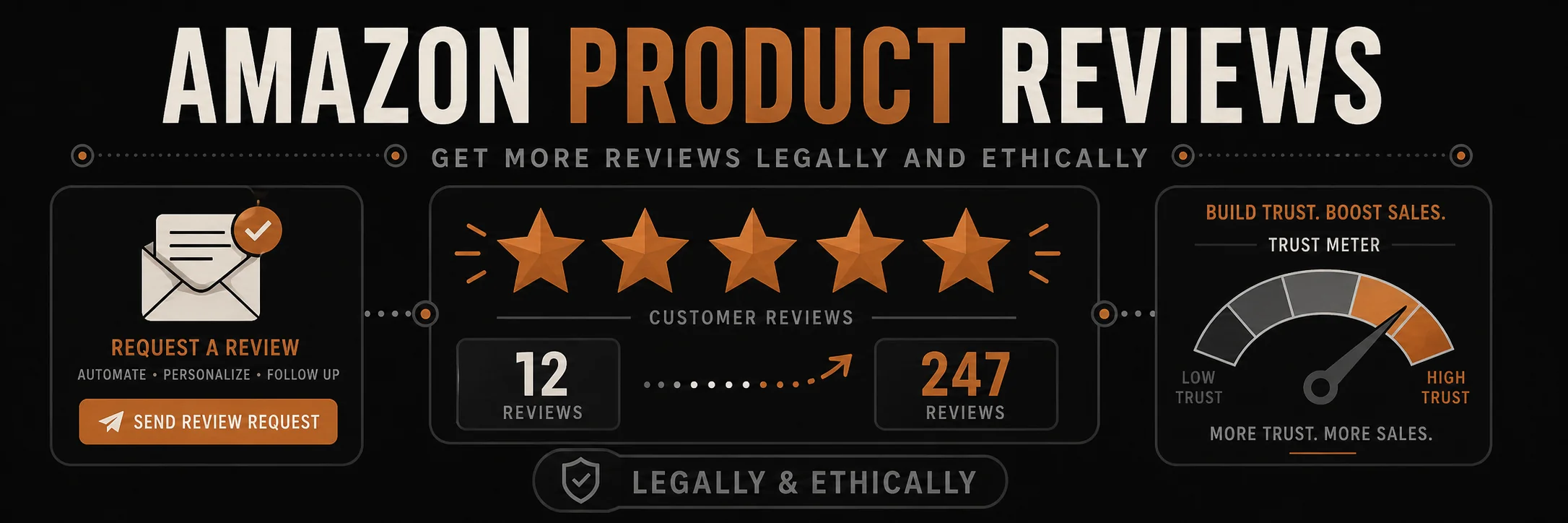
Amazon product reviews are crucial for success on the platform. Products with more reviews rank higher, convert better, and build customer trust. This guide covers legal and ethical strategies to increase your Amazon review count while staying compliant with Amazon’s policies.
Reviews drive both ranking and conversion on Amazon. This guide covers every compliant tactic for building your review count without risking your account.
Why Amazon Reviews Matter
Impact on Sales
- Products with 20+ reviews convert 2-3x better than those with fewer reviews
- Higher ratings (4+ stars) significantly increase conversion rates
- Review count is a ranking factor in Amazon’s algorithm
- Customer trust increases with more authentic reviews
SEO and Ranking Benefits
- More reviews can improve search rankings
- Recent reviews signal active, popular products
- Review content contains keywords that help with SEO
- Review velocity (rate of new reviews) affects ranking
Amazon Review Policies
What’s Allowed
- Requesting reviews through Amazon’s Request a Review button
- Following up with customers after purchase (through Amazon messaging)
- Vine Program: Amazon’s official review program
- Early Reviewer Program: For products with few reviews (if available)
What’s Prohibited
- Incentivized reviews: Offering discounts, free products, or payments for reviews
- Review manipulation: Creating fake reviews or asking friends/family
- Review gating: Only asking satisfied customers to review
- Third-party services: Using services that violate Amazon’s terms
- Review exchanges: Trading reviews with other sellers
Consequences of Violations
- Account suspension or termination
- Review removal and loss of existing reviews
- Legal action in severe cases
- Permanent ban from selling on Amazon
Legal Ways to Get Amazon Reviews
1. Amazon’s Request a Review Button
How It Works:
- Available in Seller Central for orders 5-30 days old
- Sends automated email requesting review
- Complies with Amazon’s policies
- Easy to use and track
Best Practices:
- Request reviews for all eligible orders
- Use consistently for every order
- Track review rate from requests
- Monitor for any issues
2. Amazon Vine Program
What It Is:
- Amazon’s official review program
- Vine Voices (trusted reviewers) receive free products
- Reviews are marked “Vine Customer Review”
- Helps new products get initial reviews
Requirements:
- Brand registered products
- Available inventory
- Product meets quality standards
- Enrollment fee per product
Benefits:
- Legitimate, verified reviews
- Helps new products launch
- Reviews from trusted reviewers
- Complies with Amazon policies
3. Follow-Up Email Sequences
What’s Allowed:
- Send follow-up emails through Amazon messaging
- Thank customers for purchase
- Provide helpful information
- Politely request feedback (not specifically positive reviews)
Best Practices:
- Send 1-2 follow-up emails maximum
- Focus on customer service, not just reviews
- Provide value (usage tips, care instructions)
- Use Amazon’s messaging system only
4. Product Inserts
What’s Allowed:
- Include inserts in product packaging
- Request honest feedback
- Provide customer service contact
- Share usage tips or instructions
What’s Not Allowed:
- Offering incentives for reviews
- Requesting only positive reviews
- Including external links to review sites
- Asking customers to contact you outside Amazon
Best Practices:
- Focus on customer service
- Request honest feedback
- Provide helpful information
- Keep it simple and professional
Strategies to Increase Review Rate
1. Deliver Excellent Products
- Quality First: Ensure products meet or exceed expectations
- Accurate Descriptions: Products should match listings exactly
- Fast Shipping: Deliver on time or early
- Good Packaging: Professional, secure packaging
2. Exceed Customer Expectations
- Surprise and Delight: Include small bonuses or extras
- Fast Shipping: Ship faster than promised
- Quality Packaging: Professional, branded packaging
- Clear Instructions: Helpful usage guides
3. Optimize Product Listings
- Accurate Descriptions: Set proper expectations
- High-Quality Images: Show product accurately
- Detailed Specifications: Provide complete information
- Answer Questions: Respond to customer questions quickly
4. Provide Excellent Customer Service
- Fast Responses: Reply to messages within 24 hours
- Problem Resolution: Quickly resolve any issues
- Professional Communication: Polite, helpful responses
- Proactive Support: Reach out if issues arise
Review Request Timing
Optimal Timing
- 5-7 Days After Delivery: Customer has used product
- Before 30 Days: While experience is fresh
- After Positive Experience: If customer seems satisfied
- Avoid: Immediately after delivery (too soon)
When Not to Request
- Immediately After Purchase: Too early
- After Negative Feedback: May worsen situation
- If Product Has Issues: Fix issues first
- Too Frequently: Don’t spam customers
Improving Review Quality
Encourage Detailed Reviews
- Ask for Specifics: Request details about experience
- Photos: Encourage customers to include photos
- Use Cases: Ask how they’re using the product
- Honest Feedback: Welcome both positive and constructive feedback
Respond to Reviews
- Thank Positive Reviews: Show appreciation
- Address Negative Reviews: Apologize and offer solutions
- Professional Tone: Always be professional
- Public Responses: Help other customers see your service
Handling Negative Reviews
Prevention
- Quality Control: Ensure product quality
- Accurate Listings: Set proper expectations
- Clear Communication: Provide complete information
- Fast Support: Resolve issues quickly
Response Strategy
- Respond Quickly: Address within 24-48 hours
- Apologize Sincerely: Take responsibility
- Offer Solutions: Provide refund, replacement, or assistance
- Learn and Improve: Use feedback to improve products
When to Contact Amazon
- Policy Violations: Reviews that violate Amazon policies
- Fake Reviews: Obviously fake or manipulated reviews
- Inappropriate Content: Reviews with inappropriate language
- Competitor Attacks: Reviews from competitors
Review Velocity Strategies
Launch Strategy
- Initial Push: Focus on getting first 10-20 reviews
- Vine Program: Use for initial reviews
- Early Customers: Follow up with early purchasers
- Momentum Building: Build review velocity early
Sustained Growth
- Consistent Requests: Request reviews for all orders
- Quality Focus: Ensure products maintain quality
- Customer Service: Excellent service encourages reviews
- Long-Term Strategy: Build reviews over time
Tools for Review Management
Amazon Tools
- Request a Review Button: Built-in review requests
- Vine Program: Official review program
- Seller Central: Review management dashboard
- Brand Analytics: Review insights (for brand registered sellers)
Third-Party Tools
- FeedbackWhiz: Review and feedback management
- BQool: Feedback and review automation
- Sellics: Review management and analytics
- Jungle Scout: Review analysis and insights
Review Analytics and Monitoring
Key Metrics
- Review Count: Total number of reviews
- Average Rating: Overall star rating
- Review Velocity: Rate of new reviews
- Review Distribution: Breakdown by star rating
- Review Response Rate: Percentage of reviews you respond to
Monitoring
- Daily Checks: Monitor new reviews daily
- Response Time: Respond to reviews quickly
- Trend Analysis: Track review trends over time
- Competitor Comparison: Compare with competitors
Common Review Mistakes
Mistake 1: Violating Amazon Policies
- Offering incentives for reviews
- Using prohibited review services
- Review manipulation
- Solution: Only use Amazon-approved methods
Mistake 2: Not Requesting Reviews
- Missing opportunities to request reviews
- Inconsistent review requests
- Not using Request a Review button
- Solution: Systematically request reviews for all eligible orders
Mistake 3: Poor Product Quality
- Products don’t meet expectations
- Inaccurate product descriptions
- Quality issues
- Solution: Focus on product quality and accurate listings
Mistake 4: Ignoring Negative Reviews
- Not responding to negative feedback
- Not learning from criticism
- Defensive responses
- Solution: Respond professionally and use feedback to improve
Review Best Practices Checklist
Common Questions About Amazon Reviews
How many reviews do I need?
There’s no magic number, but products with 20+ reviews typically perform better. Focus on quality and consistency over quantity.
Can I ask customers to change negative reviews?
You can respond to negative reviews and offer solutions, but don’t ask customers to change or remove reviews. Focus on resolving issues.
How long does it take to get reviews?
Most customers who leave reviews do so within 2-4 weeks of purchase. Be patient and consistent with review requests.
Should I respond to all reviews?
Yes, respond to both positive and negative reviews. Thank positive reviewers and address concerns in negative reviews professionally.
Conclusion
Getting more Amazon reviews legally and ethically requires patience, excellent products, and consistent effort. By using Amazon’s approved methods, delivering quality products, and providing excellent customer service, you can build a strong review profile that improves rankings and conversions.
Focus on long-term, sustainable strategies rather than quick fixes. Building authentic reviews takes time, but the results—better rankings, higher conversions, and increased trust—are worth the investment.
Need help with Amazon review strategy? Contact advertpreneur for expert Amazon seller consulting. We help sellers build authentic reviews and improve their Amazon performance.
Architect Signature
Hasnain
Runs Amazon SEO and listing optimization for the Advertpreneur portfolio. He researches keywords and rebuilds listing architecture at the intersection of algorithm understanding and conversion copywriting.