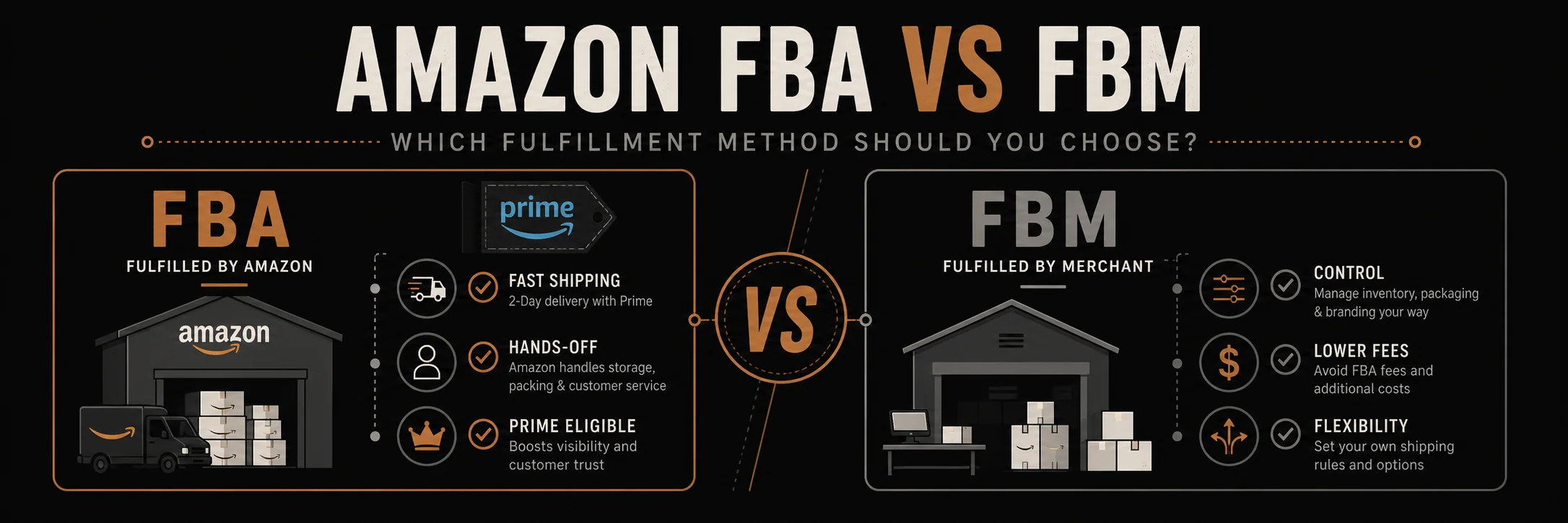
Choosing between Amazon FBA (Fulfillment by Amazon) and FBM (Fulfillment by Merchant) is one of the most important decisions you’ll make as an Amazon seller. This comprehensive comparison will help you understand the differences, costs, and benefits of each method so you can make the right choice for your business.
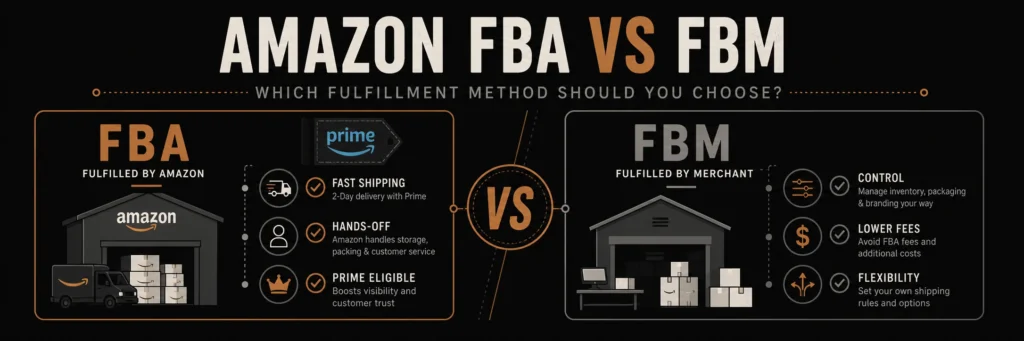
FBA and FBM each have clear advantages depending on your product, margin, and scale. This guide helps you decide which one, or which combination, fits your business.
Understanding Amazon FBA vs FBM
What is Amazon FBA?
Fulfillment by Amazon (FBA) means Amazon handles storage, packing, shipping, and customer service for your products. You send inventory to Amazon fulfillment centers, and they take care of the rest.
What is Amazon FBM?
Fulfillment by Merchant (FBM) means you handle all fulfillment yourself. You store inventory, pack orders, ship products, and manage customer service directly.
Amazon FBA: Pros and Cons
Advantages of FBA
1. Prime Eligibility
- Prime Badge: FBA products are eligible for Amazon Prime
- Free Shipping: Prime members get free 2-day shipping
- Buy Box Advantage: FBA sellers often win the Buy Box more easily
- Higher Conversion: Prime-eligible products convert 30-40% better
2. Customer Service
- Amazon Handles Returns: Amazon processes returns and refunds
- Customer Support: Amazon’s customer service team handles inquiries
- Less Work: You don’t need to manage customer service
- Professional Service: Amazon’s reputation for customer service
3. Scalability
- No Storage Limits: Amazon warehouses can store large quantities
- Multi-Channel Fulfillment: FBA can fulfill orders from other channels
- International Expansion: Easier to expand to international markets
- Hands-Off Operations: Focus on growing your business, not logistics
4. Performance Metrics
- Better Rankings: FBA products often rank higher in search
- Buy Box Win Rate: Higher chance of winning the Buy Box
- Customer Trust: Amazon Prime badge builds customer confidence
Disadvantages of FBA
1. Costs
- Fulfillment Fees: Per-unit fulfillment and storage fees
- Storage Fees: Monthly storage fees, especially for slow-moving inventory
- Long-Term Storage: Additional fees for inventory stored over 365 days
- Prep Fees: Fees for Amazon to prep products if you don’t meet requirements
2. Less Control
- Inventory Location: You can’t control where inventory is stored
- Packaging: Limited control over packaging and branding
- Shipping Speed: Can’t offer custom shipping options
- Customer Communication: Limited direct customer contact
3. Inventory Management
- Stock-Outs: Need to monitor and replenish inventory regularly
- Removal Fees: Costs to remove unsold inventory
- Commingling: Products may be mixed with other sellers’ inventory
- Restrictions: Some products can’t use FBA
Amazon FBM: Pros and Cons
Advantages of FBM
1. Cost Control
- No Fulfillment Fees: You only pay Amazon referral fees
- Storage Costs: Control your own storage costs
- Shipping Control: Negotiate your own shipping rates
- No Long-Term Storage Fees: Avoid Amazon’s storage fees
2. More Control
- Packaging: Full control over packaging and branding
- Customer Communication: Direct contact with customers
- Inventory Management: Complete control over inventory
- Customization: Offer custom packaging, inserts, or gifts
3. Flexibility
- Product Restrictions: Can sell products FBA doesn’t allow
- Large Items: Often cheaper for large or heavy items
- Slow-Moving Inventory: Better for products that sell slowly
- Multi-Channel: Easier to fulfill from multiple sales channels
4. Profit Margins
- Higher Margins: Potentially higher profits on low-cost items
- No FBA Fees: Save on fulfillment fees for expensive items
- Bulk Shipping: Lower per-unit costs for high-volume sellers
Disadvantages of FBM
1. More Work
- Time Investment: You handle all fulfillment tasks
- Customer Service: Must manage all customer inquiries
- Returns Processing: Handle all returns and refunds
- Shipping Management: Coordinate with shipping carriers
2. Prime Ineligibility
- No Prime Badge: Products aren’t Prime-eligible
- Buy Box Competition: Harder to win Buy Box against FBA sellers
- Lower Conversion: Non-Prime products convert at lower rates
- Shipping Costs: Customers pay for shipping (unless you offer free shipping)
3. Scalability Challenges
- Storage Space: Need your own warehouse or storage
- Staffing: May need employees for fulfillment
- Infrastructure: Need packing materials, shipping supplies
- Growth Limitations: Harder to scale quickly
Cost Comparison: FBA vs FBM
FBA Costs
Fulfillment Fees
- Based on product size and weight
- Standard-size items: $2.50-$5.00+ per unit
- Oversize items: $8.00-$15.00+ per unit
- Varies by product category
Storage Fees
- Standard: $0.75 per cubic foot (January-September)
- Standard: $2.40 per cubic foot (October-December)
- Oversize: $0.48 per cubic foot (January-September)
- Oversize: $1.20 per cubic foot (October-December)
Additional Fees
- Long-term storage fees (365+ days)
- Removal fees ($0.50-$0.60 per unit)
- Prep fees (if products don’t meet requirements)
- Unplanned service fees
FBM Costs
Your Costs
- Storage: Warehouse or storage facility costs
- Shipping: Carrier rates (negotiate for volume discounts)
- Packaging: Boxes, tape, labels, packing materials
- Labor: Time or employees for fulfillment
- Returns: Return shipping and processing costs
Amazon Fees
- Referral Fee: Same as FBA (varies by category, typically 8-15%)
- No Fulfillment Fees: Only pay referral fees
- Optional: Subscribe & Save fees if applicable
When to Use Amazon FBA
Best For:
- New Sellers: Easier to get started
- Small to Medium Items: Cost-effective for standard-size products
- Fast-Moving Products: High sales velocity items
- Prime Focus: Wanting Prime eligibility
- Hands-Off Approach: Prefer Amazon to handle fulfillment
- International Sales: Expanding to multiple countries
- Seasonal Products: Can scale up quickly for peak seasons
Product Types Ideal for FBA:
- Standard-size products
- Fast-moving consumer goods
- Products with consistent demand
- Items that fit Amazon’s size/weight requirements
- Products that benefit from Prime eligibility
When to Use Amazon FBM
Best For:
- Large or Heavy Items: Lower fulfillment costs
- Slow-Moving Inventory: Avoid long-term storage fees
- High-Margin Products: Want to maximize profit margins
- Custom Products: Need custom packaging or inserts
- Restricted Products: Items FBA doesn’t allow
- Multi-Channel Sellers: Selling on multiple platforms
- Established Sellers: Have fulfillment infrastructure
Product Types Ideal for FBM:
- Large or oversize items
- Heavy products (over 20 lbs)
- Slow-moving inventory
- Custom or personalized items
- Products with high profit margins
- Items restricted from FBA
Hybrid Approach: Using Both FBA and FBM
Strategy Benefits
- FBA for Fast Movers: Use FBA for best-selling products
- FBM for Slow Movers: Fulfill slow-moving items yourself
- Risk Management: Diversify fulfillment methods
- Cost Optimization: Use each method where it’s most cost-effective
Implementation
- Analyze sales velocity for each product
- Calculate costs for both methods
- Use FBA for high-velocity, standard-size items
- Use FBM for slow-moving or large items
- Monitor and adjust based on performance
Making the Decision: FBA vs FBM
Decision Factors
1. Product Characteristics
- Size and weight
- Sales velocity
- Profit margins
- Storage requirements
2. Business Stage
- New vs. established seller
- Available capital
- Infrastructure and resources
- Growth plans
3. Operational Preferences
- Hands-on vs. hands-off
- Control requirements
- Customer service capabilities
- Scalability needs
4. Financial Considerations
- Profit margins
- Cash flow
- Storage costs
- Fulfillment costs
Transitioning Between FBA and FBM
From FBM to FBA
- Calculate if FBA is cost-effective
- Prepare products to FBA requirements
- Create FBA shipment plan
- Send inventory to Amazon
- Monitor performance and costs
From FBA to FBM
- Analyze FBA costs and profitability
- Set up fulfillment infrastructure
- Create FBM listings
- Remove inventory from FBA (if needed)
- Update listings and manage both methods
Common Questions About FBA vs FBM
Can I use both FBA and FBM?
Yes, you can use both methods for different products or even the same product. Many sellers use a hybrid approach.
Which is more profitable?
It depends on your products, sales volume, and costs. Calculate costs for both methods to determine which is more profitable for your specific situation.
Can FBM sellers win the Buy Box?
Yes, but it’s more challenging. FBA sellers typically have an advantage, but FBM sellers can win with competitive pricing, excellent metrics, and fast shipping.
How do I calculate FBA costs?
Use Amazon’s FBA Revenue Calculator to estimate costs based on product size, weight, and category.
Conclusion
The choice between Amazon FBA and FBM depends on your specific products, business model, and goals. FBA offers convenience and Prime eligibility but comes with higher costs. FBM provides more control and potentially higher margins but requires more work.
Evaluate your products, calculate costs for both methods, and consider your business needs. Many successful sellers use a hybrid approach, leveraging the benefits of both methods.
Need help with Amazon fulfillment strategy? Contact advertpreneur for expert Amazon seller consulting. We help sellers choose the right fulfillment method and optimize their operations.
Architect Signature
Hasnain
Runs Amazon SEO and listing optimization for the Advertpreneur portfolio. He researches keywords and rebuilds listing architecture at the intersection of algorithm understanding and conversion copywriting.